




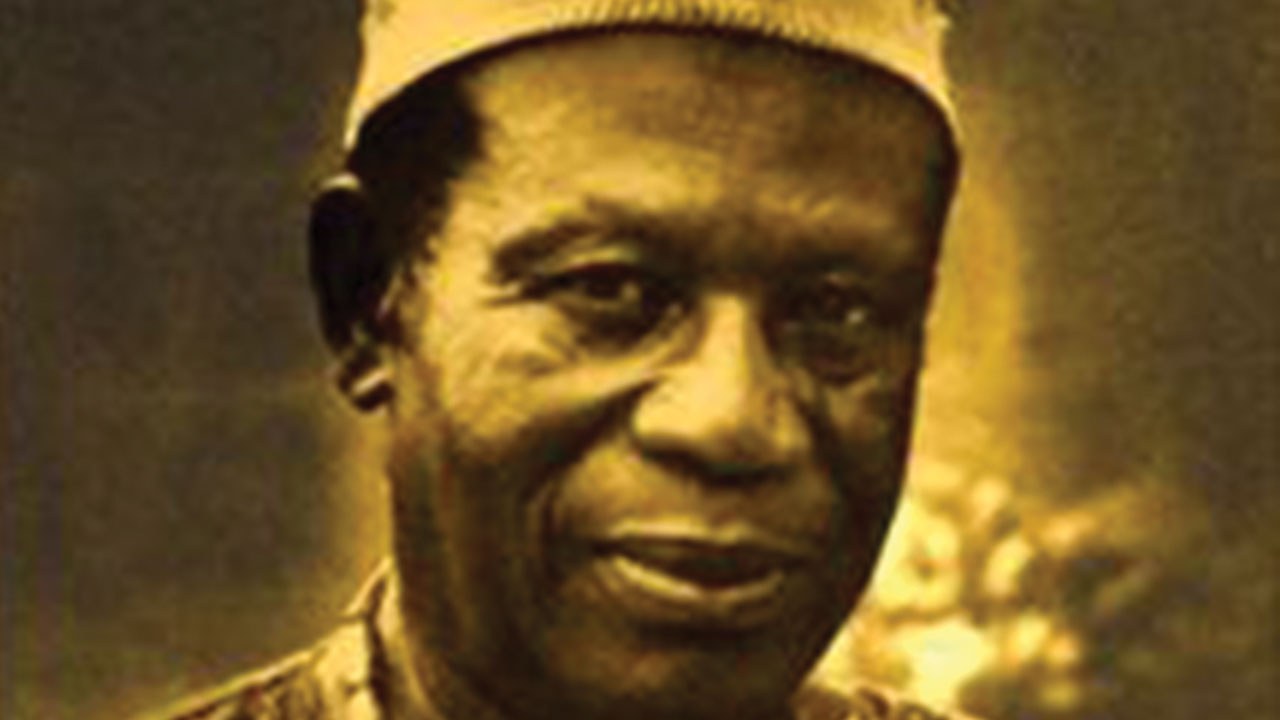
Clement Isong steered Nigeria’s Central Bank starting in August 1967, facing the immediate challenge of navigating the nation through a brutal civil war and the subsequent launch of a new currency. Clement Isong took the helm of Nigeria’s Central Bank, facing the immediate challenge of navigating the nation through a brutal civil war and the subsequent launch of a new currency.
Isong’s eight-year tenure, from the chaos of conflict to the burgeoning oil economy, would fundamentally reshape Nigeria’s financial landscape. It was a period that saw the country grapple with its survival, assert its monetary independence with the introduction of the naira, and face the complex challenges of sudden oil wealth.
A quiet scholar’s rise to central banking leadership
Clement Nyong Isong’s path to leading Nigeria’s monetary policy began far from the halls of power. Born on April 20, 1920, in Ikot Osong, then a village in Eket, Akwa Ibom State, he pursued an education that would take him across continents.
After early schooling in Nigeria, he earned a diploma from University College, Ibadan, before venturing to the United States. There, he attended Iowa Wesleyan College and later Harvard University’s Graduate School of Arts and Sciences, where he secured a doctorate in Economics.
His academic grounding led him to teach economics at the University of Ibadan. Isong then joined the Central Bank of Nigeria as Secretary, ascending to Director of Research, and gained international experience as an adviser in the African Department of the International Monetary Fund (IMF) from 1962 to 1967.
This diverse background in academia, central banking, and international finance prepared him for the formidable task ahead. He became the second indigenous Governor of the Central Bank in August 1967, succeeding Aliyu Mai-Bornu.
Steering Nigeria’s economy through civil war
Isong’s appointment by General Yakubu Gowon came at a moment of profound national peril. The Eastern Region had declared the Republic of Biafra on May 30, 1967, and fighting erupted in early July. Nigeria’s economy, which had seen significant expansion with an average annual GDP growth of 4.4% between 1962 and 1965, was suddenly thrown into disarray.
The conflict severely impacted critical economic sectors. Petroleum production, which had quadrupled between 1962 and 1965, came to a dramatic halt in the affected regions, causing a sharp decline in exports and government revenues. Transport networks were crippled, with bridges, roads, and rail infrastructure damaged or diverted for military use.
The Federal Government faced immense pressure on its external finances, needing foreign exchange for military supplies and essential imports while export earnings dwindled. Despite these daunting circumstances, Isong’s leadership was crucial in preventing hyperinflation and ensuring the nation avoided accumulating unsupportable debts.
One of his most significant wartime measures occurred in January 1968. The CBN, under his guidance, introduced new Nigerian currency notes. This strategic move aimed to invalidate the existing notes held in the secessionist territory, effectively cutting off Biafra’s access to crucial financial resources.
While the war raged, key figures like Chief Obafemi Awolowo, serving as Federal Commissioner for Finance and Deputy Chairman of the Federal Executive Council, worked alongside institutions like the Central Bank to maintain a semblance of economic order. This period highlighted how deeply intertwined Nigerian leadership became with the survival of the federation.
The birth of the naira and monetary independence
Even as the nation emerged from civil war in January 1970, Isong’s tenure continued to mark defining shifts in Nigeria’s economic identity. Perhaps the most symbolic change came on January 1, 1973, with the adoption of a decimal currency system.
The familiar pounds, shillings, and pence, a direct inheritance from British colonial rule, were replaced by the naira and kobo. This transition was more than just a monetary overhaul; it was a powerful assertion of national sovereignty.
Under the new system, one naira was equivalent to ten shillings, and one hundred kobo made one naira. New banknotes were introduced in denominations of 50 kobo, ₦1, ₦5, and ₦10, accompanied by a fresh series of coins. This move established a managed float system, giving Nigeria greater control over its currency policy.
Isong presided over this monumental change, moving Nigeria away from its colonial monetary past towards a distinctly national future. It was a step towards defining Nigeria’s economic identity, just as the early independence period had sought to define its political one.
From wartime austerity to oil boom abundance
The post-war years of Isong’s governorship brought a dramatically different economic landscape. The Civil War had ended, but a new challenge emerged: managing rapidly expanding petroleum revenues. International oil prices soared in the early 1970s, flooding Nigeria with unprecedented wealth.
This abrupt shift transformed the concerns of economic policymakers. Where wartime efforts focused on conserving foreign exchange and financing military needs, the early 1970s demanded strategies for handling a sudden influx of oil income and government revenue.
Isong, ever the economist, expressed a telling concern in October 1971. He noted that Nigeria was accumulating foreign reserves but had “nowhere to invest them properly,” despite the clear need for infrastructure development. He also dismissed a proposed $35 million in annual US aid as “a drop in the bucket,” highlighting the scale of Nigeria’s new financial capacity.
He championed fiscal discipline, famously advising military head of state Yakubu Gowon against the inflationary public sector salary increases proposed in the 1974 Udoji Awards. Isong understood the dangers of uncontrolled spending, even amidst abundance. His tenure, therefore, perfectly bridged eras of scarcity and plenty, conflict and reconstruction.
Isong’s lasting influence on systems and governance
When Clement Isong retired from the Central Bank in September 1975, his public service was far from over. After a brief period consulting, he answered the call to guide Nigeria’s nascent democracy during the Second Republic. He transitioned into politics, becoming the first civilian Governor of Cross River State, serving from October 1, 1979, to October 1, 1983, under the National Party of Nigeria (NPN).
As governor, Isong initiated significant infrastructure projects, connecting remote local government areas to urban centers and modernizing towns like Calabar and Uyo. His administration also focused heavily on education, building and refurbishing schools, providing essential resources, and strengthening teacher training programs.
He spurred industrial development, establishing factories for batteries and biscuits in Ikot Ekpene, paint and ceramics in Uyo, and reviving operations at the Asbestonit factory in Oron and the Calabar Cement Company.
He even personally handled a border crisis with Cameroon in the Ikang area in 1981, demonstrating a hands-on approach to governance. Despite facing internal political struggles within the NPN, notably with Senate President Joseph Wayas, Isong remained committed to his vision for the state.
Isong’s multifaceted career, from academic to central banker, and finally to elected governor, showcased an unwavering dedication to public service and economic prudence.
His life’s work provides a compelling lens through which to view the evolution of Nigeria’s institutions. He was a steady hand during turmoil, a visionary in currency reform, and a cautious voice amidst sudden wealth. The cultural landscape he helped underpin continues to develop today, shaped by the economic foundations he helped to lay.
His story prompts us to consider how much individual integrity and expertise can shape national destiny, particularly when complex systems are being forged. How do leaders balance urgent wartime needs with long-term economic stability? And what lessons from his careful stewardship of resources still resonate as Nigeria navigates its economic future?
