




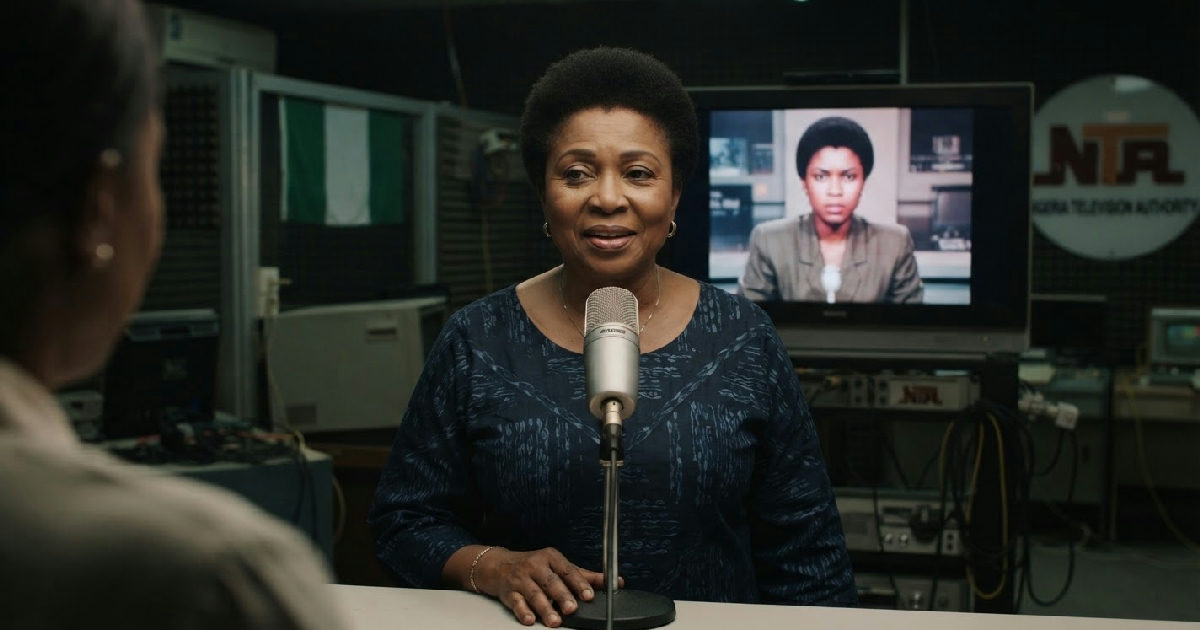
Long before she was the “Elegant Stallion,” revered for hits like “One Love” and her commanding presence in film, Onyeka Onwenu was an investigative journalist who exposed Nigeria’s corruption on television.
Most Nigerians today primarily remember her for her powerful voice and charismatic stage presence. But her professional journey began in newsrooms, armed with a sharp intellect and an unflinching commitment to truth. She brought a critical, academic eye to the burgeoning Nigerian broadcasting scene, years before her musical career ignited.
Onyeka Onwenu Nigeria’s scholar turned broadcaster
Onyeka Onwenu, born on January 31, 1952, was not merely destined for entertainment. She was a deeply intellectual force, whose early life laid a foundation far removed from the glitz of showbiz. Her academic path was rigorous, starting with a Bachelor’s degree in International Relations and Communication from Wellesley College in Massachusetts.
She further sharpened her analytical skills with a Master’s in Media Studies from The New School for Social Research in New York. This extensive education offered her a unique perspective on global affairs and how information shapes public understanding. It marked her as much more than a television personality in the making.
Her professional experience before returning home was equally substantial, including a stint with the United Nations in New York. There, she gained first-hand exposure to international institutions and the complexities of global diplomacy. This wasn’t a typical celebrity launching pad; it was serious, foundational preparation for a career demanding depth and insight.
A return to a nation in flux
Onwenu’s return to Nigeria in 1980 was a deliberate move, not a happenstance. She fulfilled her mandatory National Youth Service with the Nigerian Television Authority (NTA) in Lagos. At the time, NTA represented Nigeria’s most influential television network, widely perceived as the government’s authoritative voice.
However, NTA was also actively working to enhance its locally produced content, seeking out talent that could resonate with a diverse national audience. Onwenu quickly distinguished herself, not merely as an engaging face on screen, but through her intellectual rigour. Her academic training and international perspective made her a standout.
She rapidly became an articulate and incisive newsreader and reporter, quickly moving beyond simple presentation to active investigation. Her arrival at NTA coincided with a critical juncture for Nigeria. The country had returned to civilian rule in 1979 after years of military rule, yet economic storm clouds were rapidly gathering.
Nigeria’s vast oil wealth had created immense national expectations. But falling global oil prices and growing financial mismanagement were leading to severe hardship for ordinary citizens. This turbulent economic environment became the unexpected, yet fertile, ground for Onwenu’s unique brand of investigative journalism.
The documentary that shook a nation
The pivotal moment in Onwenu’s investigative career arrived with the 1984 documentary, Nigeria: A Squandering of Riches. This powerful film, co-produced by the BBC and NTA, laid bare Nigeria’s stark economic condition for all to see. Onwenu didn’t just narrate; she spearheaded the investigation, traveling extensively across the country.
She meticulously interviewed a diverse cross-section of Nigerians, from seasoned bankers and powerful industrialists to struggling farmers and bustling street traders. The documentary vividly exposed rampant corruption, pervasive economic decline, and the emerging environmental degradation in the oil-rich Niger Delta. It painted a sobering picture of a nation systematically squandering its immense oil wealth.
The film’s timing was nothing short of explosive. It was captured just weeks before the dramatic military coup of December 1983, which abruptly ended Nigeria’s Second Republic. The documentary inadvertently captured the palpable national mood of disillusionment and widespread hardship, effectively pre-empting the profound political upheaval that swiftly followed.
Critics noted the “near hysterical reaction” to its initial edited broadcast, underscoring the raw nerve it struck within Nigerian society. Onwenu’s work demonstrated her capacity to transcend conventional reporting. She could construct a compelling national narrative from the ground-level experiences of everyday citizens, linking individual struggles to broader systemic failures.
From news to melody: the message endures
The most surprising aspect of Onwenu’s story for many is how completely her later fame eclipsed this foundational period. Today, most Nigerians know her as the “Elegant Stallion,” the powerful singer who released the iconic album “One Love” in 1986. That musical stardom profoundly overshadowed her significant and pioneering journalistic career.
Yet, her transition into music wasn’t a departure from her core mission, but rather a change in medium. The fundamental message she sought to convey remained constant: unity, justice, and hope for Nigeria. Her rigorous journalistic skills—encompassing research, critical analysis, and compelling communication—formed the bedrock of her subsequent public life.
Onwenu herself articulated this dual identity, describing herself as “a journalist and an entertainer.” She firmly believed that journalists were vital, stating, “We are very important to the society because we draw attention to the real issues in the society, which is how to move this country forward.” This conviction informed every aspect of her career.
Her later activism, including a hunger strike against NTA in 2000 over unpaid royalties, echoed her earlier investigative spirit. Her political appointments, such as Executive Director/Chief Executive Officer of the National Centre for Women Development in 2013, further solidified her lifelong commitment to public affairs. She carried the sharp, questioning eye of a journalist through every phase of her remarkable life.
A pioneering voice, a lasting lesson
Onyeka Onwenu’s early career as an investigative journalist offers a profound and often overlooked insight into Nigerian public life. It serves as a potent reminder that the enduring impact of a public figure is frequently rooted in extensive, less-publicized foundational work.
Her journey vividly demonstrates that true influence is built not merely on the fleeting allure of fame, but on a deep-seated commitment to understanding and articulating a nation’s truths.
She did this even before the full glare of the spotlight hit. Her contribution to Nigerian broadcast history was to elevate television beyond mere entertainment, transforming it into a crucial platform for national dialogue and critical self-examination. She passed away on July 30, 2024, at the age of 72.
Her legacy extends far beyond her beloved songs and memorable screen roles. It lies equally in her unflinching commitment to truth and her pioneering efforts to shine a light on Nigeria’s complexities through the lens of a dedicated journalist. Her life teaches us that the pursuit of understanding can take many forms, but its impact is always profound.
