




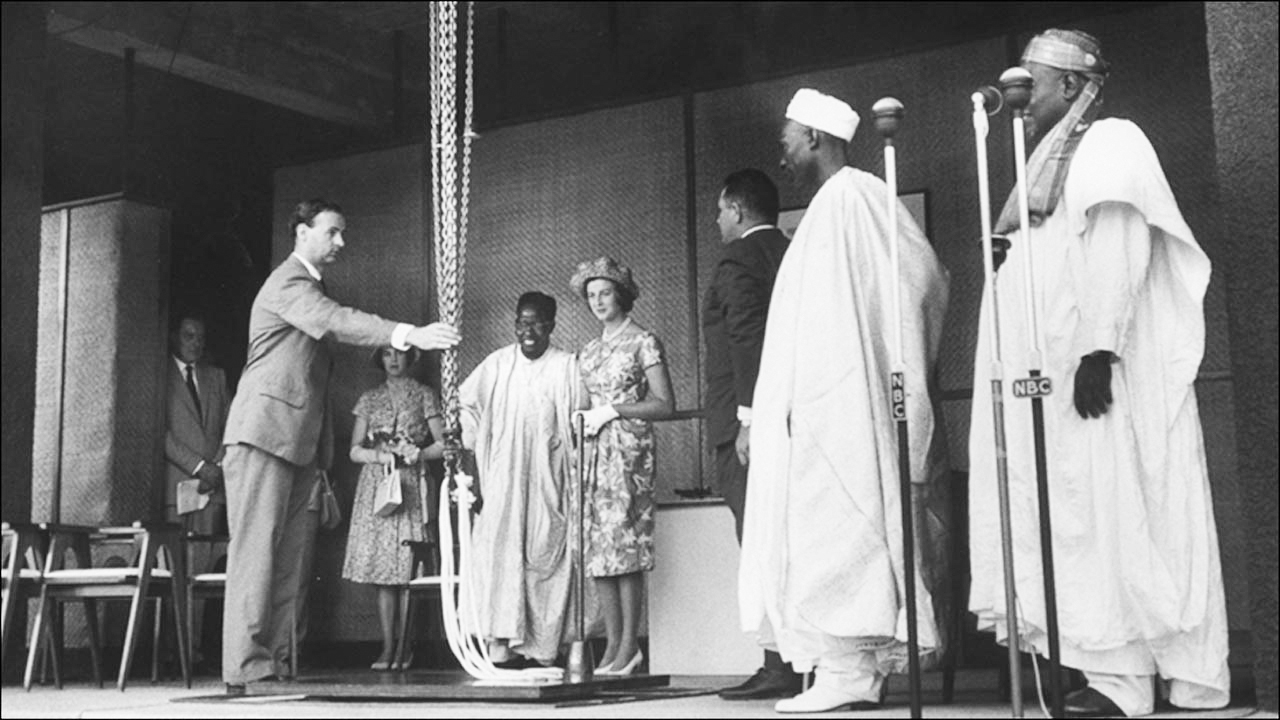
On October 1, 1960, Nigeria declared its independence from Britain, ushering in an era of hope for a newly sovereign nation. Sir Abubakar Tafawa Balewa assumed the role of Prime Minister, leading a federal parliamentary government modelled on Westminster. Yet, beneath the celebratory facade, deep structural fissures already ran through the nascent state, setting the stage for the Nigeria First Republic crises.
The period between 1960 and the military takeover in January 1966 wasn’t a sudden collapse. It was a slow, cumulative erosion of political trust and institutional legitimacy. This six-year span was defined by a series of profound Nigeria’s past crises that relentlessly undermined the civilian government.
Understanding the Nigeria First Republic Crises
Independence in October 1960 brought with it a federal parliamentary constitution, heavily influenced by the British system. Prime Minister Abubakar Tafawa Balewa stood as the head of government, steering the newly formed nation. Sir James Robertson, the last colonial Governor-General, briefly stayed on, a ghost of the past.
On November 16, 1960, Dr. Nnamdi Azikiwe stepped into the role of Governor-General, serving as Queen Elizabeth II’s representative. This structure changed on October 1, 1963, when Nigeria transitioned to a Federal Republic. Azikiwe became President, largely a ceremonial role, while Balewa retained his executive power as Prime Minister.
The party system mirrored the country’s federal architecture, with regional power bases shaping the political landscape. The Northern People’s Congress (NPC) dominated the Northern Region, while the Action Group (AG) held sway in the Western Region. The National Council of Nigerian Citizens (NCNC) commanded strength in the Eastern Region.
These organisations weren’t simply ethnic blocs; they developed political programs and competed beyond their strongholds. They formed alliances, but their influence remained deeply entrenched in powerful regional political machines. The December 1959 federal election saw no single party secure a majority, leading the NPC to form a coalition government with the NCNC, leaving the Action Group as the federal opposition.
This coalition demonstrated a capacity for national cooperation. But it also established a political system where control of regional institutions and access to federal power carried immense consequences. This setup primed the nation for the conflicts that would soon follow, making the stakes of regional dominance impossibly high.
Western Region Boils: Action Group Crisis and Emergency
The first major tremor shook the Western Region in 1962, erupting from a leadership struggle within the Action Group. Chief Obafemi Awolowo, the party leader, found himself at odds with his deputy, Chief Samuel Ladoke Akintola, who also served as Premier of the Western Region. This wasn’t just a personality clash.
It was a fundamental disagreement over political strategy. Awolowo’s faction pushed for continued opposition to the NPC-led federal government. Akintola, conversely, increasingly advocated for accommodation with the powerful federal forces. Awolowo, viewing Akintola as “over ambitious and greed individual,” sought his removal.
The dispute spilled over into outright chaos, culminating in a violent “brawl” within the Western House of Assembly in May 1962. In response, the Federal Government invoked constitutional emergency powers, imposing emergency rule on the region. This swift intervention removed the Action Group from regional power, further escalating tensions.
The legal battles were significant, but the political damage ran deeper. Many Action Group supporters viewed the federal intervention as partisan. Awolowo’s position deteriorated further when he and other AG figures faced charges of treasonable felony in November 1962. By September 1963, Awolowo was convicted and sentenced to ten years in prison, effectively silencing the most prominent federal opposition leader.
Akintola, Awolowo’s former deputy, formed the Nigerian National Democratic Party (NNDP), which subsequently assumed control of the Western Region government. The intra-party conflict not only divided the Yoruba nation but also created an instability that profoundly contributed to the eventual collapse of Nigeria’s First Republic.
Counting the Nation: The Divisive Census Crisis
Few disputes laid bare the fragility of Nigeria’s federation more starkly than the census crisis of 1962-1963. Population figures were far from mere statistics; they were critical determinants for wealth distribution, government employment, and military recruitment. They also dictated revenue allocation to the regions and the crucial allocation of seats in the House of Representatives.
Nigeria conducted its first post-independence population census in 1962. The preliminary figures were politically explosive, as they appeared to remove the North’s long-held demographic majority.
Southern politicians generally welcomed these figures. Northern leaders, however, rejected them outright, sparking accusations of deliberate inflation and flawed enumeration across the federation. Prime Minister Balewa ultimately announced the cancellation of the entire exercise, a move that only deepened suspicion and mistrust.
A second census followed in 1963, restoring a substantial Northern demographic advantage. This time, authorities in the Eastern and Mid-Western regions challenged the results, even taking the dispute to the Supreme Court. The controversy wasn’t merely about demographic data; it became a proxy war for governmental power.
Nigeria’s major regional establishments simply no longer trusted each other to accurately count the nation’s population. Because these figures directly influenced political representation, the census had transformed into another battleground for control. The very act of counting became an act of political contestation.
Electoral Fractures: The 1964 Federal Elections and ‘Operation Wetie’
The escalating tensions reached a boiling point in the federal election scheduled for December 30, 1964. Old political alliances had morphed into two formidable electoral blocs. The Nigerian National Alliance (NNA), centered on the NPC, included Akintola’s NNDP as a key partner. Opposing them was the United Progressive Grand Alliance (UPGA), a coalition of the NCNC, Action Group, and other organizations.
The campaign spiralled into intense bitterness. UPGA leaders levelled accusations against authorities, claiming obstruction of opposition candidates, manipulation of nominations, and the fraudulent return of government-allied candidates without genuine opposition. Complaints became so severe that President Azikiwe advocated for a postponement of the polls, fearing a breakdown of legitimacy.
Prime Minister Balewa insisted the election proceed. In response, UPGA called for a boycott. Its effectiveness varied dramatically: the boycott largely succeeded in much of the Eastern Region, while participation was more mixed elsewhere. The outcome was a constitutional confrontation, as Azikiwe initially resisted inviting Balewa to form a new government based on the disputed results.
After political negotiations, a compromise emerged, allowing Balewa to continue as Prime Minister. Supplementary polling took place in March 1965 in constituencies where the December election had been effectively non-existent. While the immediate constitutional crisis passed, the crisis of confidence endured. Many Nigerians began to question whether elections could still genuinely determine who governed. Nigerian campaigns were losing their democratic sheen.
If the federal election chipped away at faith in electoral institutions, the Western Region election on October 11, 1965, dealt a devastating blow. Akintola’s NNDP sought to retain control against an opposition that believed it had stronger popular support. The contest was marred by rampant allegations of intimidation, nomination interference, ballot manipulation, multiple voting, and falsification of results.
The NNDP was declared the official victor, but opposition leaders swiftly rejected the outcome, announcing rival claims of an opposition victory. The dispute ignited widespread violence across parts of Western Nigeria. Political opponents were attacked, houses and businesses burned, and a cycle of killings and retaliatory violence gripped local communities, with party competition morphing into physical confrontation.
This broader violence became infamously associated with “Operation Wetie,” a term referring to the brutal practice of dousing political opponents or their property with petrol and setting them alight. The turmoil extended far beyond isolated incidents, showcasing how severely confidence in constitutional political competition had deteriorated.
Elections, meant to avert violence by enabling peaceful power transfers, now seemed to fuel the very chaos they were designed to prevent.
The Final Rupture: The January 1966 Coup
By January 1966, Nigeria still possessed the outward trappings of a functioning democracy: a constitution, parliament, courts, political parties, and civilian governments. But the essential ingredient – trust among its major political forces – had dangerously eroded. The system, though structurally intact, was hollowed out by suspicion and partisan animosity.
Then, on January 15, 1966, Majors Chukwuma ‘Kaduna’ Nzeogwu, Emmanuel Ifeajuna, and Adewale Adem led a coordinated coup in several parts of the country. The coup resulted in the deaths of prominent political and military figures.
The coup plotters did not succeed in establishing their intended national government. Instead, Major-General Johnson Aguiyi-Ironsi, the General Officer Commanding the Nigerian Army and the country’s most senior officer, emerged as the dominant military authority. This happened after loyal forces managed to resist or contain the mutiny, but the civilian government’s authority had already crumbled.
President Azikiwe was abroad during the coup. On January 16, 1966, amid the collapse of civilian control and the overwhelming power of the armed forces following the coup attempt, the administration of the country was transferred to the military. Major-General Johnson Aguiyi-Ironsi then announced that the military had accepted authority. Northern Nigerians and others watched as the democratic experiment ended.
Regardless of the precise circumstances surrounding this transfer, the constitutional outcome was undeniable: Nigeria’s parliamentary government had ended. Ironsi became head of the Federal Military Government on January 16, 1966, sealing the fate of the First Republic and ushering in an entirely new, uncertain chapter for the nation.
A Legacy of Eroded Trust
Nigeria’s First Republic did not crumble because democracy was inherently impossible within its borders. Its destruction cannot credibly be attributed to a single ethnic group, one political party, or a solitary regional leader. It was, rather, a cumulative failure, a slow-motion unraveling born from repeated crises that systematically eroded trust and institutional credibility.
Regional political machines, fearful of domination, transformed party splits into constitutional emergencies. Population figures, meant for planning, became weapons in a fierce struggle for representation. Opposition parties lost all faith in the administration of elections. Federal and regional institutions were increasingly viewed through intensely partisan lenses.
The Western Region’s descent into sustained political violence served as a brutal, final warning. By late 1965, the constitutional system was critically weakened because too many political actors began to doubt that losing power would remain a temporary state, not a permanent one. The unspoken agreement underpinning democratic competition had fractured.
Civilian politicians undeniably contributed to this crisis. They aggressively used institutions, tolerated abuses, and challenged each other’s legitimacy, allowing political competition to become an existential battle. But they did not formally abolish civilian government. The decisive choice to intervene on January 15, 1966, came from army officers.
Military authority then replaced the constitutional order the very next day. The soldiers, therefore, did not create all the problems that destroyed confidence in Nigeria’s First Republic. Neither were they compelled by some historical inevitability to seize power. Political failure made Nigerian democracy vulnerable, but military intervention ultimately ended it, leaving a profound legacy of questions about democratic stability.
