




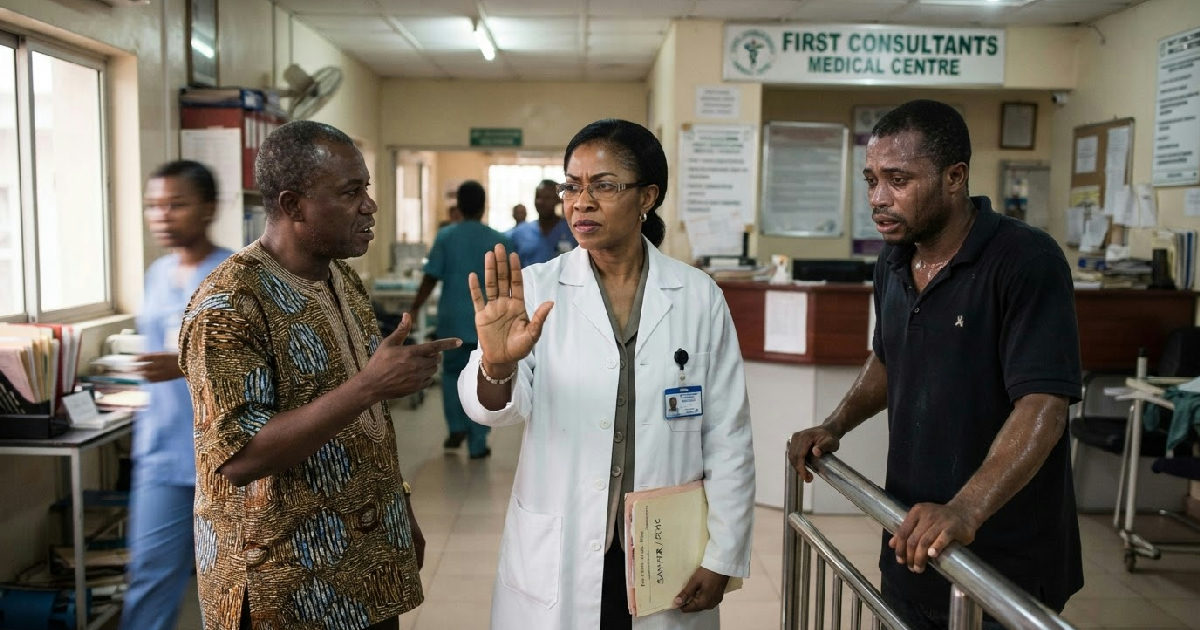
Dr. Stella Adadevoh’s refusal to discharge an Ebola patient in 2014 was pivotal in Nigeria’s successful containment of the virus. Stella Adadevoh refused to let a patient with Ebola leave the hospital in 2014, a decision that initiated Nigeria’s successful containment of the virus.
Sawyer, a Liberian diplomat, arrived in Lagos that July, collapsing at the airport with alarming symptoms. Adadevoh, recognizing the signs of the deadly virus then raging in West Africa, immediately suspected Ebola. His illness represented an immediate, grave threat to millions in the densely populated city.
Stella Adadevoh Ebola and the pressure to release Sawyer
From his admission at First Consultants Medical Centre, Sawyer and Liberian officials demanded his release. They reportedly exerted significant pressure on Dr. Adadevoh and her team to allow him to travel, undermining critical public health protocols. This external interference threatened to compromise Nigeria’s initial response to the deadly pathogen.
Adadevoh stood firm, reportedly declaring, “For the greater public good, I am not letting go of him.” She understood the profound danger Sawyer posed, choosing professional ethics over diplomatic pressure or personal risk.
Her resolute stance was a solitary bulwark against an invisible enemy, a testament to her commitment even as she risked her own life. Students at the University of Lagos often study such pivotal moments in national history.
Her family background, which included being the great-granddaughter of nationalist Herbert Macaulay, arguably instilled a deep sense of civic duty. This lineage underscored her resolve when faced with diplomatic coercion. She prioritized public safety above all else, a decision that would resonate across the nation.
Isolation and crucial diagnosis
She moved quickly to isolate Sawyer, using her own funds to procure scarce protective gear for her staff. Adadevoh also alerted health authorities, sending samples to the Lagos University Teaching Hospital. The tests confirmed Ebola on July 23, 2014, validating her crucial early diagnosis.
Sawyer died two days later, but Adadevoh’s actions bought Nigeria invaluable time. Her early intervention allowed the government to activate emergency response systems, commence contact tracing, and prepare for potential spread. This decisive initial step limited the virus’s reach, fundamentally altering the course of the crisis. Similar resolute leadership was needed during periods of economic reforms.
Her swift diagnosis was a critical turning point. Without her early suspicion and rapid testing, Sawyer might have been discharged. This would have unleashed the virus into Lagos, a city of over 20 million people, with devastating consequences. Her medical acumen was as vital as her courage.
Nigeria’s precarious position in 2014
In 2014, the West African Ebola epidemic was already the largest in history, claiming thousands of lives in Guinea, Liberia, and Sierra Leone. Nigeria, with its bustling ports and dense population centers, was exceptionally vulnerable. The arrival of an infected diplomat posed an existential threat to regional stability.
Public health infrastructure across the region was strained, and fear was rampant. A widespread outbreak in Nigeria could have pushed the entire continent into a deeper crisis. Adadevoh’s actions prevented this nightmare scenario, demonstrating preparedness could avert catastrophe. The dual battle against Nigeria’s logistics crisis often faces similar high stakes.
Many worried about Nigeria’s capacity to handle such a severe public health emergency. Its healthcare system, though robust in some areas, faced perennial challenges like funding shortages and equipment deficits. Her intervention proved that individual dedication could bridge systemic gaps, at least temporarily.
A nation’s swift containment
Ultimately, Nigeria recorded just 11 Ebola cases, with 7 survivors, a remarkable achievement compared to other affected nations. The World Health Organization declared Nigeria Ebola-free within 89 days, praising the nation’s rapid and effective response. This success was a direct consequence of Adadevoh’s early action, which prevented widespread community transmission.
Her heroism, however, came at a tragic cost. Dr. Adadevoh contracted the virus during her care for Sawyer and died on August 19, 2014, along with three of her colleagues. Her personal sacrifice underpinned Nigeria’s wider triumph over the deadly disease.
Nigeria’s subsequent response, including rigorous contact tracing and public awareness campaigns, built upon the foundation Adadevoh laid. The government quickly implemented emergency measures, containing the virus to a specific cluster. This swift, coordinated effort prevented exponential spread within the country.
The human cost and enduring legacy
Dr. Adadevoh was not the only one to pay the ultimate price. Nurses Justina Ejelonu and Obi Justina Ejelonu also succumbed to the virus. Their deaths, alongside Dr. Adadevoh’s, highlighted the grave risks frontline healthcare workers faced daily. These personal tragedies underscored the severity of the crisis averted.
Their sacrifices were not in vain; they served as a stark reminder of the dedication required to protect public health. The total death toll of four in Nigeria stood in stark contrast to the thousands who died in neighbouring countries. This was a direct result of their bravery and adherence to medical ethics.
Global recognition and lasting impact
The World Health Organization hailed Nigeria’s containment as a “spectacular success story,” a testament to the rapid response enabled by Adadevoh’s actions. Experts estimated her intervention saved over 18,500 lives. Her bravery echoed globally, earning her posthumous accolades and widespread admiration.
Her actions spurred greater investment and preparedness within Nigeria’s public health sector. The Dr. Ameyo Stella Adadevoh (DRASA) Health Trust was established in her honour, promoting public health education and emergency preparedness. Her legacy ensured Nigeria learned critical lessons from the near-catastrophe.
Adadevoh’s story reveals a profound truth about Nigeria: systemic resilience often hinges on individual courage and ethical fortitude. Her actions underscored the vital role frontline healthcare workers play in national security, demanding recognition beyond institutional narratives. This kind of individual integrity is often the unseen force behind national triumphs.
Her unwavering commitment to public health, even at personal peril, remains a powerful testament. It demonstrated that a single individual, armed with integrity and knowledge, could redirect the course of a potentially devastating national crisis, offering a stark contrast to how Nigeria’s energy crisis persisted for so long. She remains a powerful symbol of medical integrity and national service.
