




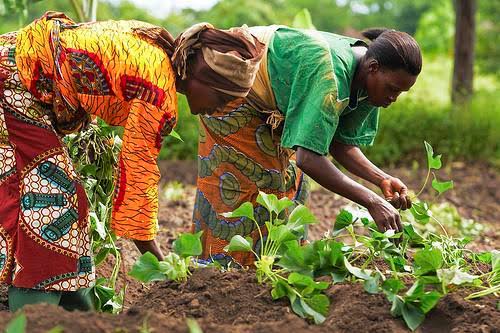
In the rural communities of Kaduna State, a quiet but profound economic shift is underway, driven by women turning small plots of land into powerful engines for household stability.
This trend of women’s vegetable farming in Kaduna, which began for many as a simple means of survival, is now blossoming into a source of income, independence, and entrepreneurial ambition, reshaping local economies from the ground up.
A growing crop of Kaduna women entrepreneurs
For women like Asabe Daniel, a resident of Wusasa village, farming became a lifeline after she lost her local government job. She started cultivating tomatoes and soya beans on a small plot, learning as she went. Her story reflects a broader movement where thousands of women are leveraging agriculture to gain financial footing, feed their families, and build a future.
The fields and backyards of Kaduna are telling a new story, one of female resilience and enterprise. What often starts with a handful of seeds is growing into a significant economic force. The experiences of these women, though individual, paint a collective picture of determination and burgeoning success across local government areas like Zaria, Sabon Gari, and beyond.
Maria Kabiru, a mother of three from Bomo village, initially hesitated due to a lack of money and land. Her fortunes changed when the East-West Seed Foundation’s THRIVE project provided her with cabbage and onion seeds and crucial training.
Despite neighbours who believed farming was a man’s job, her harvest was so successful that she now leads a group, teaching other women the techniques she learned.
Similarly, Fatima Mohammed turned to onion farming after failing to find a job following her national youth service. With capital from her brother, she has been farming for five years, finding it particularly profitable during the dry season when prices are higher. For her, farming isn’t just a passion; it has become a career that supports both her and her mother.
These stories highlight a common thread: agriculture as a viable path to economic empowerment where other avenues are closed. It’s a testament to how Nigeria economic reforms and grassroots initiatives can intersect to create tangible change, moving individuals from unemployment to becoming producers and employers.
The dual benefit of food and finance
The impact of this agricultural movement is twofold, directly addressing two of the most pressing needs for rural families: food security and income. For many, the vegetables they grow first appear on their own dinner tables before any are sold at market. This has had a direct effect on household nutrition and health.
Hannatu Adamu, who has grown carrots for five years, saw this benefit firsthand. She recalls when her youngest child suffered from malnutrition and she was advised to use carrots to create a nutrient-rich smoothie. Her farm not only provided the cure but also a source of income, giving her a greater degree of financial independence.
This combination of improved nutrition and new income streams is creating more resilient households. The money earned from selling surplus okra, tomatoes, or onions is often reinvested into the family, paying for school fees, healthcare, and other essential needs, thereby breaking cycles of poverty.
Overcoming deep-rooted systemic barriers
Despite these successes, the path for women farmers in Kaduna is far from easy. They face significant systemic obstacles that limit their ability to scale up their operations. The most formidable of these is access to land, a resource overwhelmingly controlled by men.
According to Kaduna State’s own Women’s Economic Empowerment Policy, a stark 92.7% of women in the state do not own land, with only 4.7% holding independent ownership. This forces many, like Asabe Daniel, to pay for the use of small, temporary plots, creating insecurity and capping their potential for expansion.
Beyond land, access to capital remains a major hurdle. Many women dream of growing their businesses—like Ms. Daniel, who wants to process her tomatoes into paste—but lack the funds for seeds, fertilizer, and equipment. High input costs, limited access to credit, and water scarcity during the dry season are persistent challenges that threaten to stifle their hard-won progress.
How institutional support is fueling growth
Recognizing the immense potential of these women, government bodies and non-governmental organizations have begun to step in with crucial support. These interventions are providing the resources and training needed to help female farmers move from subsistence to sustainable enterprise.
The administration of Governor Uba Sani launched a significant free fertilizer distribution program targeting 150,000 smallholder farmers, with a specific focus on women. The initiative, which started with 500 truckloads of fertilizer, aims to reduce production costs at a time when inputs are becoming unaffordable for many.
Development organizations are also playing a critical role. The Bayer Foundation-funded Women Economic Empowerment (WEE) Project, for instance, aims to increase the income of 35,000 women farmers by 30% by the end of 2026.
Partners like AFEX have trained over 16,500 women in good agricultural practices, while CoAmana has provided market access and insurance to more than 1,250 women. This addresses a key part of the value chain, helping farmers navigate the dual battle against Nigeria’s logistics crisis and get their produce to market effectively.
Training and technology make the difference
Knowledge is as vital as capital in modern farming. The National Agricultural Extension and Research Liaison Services (NAERLS) at Ahmadu Bello University has been working with women’s groups for 15 years, providing training in everything from crop selection to pest control and climate-smart agriculture. Zaria Local Government alone now has over 30 such groups, each with 25 to 50 members.
The THRIVE project, implemented by the East-West Seed Knowledge Transfer Foundation, has trained over 10,000 women in improved farming practices since early 2025. Nearly 320 of these women have already started their own businesses producing neem oil for organic pest control or selling vegetable seedlings, creating new revenue streams.
The measurable impact on Kaduna’s economy
The data emerging from these projects confirms their transformative power. A survey conducted after the first year of the WEE project found that 84.3% of 1,000 beneficiaries reported an increase in income. This translated to an average of 10,000 naira in extra monthly income in areas where the household average is just 50,000 naira.
This movement extends beyond just farming. The Jennifer Etuh Foundation, a WEE project partner, has trained 810 women in trades like tailoring and hairdressing. Meanwhile, Advantage Health Africa has equipped over 1,000 women as Community Health Entrepreneurs, who have since reached more than 250,000 households with essential health products and services.
Agriculture contributes approximately 38% to Kaduna’s GDP, and empowering women is now seen as essential to the state’s economic development. As Agriculture Commissioner Murtala Dabo stated, “Women’s participation in agriculture is not merely about equity—it’s essential to our economic development.”
The road from survival to sustainable business
The journey for Kaduna’s women farmers is one of evolution—from backyard gardens for family meals to organized, profitable agricultural enterprises. Their ambition is clear: they don’t just want to farm; they want to build businesses, process their produce, and create lasting wealth.
The growth of the Women in Mechanised Agriculture Association, from just six members in 2019 to nearly 2,900 today, shows a clear demand for technology and scale. These women now offer mechanized services like ploughing, harvesting, and irrigation, fundamentally changing how farming is done.
However, this growth requires reliable infrastructure, something often complicated by issues like Nigeria’s energy crisis persisted challenges, which affects everything from water pumps to processing plants.
While individual determination has carried these women far, their future success hinges on continued and expanded support. Closing the gap in agricultural extension services, ensuring access to land and finance, and investing in rural infrastructure are the next critical steps.
The women of Kaduna have shown what’s possible with a small piece of land; the challenge now is to provide the foundation upon which they can build enduring enterprises.
