



As campaign activities for Nigeria’s 2027 general elections get underway, politicians and clerics have quickly resorted to familiar rhetoric and strategies to mobilise support for their candidates. This trend is already evident in the early stages of the 2027 Nigerian Campaigns.
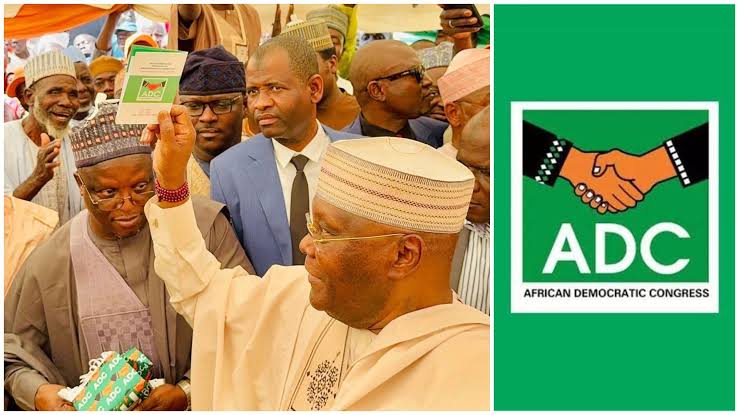
Atiku Abubakar, the presidential candidate for the African Democratic Congress (ADC), ignited a fresh round of debate, drawing immediate responses from both political rivals and prominent religious figures.
His remarks, alongside escalating rhetoric from clerics Sani Jingir and Ezekiel Dachamo, underscore a persistent dynamic in Nigerian politics: the early deployment of identity-based appeals.
Atiku Abubakar Revives Religious Ticket Debate in 2027 Nigerian Campaigns
This initial volley of political maneuvering arrives as many Nigerians express weariness with what they perceive as recycled tactics designed to sway voters through emotional pleas and financial inducements. The unofficial start of the 2027 Nigerian campaigns reveals a tension between politicians’ reliance on traditional methods and a public increasingly demanding substantive policy discussions.
Atiku Abubakar thrust the sensitive issue of the Muslim-Muslim ticket back into national conversation during a recent interview with JKD Media. He openly challenged the personal records of President Bola Tinubu and questioned the religious makeup of the current presidential ticket.
Abubakar recounted his refusal to endorse a Muslim-Muslim ticket in 2007, when he reportedly declined to nominate Mr. Tinubu as his running mate under the Action Congress of Nigeria (ACN).
Abubakar maintained this stance in 2015, detailing his opposition when former President Muhammadu Buhari was reportedly considering Mr. Tinubu for the vice-presidency. “I don’t believe in a Muslim-Muslim ticket because it does not bode well for the country,” he told interviewer Yusuf Mamman. But history reveals a more intricate narrative.
In 1993, Abubakar himself had sought to become M.K.O. Abiola’s running mate. That pairing would have resulted in a same-faith ticket if Abiola hadn’t ultimately chosen Babagana Kingibe, a fellow Muslim, instead. This historical detail highlights the long-standing political calculations that often supersede stated principles in Nigeria’s electoral contests.
Clerical Voices Amplify Divisive Rhetoric
The political maneuvering quickly found echoes within religious circles, with two prominent clerics taking central roles in framing the 2027 elections as a demographic contest. Jos-based Islamic cleric Sani Jingir and Christian preacher Ezekiel Dachamo faced immediate backlash for their public statements, which many critics deemed inflammatory and dangerously divisive.
Sani Jingir, a strident promoter of the APC Muslim-Muslim ticket in the 2023 presidential election, recently reiterated his stance at a mass wedding organised by the Kano State Government for 1,500 couples.
Speaking in Hausa, the Islamic cleric declared: “I am one of those who raise the flag of Islam; I am calling on people to come and let us do Muslim-Muslim again.” He acknowledged that his statement would pain non-Muslims, but asserted his right to advocate for his faith.
Jingir urged Muslims to register and vote in large numbers, arguing that the election outcome would demonstrate their demographic dominance in the country. He openly challenged claims of non-Muslim numerical superiority, referencing the 2023 election results. This stance mirrors a historical pattern of societal tensions exploited for political gain.
Mr. Jingir is a factional leader of Jama’atu Izalatil Bid’ah Wa Iqamatis Sunnah (Izala), a reformist Salafi movement founded in Jos in the 1970s. However, his deputy, Yusuf Sambo, reportedly backs Atiku, arguing for a leader who will treat all faiths with fairness. This internal divergence within the Izala movement showcases the complex interplay of religious and political loyalties.
On the other side of the divide, Ezekiel Dachamo, a Christian preacher, described killings by bandits in Plateau State as a direct consequence of Nigerians electing Muslims as president and vice president. In a widely circulated video, Mr. Dachamo urged Christians to be careful about the Muslim-Muslim ticket for the 2027 election.
He called for Christians to demonstrate their majority status at the federal level, citing the Nigerian census. This type of religious framing, according to Professor Ibrahim Siraj of Bayero University, Kano, is “dangerously divisive,” especially in a historically volatile region like Plateau State.
Corruption Allegations and Political Inducements
Beyond religious appeals, the 2027 Nigerian campaigns also see the resurgence of another familiar tactic: leveraging corruption allegations and financial inducements. A Kaduna-based Islamic cleric, Musa Yusuf, popularly known as Asadussunnah, commended the APC for appointing former Zamfara State Governor Abdulaziz Yari as its presidential campaign’s director-general. Mr.
Yusuf praised Yari for his philanthropic efforts, citing a recent donation of ₦1 million in Zakat to about 250 clerics.
This endorsement, and an earlier one by cleric Jalo Jalingo on Facebook comparing Yari to one of Prophet Muhammad’s companions, sparked immediate social media backlash. Critics accused these clerics of compromising their moral authority by praising a public official who faces serious corruption charges. The incident highlights the persistent issue of how money and influence can distort religious leadership.
Mr. Yari, who currently represents Zamfara East in the Senate, served as governor of Zamfara State from 2011 to 2019. His past is marred by significant legal challenges. In 2021, the Federal High Court in Abuja ordered the final forfeiture of substantial funds held by Mr.
Yari in Zenith Bank and Polaris Bank, citing his inability to explain their acquisition. The anti-graft agency, ICPC, also secured an interim forfeiture order in February 2022 against 10 high-value properties traced to Yari and his associates across Abuja, Kaduna, Zamfara, and Maryland, USA.
Furthermore, Mr. Yari was repeatedly detained by the Economic and Financial Crimes Commission (EFCC). In May 2022, he was arrested over his alleged role in an N84 billion fraud involving Ahmed Idris, the former Accountant-General of the Federation. Investigators alleged that Yari received roughly N22 billion from the diverted funds through linked proxy companies.
Anti-corruption activists have noted that multiple figures appointed to key campaign roles in the 2027 Nigerian campaigns similarly face active or dormant investigations.
A Recurring Pattern of Political Expediency
The strategies deployed in these early stages of the 2027 Nigerian campaigns are far from new. Professor Ibrahim Siraj highlighted how the rhetoric from clerics like Jingir and Dachamo dangerously reduces complex political contests to mere demographic battles between religions. This approach, he argued, distracts from systemic issues and shields underperforming officials from public scrutiny. Such diversions can hinder efforts to improve local living conditions.
Historically, Nigerian politics has often hinged on balancing religious and ethnic considerations, sometimes at the expense of merit. In the 1979 presidential election, Nnamdi Azikiwe, the NPP candidate, chose fellow Christian Ishaya Audu as his running mate. Similarly, Obafemi Awolowo of the UPN selected Philip Umeadi, a Christian from Anambra State.
Military regimes also saw same-faith pairings, with Joseph Wey serving as Chief of Staff under Yakubu Gowon, both Christians, and Muhammadu Buhari having fellow Muslim Tunde Idiagbon as his deputy from 1983 to 1985.
These historical precedents suggest that the current tactics are part of a long-standing playbook. “What these leaders must recognise is that both Muslims and Christians are victims of the violence in Jos; neither side holds a monopoly on suffering,” Professor Siraj stated. He urged religious and civic leaders to unify communities around shared democratic values rather than exploiting grievances for short-term political leverage.
Citizens Push Back, Demand Accountability
Amidst the familiar political machinations, there is a palpable sense among many Nigerians that these “old tricks” are losing their potency. The public backlash against clerics like Jingir and Dachamo, and against those endorsing individuals like Abdulaziz Yari, signals a growing demand for accountability and policy-driven leadership.
Ustaz Bn-Al Qasim, a Kaduna-based cleric, articulated this sentiment sharply, blaming corrupt politicians for the nation’s economic hardship and insecurity. His words resonated with many.
“I felt ashamed after seeing one of our colleagues praise a senator simply because he donated money to some of us,” Bn-Al Qasim said. He argued that gifts of millions to individual clerics do not elevate politicians, especially those implicated in corruption.
“Rather than distributing one million naira to individual clerics, politicians should foster a conducive economic environment where every citizen can compete and thrive.” This perspective reflects a desire for systemic change over fleeting handouts.
Bn-Al Qasim’s powerful message encapsulates a broader frustration: “No politician should be commended for distributing funds, as that money belongs to the public.” This pushback suggests a potential shift in voter expectations. Citizens are beginning to challenge the transactional nature of politics, demanding genuine governance rather than appeasement. This evolving consciousness offers a glimpse into how societal values are shaping demands for national leadership.
As the 2027 Nigerian campaigns officially draw closer, the early exchanges suggest a battle not just between candidates, but between entrenched political habits and a populace yearning for something different. Will the familiar tactics of religious division and financial inducements continue to hold sway, or are Nigerians finally ready to demand a new era of substantive governance and accountability?
