




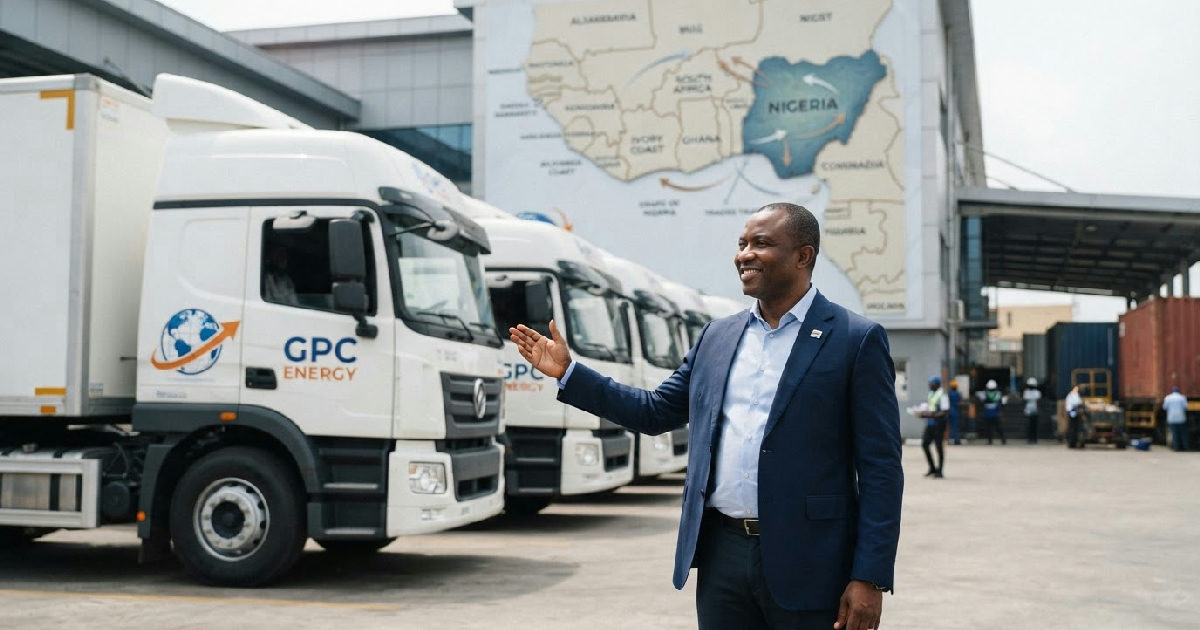
In 2010, from a modest Lagos office, Elvis Okonji laid the foundation for GPC Energy and Logistics Ltd. His vision was clear, if audacious: transform a five-truck operation into a continental logistics powerhouse. This wasn’t just about moving goods; it was about building a durable system for Nigeria’s burgeoning economy.
Now, after more than a decade of navigating Nigeria’s complex commercial terrain, GPC Energy is setting its sights beyond national borders. The firm has announced an ambitious push into the broader West African market, a strategic move fueled by remarkable growth and a clear roadmap for the future.
Laying the Groundwork for GPC Energy West Africa Expansion
Starting with just five trucks, GPC Energy’s early years were an intense struggle for survival. The company saw its capacity drop by 20 percent after its inaugural trip, a stark introduction to the realities of Nigerian logistics.
Access to credit began in 2012, allowing for gradual expansion. The real turning point came in 2014 with their first major contract: a multinational client in the building materials sector. This single client validated years of persistent effort and strategic positioning.
By 2015, the firm had pivoted, expanding its service offerings and venturing into new sectors. This diversification marked a critical phase in its development, moving GPC Energy beyond a niche player towards a more integrated logistics provider. The initial growth trajectory hinted at the success that was to follow.
Today, GPC Energy and Logistics Ltd. commands a modern fleet of over 900 heavy-duty trucks. They serve some of Nigeria’s largest multinational companies across the fast-moving consumer goods (FMCG) and cement industries. This transformation from a handful of vehicles to a dominant force illustrates the power of sustained strategic execution.
The N20 Billion Bond That Powered Expansion
The company’s growth accelerated significantly following a N20 billion bond issuance in 2021. This 10-year bond was a critical financial maneuver, notably oversubscribed by 25 percent by domestic institutional investors. It showcased investor confidence in GPC Energy’s operational model and future potential.
The proceeds from the bond were earmarked for fleet expansion, specifically to acquire at least 220 additional trucks. Despite the global economic slowdown and post-COVID supply chain disruptions, GPC Energy successfully acquired approximately 260 trucks. This investment solidified their capacity and market presence.
CEO Elvis Okonji highlights that this influx of assets, coupled with disciplined growth, allowed GPC to achieve a 55 percent compound annual revenue growth since 2021. This performance came even as Nigeria faced economic headwinds from the 2023 reforms, underscoring the firm’s resilience.
Okonji emphasizes integrity and trust as core values, stressing the importance of following through on commitments made to investors. Such principles are vital for companies operating in West Africa’s historical systems of commerce, where reputation often dictates opportunity.
Navigating Economic Headwinds and Future Funding
The financial landscape has shifted considerably since 2021. Nigeria’s Monetary Policy Rate (MPR) has surged from 11.50 percent to a current benchmark of 26.5 percent. This demands significantly higher yields for institutional investors, complicating future bond issuances.
Despite these changes, GPC Energy remains optimistic about securing additional funding. The company plans a Series 2 bond to raise N30 billion, banking on its industry leadership and the guarantee provided by InfraCredit. This local credit enhancement could offer crucial savings on closing rates.
The prolonged conflict in the Middle East has also impacted operations, primarily by escalating working capital costs. GPC has hedged against these rising energy prices through its pricing model. The company prioritizes efficiency and sustainability, exploring phased energy transitions to mitigate costs.
Beyond the numbers, GPC’s journey also reflects a specific Nigerian ambition: to build enduring enterprises that shape not just local but regional economies. This drive, sometimes overlooked, has seen other influential Lagos figures contribute to reshaping African ventures.
The Challenge of Nigeria’s Cold Chain Logistics
Nigeria faces a critical challenge in cold chain logistics, contributing to a staggering 50 percent loss of agricultural yield. This isn’t merely a shortage of refrigerated transport; it’s fundamentally an energy crisis, according to GPC’s leadership.
Elvis Okonji, the company’s CEO, points out that stable, affordable power is essential for long-term storage. Without it, the economic value of perishable goods erodes quickly. While solar power offers a solution, its high initial capital investment makes it unattractive for many.
GPC Energy aims to address this systemic issue by building a massive frozen warehouse, powered by a significant solar system. This initiative seeks to preserve agricultural products and strengthen agro-value chains. It’s a direct response to a fundamental infrastructural gap.
This approach aligns with GPC’s broader focus on integrated logistics solutions. By controlling nearly all aspects of shipping and import costs, they manage to clear goods rapidly. This efficiency helps them keep operational costs down, even amidst currency adjustments affecting customs duties.
Expanding Across West Africa: A Systemic Leap
With a strong operational base across 15 locations in Nigeria, GPC Energy is now positioning itself for regional expansion. Their ambition is to become the preferred integrated logistics partner across West Africa. This move represents a significant systemic leap for the company.
The strategy hinges on three key pillars: technology-driven fleet management, diversification into new segments of the logistics value chain, and aggressive regional positioning. They envision becoming the number one Third-Party Logistics (3PL) provider in Nigeria by 2027 in scale and customer satisfaction. The company’s ambitious push into West Africa will require navigating diverse regulatory landscapes, and indeed, the broader African continent has often seen crises forging new realities for millions.
Elvis Okonji notes the limitations of current electric vehicle technology for heavy-duty bulk cargo transport. While acknowledging its disruptive potential, GPC plans to pivot to electric vehicle technology only when it becomes economically viable for their specific operations.
Infrastructure reform remains paramount for unlocking growth in the entire energy and logistics sector. Nigeria, with a population more than 3.5 times that of France, possesses only a fraction of its paved road network. This stark comparison highlights a glaring infrastructure deficit.
Okonji stresses that Nigeria desperately needs more and better roads to facilitate the movement of goods. Furthermore, he points to the debilitating effects of multiple taxation across states. These fragmented revenue collection frameworks create immense operational burdens for logistics operators.
A Vision Beyond the Present
GPC Energy once turned down a N10 billion buyout offer in 2019, just before the COVID-19 pandemic. This decision, made to retain equity and scale independently, has been vindicated by their subsequent growth and current ambitious outlook.
Okonji reflects on the long-term vision. He aims to build a business that will outlive him, one that can eventually transition to other investors, much like global giants DHL or UPS. This multi-generational perspective underpins their current strategic moves.
The company’s journey from five trucks to a regional player illustrates the persistent effort required to build critical economic systems in Nigeria. Their expansion into West Africa is not just about GPC’s growth; it reflects a broader evolution in how Nigerian enterprises are reshaping continental supply chains and infrastructure. The questions of sustainable energy and robust infrastructure remain central to this ongoing transformation.
