



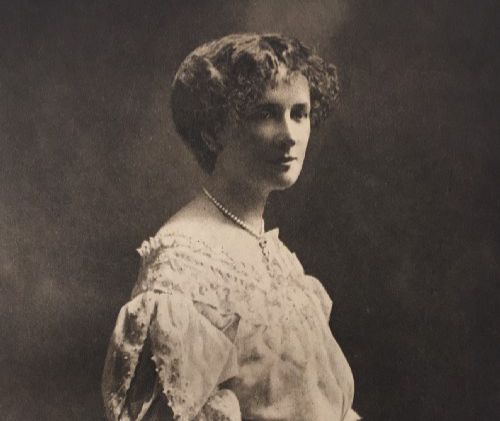
On May 10, 1904, in the grand Whitehall Rooms of London’s Hôtel Métropole, Lady Lugard delivered an address that unveiled West Africa’s deep historical systems.
This address, later published in Volume XXXV of the Proceedings of the Royal Colonial Institute, was more than just an academic exercise. It provided a remarkable window into how one of Britain’s most influential imperial journalists perceived West Africa.
The Imperial Lens of Lady Lugard’s Negroland Address
She articulated an understanding of the region as deeply interconnected with a wider world, shaped by centuries of trade, scholarship, and religious exchange, long before the colonial forces of her husband, Frederick Lugard, were consolidating their grip.
Before her marriage to Sir Frederick Lugard in 1902, Flora Louisa Shaw had already carved out a significant career. She served as colonial editor for The Times from 1893 to 1900, becoming the first woman to hold such a prominent editorial role on a national newspaper. Her reporting frequently tackled British imperial affairs, especially those concerning Africa, framing developments for a broad British audience.
Shaw’s influence extended beyond journalism; she’s often credited with coining the name “Nigeria.” In an article for The Times published in January 1897, she suggested “Nigeria” as a more convenient geographical designation for the “agglomeration of pagan and Mahomedan States” then known as “Royal Niger Company Territories.” This proposal reflected a broader imperial impulse to simplify and define territories for administrative control.
Her marriage to Frederick Lugard, who served as High Commissioner for Northern Nigeria from 1900 to 1906, solidified her position at the heart of Britain’s African imperial project. He was the soldier and administrator, she the journalist and political writer, together forming a formidable couple whose actions and ideas deeply influenced the region.
It was against this backdrop of consolidating British power that she delivered her 1904 address, just months after British forces had captured Kano and occupied Sokoto in 1903, dismantling the political independence of the Sokoto Caliphate’s emirates.
Trans-Saharan Ties: Channels of Ancient Commerce
Lady Lugard’s “West African Negroland” address importantly centered on the profound historical relationship between West Africa and the regions north of the Sahara. She articulated a vision of a vibrant pre-colonial system, highlighting trans-Saharan routes that had for centuries linked North African commercial hubs with the western and central Sudan. These were not mere paths through sand.
These routes were arteries of exchange, carrying salt, textiles, copper, horses, and manufactured goods southward, while gold, ivory, and other commodities flowed north. But the desert highways transported far more than just merchandise.
Religious ideas, scholarly texts, legal traditions, and systems of writing moved alongside the traders, deeply embedding Muslim merchant communities across parts of West Africa well before the arrival of European colonial powers. By 1000 C.E., documentary evidence already showed Muslim merchants thriving in the Bilād al-Sūdān, the Arabic term for territories south of the Sahara.
West African rulers and merchants actively participated in these vast networks, shaping the religious and commercial landscape.
The spread of Islam across West Africa was largely a gradual process, integrating with existing local traditions. Conversion often bolstered alliances with influential Muslim trading communities and neighboring states. Arabic literacy opened doors to extensive legal, religious, and intellectual traditions stretching from North Africa all the way to the Middle East.
This organic evolution meant Islam developed distinctly from one region to another, adapting to local political and economic realities.
Islamic Scholarship and Global Connections
Shaw’s presentation underscored West Africa’s role in a much broader intellectual landscape, drawing parallels with the achievements of Islamic civilization in medieval Europe. She cited cities like Córdoba, Seville, and Toledo, which flourished under Muslim rule as centers of learning, commerce, and cultural fusion.
This period, known as al-Andalus, saw a diverse population of Arabs, North African Amazigh peoples, Iberian Muslims, Christians, and Jews coexisting and contributing to a rich intellectual environment.
The intellectual ferment of medieval Islam was pivotal in the global circulation of knowledge. Scholars working in Arabic advanced fields like mathematics, astronomy, medicine, philosophy, and geography. Later, translation centers across Spain and the Mediterranean made these Arabic works, along with Greek texts preserved and expanded within Islamic scholarly traditions, accessible to Latin-reading Europeans. This movement of ideas transcended geographical and cultural boundaries.
Paper and the Movement of Knowledge
The humble material of paper itself provides a tangible illustration of this cross-cultural exchange. Its origins lay in China, but the technology migrated westward into Islamic lands, where it became indispensable for administration, scholarship, commerce, and book production. Papermaking hubs emerged across West Asia and North Africa, eventually reaching Europe through Mediterranean conduits like Spain and Sicily.
This journey of papermaking technology highlights the transmission of innovation across societies. Similarly, the magnetic compass, first developed for navigation in China, traveled westwards to become vital for Mediterranean and European seafaring. Gunpowder also followed this pattern, originating in China before its technologies spread across Eurasia and were adopted by various military cultures.
These examples demonstrate how innovations could traverse multiple societies before becoming associated with specific regions or cultures.
Hindu-Arabic Numerals and Mathematics
The numerical system we commonly refer to as Arabic numerals tells a similar story of intellectual evolution and diffusion. This decimal place-value system originated in India, but it was mathematicians within the Islamic world who adopted, refined, and disseminated these methods across a vast geographical area.
Muhammad ibn Musa al-Khwarizmi, a key figure in ninth-century Baghdad, was instrumental in spreading Indian calculation methods. His Latinized name even gives us the English word “algorithm.”
The term “algebra” also stems from Arabic, specifically al-jabr, found in the title of one of al-Khwarizmi’s influential mathematical works. European scholars later encountered these sophisticated methods through translations and direct engagement with Islamic intellectual centers. Thus, “Hindu-Arabic numerals” aptly captures the system’s Indian genesis and its crucial development and transmission through Arabic-speaking scholarly traditions, showcasing a profound global scientific exchange.
Africa’s Active Role in World History
Crucially, Lady Lugard’s address painted West Africa not as an isolated entity, but as an active participant within interconnected regional and international systems. The Sahara Desert, though formidable, was never an impenetrable barrier. For centuries, established routes facilitated the movement of merchants, pilgrims, scholars, and political envoys between West Africa and North Africa, demonstrating constant engagement.
Great African political formations like the Ghana Empire developed well before Islam significantly influenced its commercial and ruling classes. The Mali Empire, famed for figures like Mansa Musa whose 1324 pilgrimage to Mecca highlighted its immense wealth, blended indigenous political structures with participation in a wider Islamic commercial and diplomatic sphere. Leaders across the continent similarly engaged with external forces while maintaining local traditions.
The Songhay Empire grew to become one of Africa’s largest, its cities supporting vital traditions of Muslim scholarship. Kanem-Bornu maintained political and commercial ties that stretched across the central Sahara for many centuries. Even the Hausa states, developing unique local political traditions, became increasingly integrated into Muslim commercial and intellectual networks.
These societies were part of a global history of movement and exchange, yet they firmly retained their own distinct political foundations and cultural identities.
The Address and Nigeria’s Colonial Project
Lady Lugard’s 1904 presentation, delivered as Britain actively consolidated its grip on Northern Nigeria, provided a complex framing for the imperial project. Her meticulous detailing of West Africa’s deep historical systems — its ancient trade, scholarship, and Islamic governance — implicitly argued for a British approach that acknowledged, yet ultimately sought to control, these established structures.
Her husband, Sir Frederick Lugard, became renowned for formalizing “indirect rule” in Northern Nigeria.
This system, which integrated local rulers into the colonial administration under British oversight, could be seen as an application of the understanding Shaw articulated: recognizing existing indigenous institutions, including religious and judicial systems, as legitimate frameworks through which colonial power could be exercised. Yet, this recognition was always subservient to British control.
The political dynamics of this colonial era would permanently alter the region.
The “West African Negroland” paper thus serves as a powerful historical document, revealing the intellectual underpinnings of British colonial policy during a critical period. It illustrates the tension between acknowledging the rich, complex history of West Africa and the contemporary imperial agenda of imposing a new administrative order.
This perspective was deeply shaped by her belief in the “positive benefits” of the British Empire, positioning her as an “evangelising imperialist” keen to educate the public on its reach.
Lady Lugard’s 1904 address offers more than just a historical artifact; it’s a window into the making of modern Nigeria itself. It revealed a West Africa deeply connected through intricate systems of trade, scholarship, and religious diffusion that predated European intervention by centuries.
From the flow of paper from China to Europe, to the development of Indian numerical traditions through Arabic scholarship, and the adaptive engagement of African rulers with Islam, her speech highlighted a region perpetually intertwined with global currents.
Yet, this comprehensive historical view was presented at a moment of profound colonial imposition. It raises a lingering question: to what extent did this sophisticated understanding of West Africa’s historical systems genuinely inform or merely rationalize the British project of “indirect rule” and the ultimate reshaping of Nigeria?
The story of “West African Negroland” is a reminder that even as new systems were imposed, ancient ones continued to shape the terrain, creating the complex nation we recognize today.
