




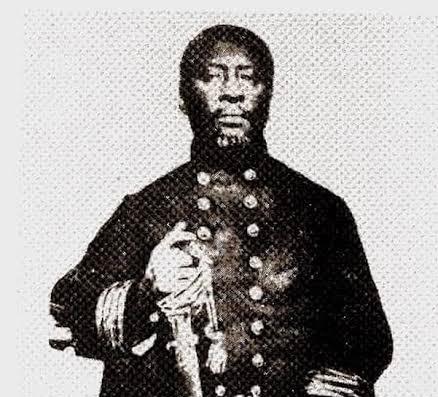
Pepple’s story is far from simple. It’s a narrative woven with internal Bonny politics, British interference that led to his 1854 deposition and seven years of exile, and his eventual return to a diminished throne in 1861. Yet, his final years produced an enduring legacy in the introduction of Christianity to his kingdom.
William Dappa Pepple: early challenges
William Dappa Pepple ascended to the Bonny throne in 1830, but his path to full authority was anything but smooth. The kingdom operated through powerful trading houses, whose leaders wielded significant economic and political influence. Internal power struggles and rivalries between houses, such as the Anna Pepple House and his own Manilla Pepple House, meant the young king initially exercised limited effective control.
British interests quickly intertwined with Bonny’s internal power struggles. British officers often sought to secure legitimate trade, opposing factions linked to continued slave trading. Pepple, in turn, sometimes saw an opportunity to gain an advantage over his domestic rivals through these external forces.
This early involvement proved beneficial for both sides. Pepple solidified his control over the kingdom, while British merchants and naval officers expanded their influence in Bonny affairs. This episode highlights that Pepple wasn’t simply an adversary of Britain; he could strategically align with British power when it served his own political ends.
However, this pragmatic alliance would later sour as British commercial and political demands began to clash directly with his sovereign authority.
Bonny itself was undergoing profound shifts. Once a major hub for slave exports, it was rapidly becoming a crucial center for the palm-oil trade. British merchants craved stable commercial conditions, predictable regulations, and protection for their property.
Bonny’s leaders, including Pepple and his chiefs, were equally determined to safeguard their wealth, political standing, and control over this vital commerce. These conflicting priorities ultimately ignited a significant political crisis.
Deposition and the Weight of Intervention
By the early 1850s, King William Dappa Pepple found himself entangled in bitter disputes. These conflicts weren’t just with his own leading chiefs but also with European traders. British Consul John Beecroft, whose jurisdiction stretched across the Bight of Biafra, became deeply enmeshed in these escalating tensions.
The situation in Bonny represented a complex mix of local factional politics, arguments over trade debts, questions of royal authority, and Britain’s ever-growing commercial interests. It was a crucible where indigenous governance met external ambition, often with explosive results. By January 1854, the breaking point arrived.
Pepple was officially pronounced deposed and removed from Bonny. He was transported to Fernando Po, an island now known as Bioko in Equatorial Guinea.
His opponents within Bonny certainly had genuine grievances, with powerful chiefs long resisting attempts to centralize power in the monarchy. Yet, British intervention fundamentally altered the nature of this struggle.
A dispute over kingship became inextricably linked to the presence of foreign merchants, naval power, and consular authority, setting a precedent for future interventions across the region. The enduring nature of traditional institutions often faced challenges from these external forces.
From Fernando Po, Pepple was later moved to Ascension Island, a remote British outpost in the South Atlantic. British officials had moved beyond commercial diplomacy to direct participation in Bonny’s political affairs, effectively shaping its leadership.
“I No Do Bad Like He”: Exile and Awareness
William Dappa Pepple’s exile offered a unique window into his character and political astuteness. One of the most vivid descriptions of him during this period comes from the Scottish explorer and physician, William Balfour Baikie.
Baikie encountered Pepple at Fernando Po in 1854 during an expedition to the Niger and Benue rivers, publishing his observations in his 1856 work, Narrative of an Exploring Voyage Up the Rivers Kwóra and Bínue.
Baikie portrayed Pepple as remarkably intelligent and politically informed. He noted that the exiled ruler was familiar with Britain’s governmental system, the roles of its Cabinet ministers, and even prominent European figures like the Duke of Wellington and Napoleon Bonaparte. This deep awareness showcased a monarch who understood the intricate workings of the global powers now influencing his kingdom.
During their conversation, Pepple reportedly gestured towards an image of Napoleon, comparing his detention to that of Emperor Napoleon Bonaparte at St. Helena, stating: “I no do bad like he”. This statement became a defining expression of his exile, reflecting his belief in his sovereign status and his refusal to be treated as a mere prisoner.
Pepple’s comparison of his plight to Napoleon’s was not a simple analogy. It underscored his grasp of European politics and asserted his dignity as a sovereign ruler, distinct from a defeated emperor held after war.
He eventually made his way to Britain, reaching London by 1856, and settling in Tottenham with his wife, Queen Elona Alapuotariabo-Ofori, and household members. His son, George, received an English education during this time, further cementing a connection to British culture.
While in exile, Pepple’s relationship with Christianity deepened, though missionary interest in Bonny predated his departure. Disagreements over missionary demands concerning traditional religious institutions had previously prevented the establishment of a permanent station. Pepple’s later missionary initiative was, therefore, a re-ignition and transformation of this earlier, stalled project.
A Weakened Crown: The 1861 Return
His years of exile did not extinguish William Dappa Pepple’s claim to the Bonny throne. His predicament generated considerable attention, becoming the subject of petitions, correspondence, and parliamentary debates in Britain. The British Government eventually sanctioned his return, agreeing to provide financial compensation for his lost annuity. This compensation reflected the new reality of his dependence on British decision-making.
His restoration was set in motion. William Dappa Pepple arrived back in Bonny on October 25, 1861, more than seven years after his forced removal. Efforts were made to manage the bitter factions that still divided the kingdom.
The restored king soon realized that regaining the throne was not synonymous with recovering his former power. Bonny had endured political violence and intense rivalry during his absence. Much of the monarchy’s economic foundation had eroded, royal wealth had been lost, and powerful trading houses had significantly increased their influence.
Furthermore, British consular authority had become even more deeply entrenched in the political fabric of the river state.
Pepple remained king, yet his capacity to dominate Bonny politics had been permanently curtailed. His experience vividly illustrates a core truth of 19th-century Niger Delta politics: kingship demanded more than just royal lineage.
A ruler also needed commercial wealth, loyal followers, control over the influential trading houses, and the ability to negotiate effectively with increasingly powerful foreign entities. Much like Seriki Williams Abass of Badagry, African leaders had to master complex negotiations with European powers.
A Lasting Legacy: Faith and Transformation
The final phase of William Dappa Pepple’s reign, though marked by diminished political sway, produced one of his most enduring legacies: the establishment of Christianity in Bonny. He is credited with playing a significant role in introducing Christianity to his kingdom.
This religious shift marked a departure from previous practices. Earlier missionary interest had encountered disagreements over demands concerning traditional religious institutions, preventing a permanent station from being established. Pepple’s later initiative marked a re-ignition and transformation of this earlier, stalled project.
Missionary activities began to take shape. The initial steps were modest, and Christianity did not immediately sweep through Bonny. By the time of Pepple’s death, the Christian community remained relatively small, its major expansion occurring largely in subsequent years.
Pepple’s historical significance wasn’t that he converted his entire kingdom. Instead, his crucial role lay in the overall introduction of Christianity. This gave the burgeoning Christian movement a presence it might otherwise have struggled to achieve. The seeds planted under Pepple’s influence blossomed into a lasting presence.
The connection between the royal house and this new faith endured beyond William Dappa Pepple’s lifetime. His son, George Oruigbiji Pepple, who had received an English education and was a Christian, continued this relationship.
On April 21, 1867, supported by Oko Jumbo and other chiefs, George Oruigbiji Pepple declared the monitor lizard no longer the sacred deity of the kingdom. The development of new systems of influence and wealth was a constant feature of this era, whether through trade or spiritual endeavor.
Death, Succession, and a Shifting Delta
William Dappa Pepple died in September 1866, having returned to the Bonny throne for approximately five years. He was succeeded by his son, George Oruigbiji Pepple, whose years spent in Britain and English education had prepared him for a different kind of rule.
George inherited a monarchy vastly altered from the one his father knew in the 1830s and 1840s. Powerful chiefs and influential trading houses now controlled much of Bonny’s economic life. British influence, having asserted itself so decisively during his father’s exile, continued its inexorable expansion. The very fabric of Bonny’s sovereignty was undergoing profound change.
The kingdom would soon face even greater upheaval as intense competition between its major houses intensified. This period saw a broader redistribution of commercial and political power throughout the eastern Niger Delta.
William Dappa Pepple’s death, therefore, did not bring an end to an era of conflict. It occurred amidst a broader redistribution of commercial and political power throughout the eastern Niger Delta, a period of profound reordering that would redefine the region for generations to come.
His life embodies the complex interplay of internal dynamics and external pressures that shaped Nigeria’s earliest interactions with colonial powers, showcasing how individual choices, even those made under duress, could ripple through history and fundamentally alter the course of a kingdom.
William Dappa Pepple’s life cannot be reduced to the simple story of an African king who quarrelled with his chiefs, travelled to Britain and later returned home.
His career reveals something larger. He became king in 1830 during a period when British naval support could help strengthen an African ruler. Less than two decades later, British merchants, warships and consular power helped remove that same ruler when his interests collided with theirs.
His deposition in January 1854 illustrates the increasingly interventionist nature of British policy in the Niger Delta long before the territory came under formal colonial rule.
His exile also produced one of the nineteenth century’s most striking African protests against foreign interference. When Baikie recorded Pepple comparing his detention to Napoleon’s, stating, “I no do bad like he,” the exiled monarch was asserting his understanding of his status as a sovereign ruler.
His restoration in 1861 revealed another reality. A crown could be returned without restoring the economic and political foundations that had once made it powerful.
Finally, his significant role in introducing Christianity helped establish this new faith in Bonny at a pivotal moment in the development of the region.
William Dappa Pepple consequently belongs not only to the history of Bonny but to the wider history of nineteenth-century Nigeria: the transformation of Atlantic commerce, the expansion of British consular power, the changing authority of indigenous states and the growth of Christian institutions.
His story is ultimately about sovereignty in an age when the balance of power along the West African coast was being rewritten.
