




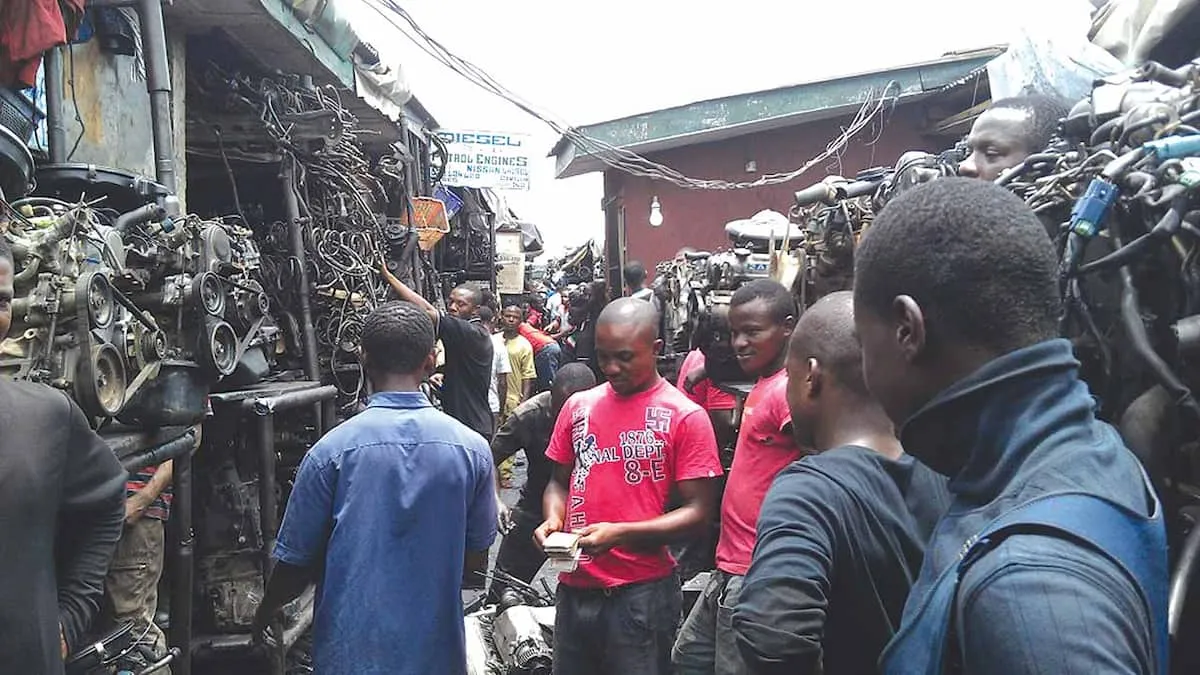
In southeastern Nigeria, an ancient economic model known as the Igbo apprenticeship system has for centuries served as a powerful engine for entrepreneurship and community wealth. This system, often called Igba Boi or Nwa Boy, is now finding a new resonance across the Atlantic, with Black Americans embracing its principles to build generational wealth and foster community-driven economic alternatives.
At its heart, the Igbo apprenticeship system is a meticulously structured, informal framework of vocational training and mentorship. It operates on deep-seated trust and a communal philosophy that prioritises shared prosperity, aiming to lift individuals and entire communities through practical skills and start-up capital. This unique approach to economic development has long been recognized as a powerful indigenous model, proving its enduring adaptability and efficacy.
Understanding the Igbo apprenticeship system’s enduring roots
The Igbo apprenticeship system emerged from the heart of Igboland, a region famed for its industrious and entrepreneurial spirit. While its practices predate modern economic structures, the system gained profound significance after the Nigerian Civil War, which concluded in 1970. The war devastated Igbo communities, leaving many displaced and economically shattered.
With limited government support for rebuilding lives—often a flat £20 compensation regardless of actual losses—the Igbo people turned inwards. The apprenticeship model became a critical survival strategy, allowing communities to pool resources and expertise to reconstruct their livelihoods. It powered the resurgence of Igbo dominance in critical sectors like auto parts, electronics, and general merchandise, becoming a true testament to resilience.
This enduring system is built on the philosophy of “Onye aghala nwanne ya,” a guiding principle that translates to “may one never leave their brother behind.” It embodies a communal obligation to share wealth and opportunity, ensuring that economic gains circulate within the community rather than concentrating in a few hands.
This collective spirit forged a path for thousands of Igbos to rebuild and thrive against immense odds.
The Mechanics of Mentorship and Shared Growth
The Igbo apprenticeship system, whether known as Igba Boi, Imu Ahia, or Imu Oru, functions through a series of well-defined stages, each rooted in trust and practical learning. It creates a robust pipeline of new business owners, making it arguably the world’s largest business incubator.
Sourcing and Incubation: Learning the Trade
The journey begins with an “Oga,” an experienced entrepreneur or master craftsman, identifying a young person, often referred to as a “Nwa Boy” or “apprentice,” typically straight out of secondary school. These apprentices are often selected from the Oga’s home village, with families frequently mediating these vital placements. This initial phase, sometimes called the integration phase, is crucial for establishing the mentor-mentee relationship.
Once selected, the apprentice enters an incubation phase, which can last anywhere from five to eight years. During this period, the Nwa Boy lives and works closely with the Oga, immersing themselves fully in the business.
This isn’t just about technical skills; it’s an intensive, hands-on education covering everything from customer relations and negotiation to stock management and basic bookkeeping. The Oga also instils crucial character traits: discipline, resilience, honesty, and financial acumen.
While apprentices usually receive no wages, their living expenses—accommodation, food, and sometimes a small stipend—are covered by the Oga.
Graduation and Settlement: Building New Enterprises
The culmination of the apprenticeship is the “settlement” phase. Upon successfully completing their agreed-upon term, the Oga provides the Nwa Boy with start-up capital. This settlement might be cash, goods, or even a fully stocked shop, giving the new entrepreneur the essential foundation to establish their own independent business.
This crucial act ensures the continuity of the entrepreneurial cycle, empowering the apprentice to become an Oga themselves in due course.
Beyond the initial capital, many Ogas continue to mentor their former apprentices, connecting them to vital networks of suppliers and customers. This ongoing support strengthens the community’s economic fabric and ensures that newly established businesses have a strong chance of success. This mechanism allows wealth to circulate and multiply, rather than being hoarded, embodying the true spirit of shared prosperity.
A Cultural Blueprint for Economic Resilience
The Igbo apprenticeship system is more than just an economic model; it’s a profound cultural practice that reflects core values of the Igbo people. It offers a counter-narrative to formal educational systems, proving that practical, on-the-job training can be a powerful driver for social mobility and wealth creation, especially for those from disadvantaged backgrounds.
The system’s emphasis on hands-on learning and character development prepares individuals not just for business, but for life.
This method of development fosters robust community ties, creating intricate networks of mutual support and collaboration. It’s a testament to traditional Nigerian community-building, where collective advancement is prioritised over individual accumulation. The system also teaches key aspects of managing household life alongside business, showing how deeply intertwined these spheres are in traditional Nigerian society.
It reveals a specific cultural perspective on what truly constitutes wealth and success.
Indeed, towns like Nnewi in Anambra State have been cited by Forbes Africa for producing more naira billionaires than any other in Nigeria, a phenomenon largely attributed to the pervasive influence of this apprenticeship model. This success illustrates how indigenous systems, rooted in local culture and values, can produce extraordinary economic outcomes.
The Model’s Resurgence in the African Diaspora
The Inquirer.com article highlights a significant trend: Black Americans are now actively reviving this ancient Nigerian apprenticeship model. This adoption signifies a growing recognition of its potential to create wealth and build community-driven alternatives outside its traditional Nigerian context. It presents a tangible pathway for economic empowerment, especially within communities seeking innovative approaches to job creation and generational wealth.
Individuals like William Bowie, mentioned in the Inquirer.com piece, have personally experienced the benefits of such an apprenticeship, seeing it as a viable route to prosperity. Organisations like Philadelphia Works, which offer pathways into building trades for “second-chance applicants,” reflect a similar ethos of inclusivity and practical skill development.
This alignment suggests a natural synergy between the Igbo model’s inclusive principles and contemporary needs in the diaspora.
The appeal of the Igbo apprenticeship system lies in its proven ability to generate capital and create opportunities, often in the absence of traditional formal structures. It’s an example of how enduring cultural practices can transcend geographical boundaries, offering vital tools for economic upliftment in diverse settings. The model’s current revival shows its dynamic potential as a blueprint for self-sufficiency and collective prosperity.
Navigating Challenges and Charting the Future
Despite its many successes, the Igbo apprenticeship system faces its own set of challenges. Historically, it has been predominantly male-dominated, a reflection of prevailing patriarchal views that often confined commerce to men. This has limited opportunities for women within the system, although efforts are underway to address such imbalances.
The informal nature of many agreements can also lead to inconsistencies in training quality and, in some cases, exploitation of apprentices. The absence of formal certifications and standardized teaching methods means the quality of an apprentice’s experience can vary significantly depending on the Oga.
There’s also the risk that some apprentices might not receive the promised settlement, or that the start-up capital proves insufficient in a competitive modern market.
However, there’s a concerted movement to formalize and professionalize the system. Institutions like the Institute of Entrepreneurship and Apprenticeship Management and Administration (IEAMA) are working to integrate global best practices. Their aim is to offer formal certifications for apprentices and provide accredited trainer status for masters, enhancing the system’s credibility and reach.
Such reforms could mitigate existing challenges, offering better protection for apprentices and standardizing outcomes.
The renewed interest, particularly from Black Americans, underscores the enduring relevance of indigenous economic models. It highlights a universal desire for self-determination and sustainable wealth creation through community solidarity.
This ancient system, with its deep cultural roots and flexible structure, continues to evolve, demonstrating a powerful path forward for those seeking economic independence and collective advancement. Its story is a vivid reminder that Nigerian identity holds keys to global challenges, connecting past ingenuity with future prosperity.
