



Nigerian visual artist Jelil Bello explores the relationship between identity and mental wellbeing through his diverse body of work.
Through striking visual narratives, Bello invites viewers to engage with themes of self-perception, resilience, and healing, showing how art can serve as a vital tool for reflection and empathy in everyday Nigerian life.
Jelil Bello art identity and its impact on mental health
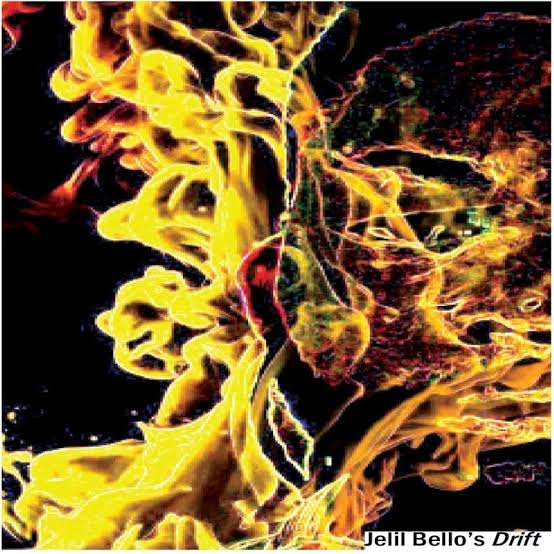
Bello’s digital artwork, ‘Drift’, recently captured the People’s Choice Award at the ‘Art as a Response to Mental Health’ exhibition. Hosted at the Chinwe Russell Art Gallery in Doncaster, UK, until the close of July 2026, this piece stood out among over 301 submissions from artists across 21 countries.
In ‘Drift’, a human face emerges from golden smoke, appearing and receding simultaneously. This evocative imagery speaks to the fluid nature of thought, emotion, and self-perception, reflecting how personal identity is always in motion. It quietly acknowledges the hidden struggles of mental distress, yet also signals the inherent human capacity for positive change.
The artwork uses gentle shifts in tone, predominantly gold, to create layers of light and shadow. This quiet beauty resonated deeply with many, helping Bello secure the coveted People’s Choice Award. But its true power lies in its ability to prompt viewers to consider resilience as a path forward, rather than succumbing to despair.
Visual storytelling: exploring internal landscapes
‘Drift’ is just one example of Jelil Bello’s broader artistic practice, which consistently delves into the emotional and psychological facets of contemporary existence. Working across photography, mixed media, and conceptual art, Bello frequently addresses themes of memory, vulnerability, and resilience.
His approach transforms personal and social experiences into a visual language, encouraging deeper introspection. This isn’t art that dictates answers; it’s art that poses questions, mirroring the complexities Nigerians face daily.
Capturing vulnerability and change
Consider ‘Breath of Becoming’, where clouds of coloured smoke drift, symbolising the ebb and flow of emotions and the continuous process of transformation. The piece avoids presenting healing as a straightforward, complete state. Instead, it embraces uncertainty, suggesting that recovery, however uneven, holds its own distinct beauty.
Another powerful work, ‘Between Roots and Reflection’, blends human figures with tree shapes, crafting a dreamlike scene that delves into belonging, memory, and the journey of self-discovery. These visual layers highlight the intricate ways personal history and internal struggles shape one’s identity.
Similarly, ‘Ghost in the Ink’ employs smoke-like forms that fade into darkness to represent anxiety, persistent emotions, and those memories that prove difficult to articulate. The subtle spiritual symbols woven into the piece communicate feelings that, while hard to explain, are universally understood.
Connecting identity, environment, and heritage
Bello’s art often draws a direct line between psychological wellbeing and the surrounding environment. This connection surfaces clearly in ‘Echoes in Form’, where natural rhythms manifest as visual movement. The organic patterns imply that landscapes themselves can contain emotion, memory, and energy, affecting those who inhabit them.
The work prompts viewers to consider the profound link between environmental care and mental health. Bello suggests that neglecting the natural world inevitably harms the emotional spaces and inner peace of individuals. It’s a potent reminder for a generation witnessing rapid environmental shifts across Nigeria.
Olumo Rock as cultural anchor
Environmental themes gain even more strength in pieces like ‘Bloom’, which features a towering tree-like shape embodying renewal, growth, and endurance. In ‘Where Stone Breathes’, solid rocks appear imbued with life, symbolising that even in the toughest conditions, life and renewal remain possible. Both works collectively champion ecological recovery, offering messages of hope and resilience.
A deep respect for heritage underpins ‘Eyo Olumo’. Here, Olumo Rock in Abeokuta, Ogun State, stands as more than just a geological formation. It becomes a powerful symbol of cultural memory, protection, and ancestral connections for the Egba people.
Bello transforms this significant landmark into an emblem of both place and tradition. The title itself subtly hints at a meeting between this historic natural fortress and the grand Eyo Festival in Lagos. This work serves as a powerful reminder of the need to safeguard cultural landscapes, recognising them as essential sources of shared Nigerian identity.
The universal language of form and feeling
While Jelil Bello often employs abstract imagery, the human figure consistently retains its importance within his artistic vision. He skillfully merges abstract and recognisable shapes, making profound themes like mental wellbeing both accessible and deeply resonant for his audience.
This nuanced approach allows viewers to interpret his works in their own personal ways, without diminishing their powerful emotional impact. It’s a delicate balance that invites engagement rather than simply presenting a fixed message. His art bridges the gap between the complex and the relatable.
This distinctive style is also evident in ‘The Memory of Shape’, where repeating stone formations symbolise endurance, historical continuity, and inherited memory. The piece speaks to communities whose identities are inextricably linked to their landscapes, their architecture, and their natural features. It argues that places carry as much history and memory as the people who inhabit them.
A similar introspective mood pervades ‘Rocky Reflections’, depicting a figure almost hidden within a rugged, rocky setting. This quiet, contemplative scene evokes a sense of solitude and thoughtfulness, touching upon universal themes of displacement, the search for emotional calm, and the enduring human need for shelter, belonging, and comfort.
Art as a catalyst for community dialogue
Jelil Bello, a self-taught photographer with a background in Economics, has built a practice founded on visual storytelling. His art isn’t just about aesthetics; it’s a deliberate tool for igniting conversations around pressing social issues that shape daily Nigerian life.
His explorations extend to mental health, but also confront abuse, youth vulnerability, poverty, caregiving, and community strength. Bello’s work illuminates how these societal factors intersect with individual and collective wellbeing. In doing so, he offers a platform for empathy and shared understanding.
While ‘Drift’ has garnered him international acclaim, the true value of his art lies in its capacity to help people reflect, empathise, and initiate personal healing. It acknowledges that art may not offer direct medical solutions to mental distress, but it provides an invaluable cultural space for acknowledging, processing, and navigating these complex experiences.
The role of art in society often extends beyond mere observation; it can profoundly shape how we perceive ourselves and our communities. Bello’s work exemplifies this, encouraging a collective pause to consider the invisible burdens many carry and the often-overlooked sources of strength found in heritage and connection.
The question his art leaves us with is how deeply we are willing to look within ourselves and our surroundings to find that healing.
