




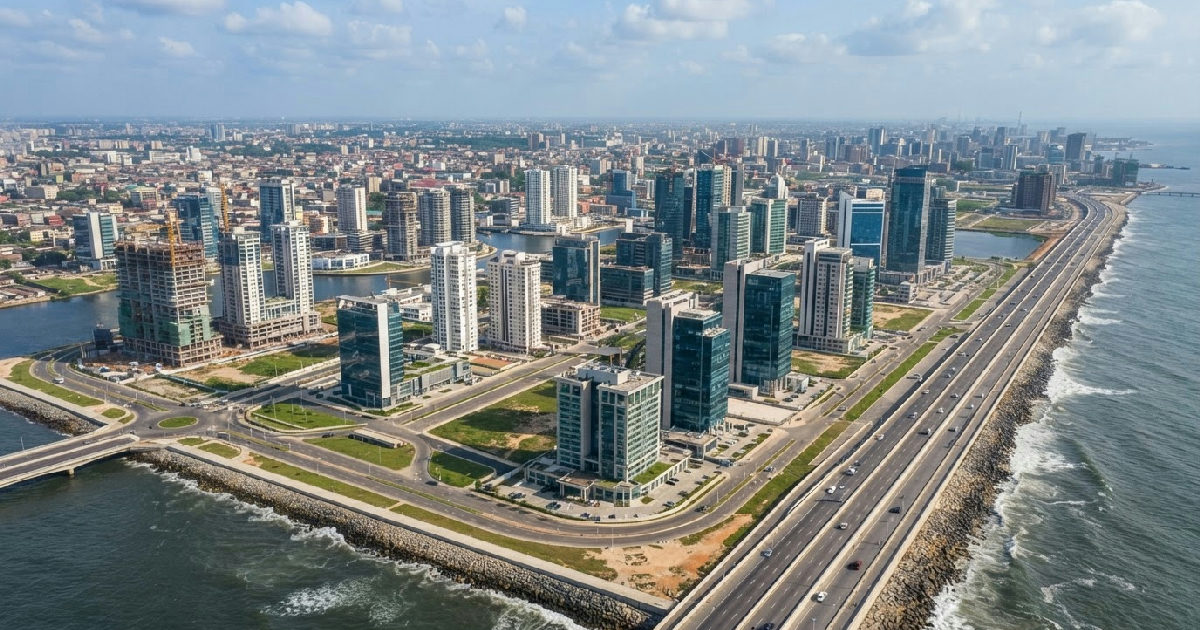
Decades before the mid-2020s saw billions invested in its luxury high-rises, the Lagos coastal corridor was already envisioned as Nigeria’s next prime real estate destination. This sprawling stretch, from Victoria Island through Oniru and Eko Atlantic City to the emerging Bluewater Okunde area, wasn’t an accidental boom. It was the culmination of long-term strategic planning and audacious land reclamation projects.
Back in 2001, when BusinessDay first began tracking trends in the Nigerian economy, the idea of turning Lagos’s vulnerable coastline into a haven for Grade A addresses seemed distant. But visionaries saw beyond the immediate challenges, anticipating the convergence of infrastructure and investment that would eventually redefine the city’s landscape.
The foundations of Lagos coastal corridor real estate prosperity
The transformation didn’t happen overnight. It was built on significant infrastructure projects that laid the groundwork for future development. The ambitious Lagos-Calabar Coastal Highway, a monumental 700-kilometer project, served as a powerful catalyst, reshaping property values along its path.
Its first 47.47-kilometre phase, already operational by 2026, began at Ahmadu Bello Way and featured five lanes in each direction, a 20-meter reserve for a future rail line, solar street lighting, and extensive drainage. This highway provided critical access, complementing the colossal Eko Atlantic City development, which reclaimed some 1,000 hectares from the Atlantic Ocean to solve shoreline erosion.
Eko Atlantic and Beyond: A New Victoria Island Emerges
The vision for the Lagos coastal corridor increasingly mirrored, and even surpassed, the prestige of older, established areas. Developers quickly recognised its potential as a “new Victoria Island,” attracting investments from major players like Palton Morgan Holdings.
Palton Morgan’s Paramount Twin Towers (PTT) project, a 13-storey development at Oniru Waterfront, epitomised this shift. Offering 160 luxury apartments, including two- and three-bedroom units, maisonettes, and penthouses, it reflected the soaring aspirations for the area. The first residents were expected by early 2027.
Investment Floods the Coastal Front
The financial impact of these developments was stark. A parcel of land in Bluewater Okunde, measuring approximately 2,400 square metres, sold for about ₦800 million just a few years prior, but by 2026, its value had surged past ₦5 billion. This explosive appreciation highlighted the immense investor confidence.
This rapid growth stemmed from improved road access, clearer zoning regulations, and the undeniable draw of oceanfront living. Companies like Eko Development Company/Periwinkle Residences, with projects such as Azuri Towers, Eko Pearl Towers, and Pan Atlantis, and Cruxstone Development & Investment, with Nautica Rise, followed suit. The scale of these developments underscores a powerful new chapter for Nigerian urban development.
The Coastal Highway’s Contentious Path
Despite its promise, the Lagos-Calabar Coastal Highway sparked controversy, particularly concerning its alignment, coastal setbacks, and potential environmental impact. Town planners and environmental advocates argued for a more comprehensive coastal development master plan.
Concerns emerged that the highway’s route, in some sections, ran behind existing developments and regulated setback zones, limiting direct interaction with the Atlantic shoreline despite being marketed for tourism. Minister of Works David Umahi defended the alignment, insisting on adherence to environmental safety standards and right-of-way requirements, citing setbacks as critical safeguards against erosion and rising sea levels.
Historical Echoes in Real Estate
Lagos’s history is replete with instances of strategic land use and development, often driven by necessity and vision. From the early 20th century, as the city grew, planners consistently looked to expand its footprint, whether through marshland reclamation or optimising existing waterfronts.
This current coastal boom isn’t an anomaly, but rather a continuation of that historical drive to redefine urban boundaries and accommodate burgeoning populations and economic activity.
The push for such ambitious projects also reflected a persistent challenge in Nigeria: the need for robust infrastructure. Historically, inadequacies in transport often hindered economic growth, despite efforts to unlock vast economic potential.
Past efforts to create new commercial and residential hubs, such as the early expansions of Ikoyi and Victoria Island, set precedents for the ambition now seen along the coastal corridor. This drive, focused on improving transport and urban planning, spanned decades.
Understanding ‘Grade A’ in Coastal Property
The designation of “Grade A” defines the pinnacle of real estate quality in Lagos’s coastal corridor. It signifies more than just a high price tag; it encompasses prime location, often with ocean views, coupled with cutting-edge architecture and design.
These properties featured advanced technology infrastructure, smart building systems, and robust security. Many incorporated eco-friendly practices and offered extensive amenities like private beaches and world-class facilities, appealing to discerning investors and residents seeking modern luxury and convenience.
Looking Ahead: Nigeria’s Economic Trajectory
The emergence of the Lagos coastal corridor as a premier real estate frontier reveals much about Nigeria’s economic trajectory and urban aspirations. It signals a determined push towards creating world-class residential and commercial spaces, attracting both local and international investment.
But it also highlights the delicate balance between rapid development and environmental concerns, particularly with erosion patterns, flooding exposure, and environmental approval requirements.
The Lagos State Partnership for Coastal Resilience Initiative, active from 2024-2025, and the planned deployment of Groyne technology along the 180-kilometre shoreline, costing over N3 trillion, reflect a growing awareness of these environmental realities. This strategic focus on infrastructure aimed to unlock the economic potential of Lagos’s vast waterfronts, while broader infrastructural efforts continued elsewhere.
The future of Nigeria’s premier urban centres hinges on this ambitious, yet carefully managed, expansion.
