




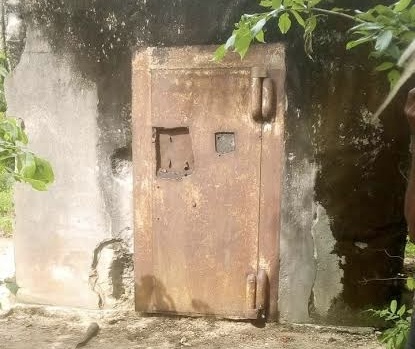
In 1929, as the Women’s War erupted across southeastern Nigeria, colonial bank manager John Muller locked himself inside his vault in Ikot Abasi, never to emerge.
This extraordinary event cast a long shadow over the town, turning an ordinary banking facility into an enduring enigma. The massive concrete cube, nearly two meters on every side, remains a potent symbol of a turbulent era in Nigeria’s history.
Ikot Abasi bank safe from colonial policies
The 1929 Women’s War, widely known as the Aba Women’s Riot, saw women across parts of southeastern Nigeria rise in fierce protest. They opposed British colonial policies and the feared imposition of new taxes on their domestic animals and household items.
This widespread unrest highlighted deep tensions between local populations and the colonial administration. Ikot Abasi was among the communities significantly affected by these disturbances, making it a focal point of resistance against the complex commands of foreign rule.
The protests started in November 1929, spurred by colonial attempts to count women and their property for taxation purposes. This move was a direct threat to the economic autonomy of market women, who played crucial roles in local economies.
Thousands of women mobilized, using traditional forms of protest such as “sitting on a man” – a direct and powerful demonstration against perceived injustices. The conflict quickly spread, encompassing towns and villages across what are now Abia, Imo, Rivers, and Akwa Ibom States.
The Manager’s Desperate Act
Amidst the escalating chaos of the Women’s War, John Muller, the colonial bank manager, reportedly became increasingly fearful. He sought what he believed would be safe haven inside the bank’s formidable vault, an act that sealed his fate.
Once inside, accounts suggest Muller tragically took his own life. The vault’s door remained shut, trapping his remains and the circumstances of his death within its impenetrable confines. This incident immediately became etched into the town’s collective memory.
His decision reflected the profound fear that gripped many colonial officials as indigenous resistance intensified. The safe, a symbol of financial security, became for Muller a final, desperate refuge from a world turned upside down by a women-led uprising.
An Impenetrable Mystery
Over the decades, the Ikot Abasi bank safe has resisted every attempt to force it open. Locals have reportedly used explosives, cutting equipment, and even heavy machinery like bulldozers, yet its thick iron door has remained steadfastly shut.
The safe is a massive cube, built of solid concrete, measuring about two meters on every side. Its construction involved multiple layers of concrete, each successively harder than the last, creating an almost impregnable barrier.
The scars of these numerous efforts are visible on its exterior, a testament to its formidable construction and the persistent curiosity of the community. This enduring resistance only deepens the mystery of what lies beyond the sealed door, echoing other historical enigmas like the fake Abuja airport scandal.
For over 95 years, the vault has defied all modern attempts at entry. Its stubborn refusal to yield has only intensified local fascination, cementing its place as a unique historical landmark and a constant source of local speculation.
Beyond Muller’s Fate: The Human Cost of the Women’s War
John Muller’s reported death inside the Ikot Abasi safe offers a singular, tragic snapshot of the 1929 Women’s War. But his individual story unfolded against a backdrop of widespread violence and brutal colonial repression that claimed numerous Nigerian lives.
British forces responded to the women’s protests with overwhelming force, firing into crowds of unarmed demonstrators. Hundreds of women were killed and wounded, particularly in Aba and Owerri provinces, leaving deep scars on the communities involved.
The conflict exposed the deep inequalities and violence inherent in colonial rule. It was a stark demonstration of how local resistance, even peaceful protest, could be met with deadly force, fundamentally shaping the relationship between the colonizers and the colonized.
Echoes of History: What the Safe Symbolizes for Ikot Abasi
The old bank safe represents more than just a forgotten banking relic for the people of Ikot Abasi; it embodies a profound, unresolved chapter of their history. The local legend of John Muller, the colonial manager, still captivates generations.
Beyond Muller’s fate, rumors persist about what the safe might contain. Some believe it holds his remains, a grim monument to a desperate act. Others speculate it might be filled with funds, perhaps coins from the slave trade era, hidden by dealers long ago.
Regardless of its actual contents, the unopened safe serves as a powerful symbol of untold stories and hidden truths from the colonial period. It stands as a silent witness to a tumultuous past, its secrets guarding a piece of Ikot Abasi’s collective memory.
Ikot Abasi’s Colonial Scars
The old bank safe is more than just a locked box; it is a tangible link to Ikot Abasi’s broader colonial past. The town holds other significant relics, including the “Bridge of No Return,” slave houses, and the Amalgamation House where Nigeria’s amalgamation was proclaimed in 1914.
These sites, including the nearby John Miller House – associated with a different historical figure, a slave trader from 1834 – stand as stark reminders of the exploitation and unequal systems that defined the era. Ikot Abasi was a major point for the sale of slaves, establishing its grim historical significance long before Muller’s tragic end.
The safe, however, offers a unique perspective because its contents remain inaccessible, its story frustratingly unfinished. Unlike other historical buildings that can be explored, the vault keeps its secrets closely guarded, prompting continuous local discussion.
A Challenge for Heritage: Documenting an Unfinished Story
The enduring mystery of the Ikot Abasi bank safe presents a significant challenge for heritage preservation in Nigeria. Its status as an impenetrable, undocumented artifact means a crucial piece of local history remains obscured.
Efforts to document and preserve such colonial-era structures are vital for understanding Nigeria’s past. Without proper investigation and eventual opening, the full context of Muller’s story and any other hidden contents will remain speculation, impacting historical accuracy.
The sealed safe stands as a silent sentinel, preserving a story that resonates almost a century after the bank ceased its original operations. This ongoing enigma highlights the urgent need to unravel such historical puzzles, ensuring that these remnants of the past contribute fully to Nigeria’s rich narrative, much like the broader impact when Adekunle Fajuyi died during the 1966 counter-coup.
Until the vault is finally opened or its history fully uncovered, the questions surrounding it will persist. The safe reminds us that some historical narratives remain literally locked away, waiting for their truths to be revealed.
