




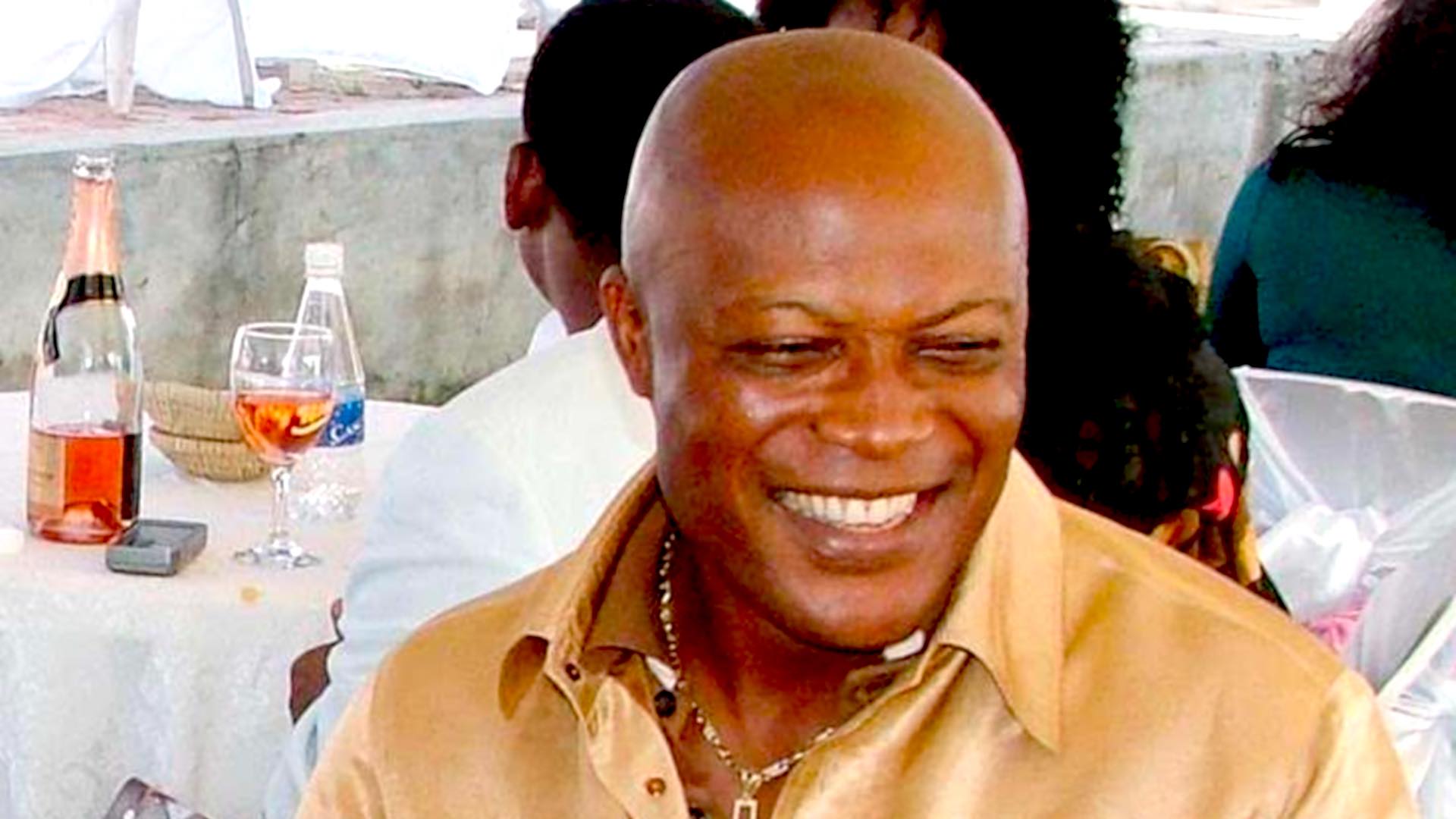
In one of the most audacious frauds in history, Nigerian banker Emmanuel Nwude sold a non-existent airport to a Brazilian bank for $242 million. The elaborate scam, which unfolded between 1995 and 1998, involved Nwude impersonating the then-Governor of the Central Bank of Nigeria, Paul Ogwuma, to seal the deal.
Nwude, a former director of Union Bank of Nigeria, targeted Nelson Sakaguchi, a director at Brazil’s Banco Noroeste. The deal was for the construction of a new international airport in Nigeria’s capital, Abuja.
Emmanuel Nwude’s impossible scam
This was a plausible story during the 1990s, a decade defined by major infrastructure projects as the government established its new capital city under military rule. The context of sweeping state-led changes was common.
The scheme was breathtakingly simple in its premise but complex in its execution. Nwude and his accomplices, including Nzeribe Edeh Okoli and Amaka Anajemba, created a web of forged documents and fake contracts. They convinced Sakaguchi that he was investing in a legitimate, high-value government project that promised huge returns.
Central to the deception was the false use of Paul Ogwuma’s identity, then Governor of the Central Bank of Nigeria. Nwude allegedly impersonated Ogwuma, giving the transaction the veneer of official backing. This crucial step helped convince Sakaguchi of the project’s authenticity.
Over three years, Sakaguchi wired a total of $242 million to accounts controlled by the fraudsters. These payments were allegedly for the airport construction, along with associated fees for taxes and currency fluctuations. The fraudsters claimed $110 million was for money due to the Federal Government, $6.73 million for currency fluctuation charges, and $4.75 million for value-added tax.
The deception was so complete that Sakaguchi even travelled to London. There, he met individuals who presented themselves as connected to Nigerian government authorities. These meetings bolstered the fraudsters’ credibility, masking serious failures in the bank’s internal financial controls.
The Unravelling and the Long Pursuit
The fraud began to collapse in February 1998. Spanish banking giant Banco Santander moved to acquire Banco Noroeste, and a due diligence audit uncovered a massive hole in the Brazilian bank’s accounts. Auditors found a substantial discrepancy between the bank’s recorded financial position and the funds transferred for the supposed airport.
Questions immediately arose about the payments’ purpose and the authority for the transactions. The discovery transformed what seemed like a commercial transaction into an international banking scandal. Banco Noroeste ultimately collapsed under the weight of the losses.
The fallout extended to Nelson Sakaguchi himself. In April 1998, former controllers of Banco Noroeste filed a criminal complaint accusing him of fraud. His investigation in Brazil became a parallel legal saga to the Nigerian pursuit of Nwude and his co-conspirators.
In Nigeria, the new civilian government established the Economic and Financial Crimes Commission (EFCC) in 2003. Its then-chairman, Nuhu Ribadu, made the Nwude case a top priority. The investigation became a landmark moment for Nigeria, similar to the enduring battle fake drugs required against counterfeit medicines.
After a complex international investigation involving the UK, Switzerland, Brazil, and the US, Nwude and his associates were arrested in 2004.
Investigators faced a difficult task tracing funds across multiple accounts and jurisdictions. The Nigerian prosecution also encountered jurisdictional hurdles, initially beginning in Abuja before being moved to Lagos due to the nature of the alleged offences and where they occurred. This underscored the complexities of pursuing financial crimes across borders.
A Landmark Conviction and its Legacy
The trial was a sensation. Nwude reportedly attempted to bribe Ribadu with $75,000 cash, an offer the EFCC chairman refused. In July 2005, Amaka Martina Anajemba and her company, Fynbaz Nigeria Limited, changed their pleas. They were convicted and sentenced to 30 months imprisonment, with assets forfeited.
On November 18, 2005, Nwude and other defendants, including Nzeribe Okoli, also changed their pleas and were convicted. Reports varied on Nwude’s sentence, with some contemporary accounts citing 25 years and others, like Channels Television in 2026, recording a five-year prison term. Okoli received a two-year sentence.
The court ordered the forfeiture of properties, shares, stocks, vehicles, and other assets for the benefit of the victims. The EFCC recovered approximately $129 million from Nwude’s assets. Nigeria publicly returned about $17 million to representatives of the Brazilian bank in November 2005, a partial but significant restitution.
The case demonstrated the capacity of new Nigerian institutions to pursue complex international crimes and bring powerful figures to justice.
The Wider Impact on Financial Crime Investigations
The Nwude scandal became one of the best-known examples of large-scale advance-fee fraud associated with Nigeria. These crimes are often linked to Section 419 of Nigeria’s Criminal Code. The airport scheme, however, differed from smaller payment frauds. It exploited access to a bank’s internal financial processes and presented the transaction as a legitimate government infrastructure project.
This case provided critical lessons in verifying official identities and authenticating contracts. It also highlighted the necessity of independently confirming the authority behind major public sector transactions. A document with an official-looking reference number, the case showed, isn’t proof of a government contract.
The investigation also underlined the need for effective financial intelligence and reliable records of property ownership. International cooperation between countries was crucial, as were legal mechanisms for confiscating the proceeds of crime. The complexities of this investigation helped shape the development of Nigeria’s anti-money laundering system.
Nwude’s Continuing Legal Battles and Legacy
Nwude’s legal troubles did not end with his release from prison. Years later, he faced another criminal case concerning property connected to the original fraud. In July 2017, the EFCC received a petition regarding alleged forgery and dealings in a property located at Plot Y, Mobolaji Johnson Street, Oregun, Ikeja, Lagos.
The alleged offences occurred between 2011 and 2012. Nwude and two lawyers, Emmanuel Ilechukwu and Rowland Kalu, were arraigned in March 2018. They pleaded not guilty. The prosecution alleged that forged documents had been used in an attempt to deal with property previously forfeited in connection with the original fraud, a stark reminder of challenges from the 1966 counter-coup and its aftermath.
On March 11, 2026, Justice Mojisola Dada of the Lagos High Court’s Special Offences Division convicted Nwude and the two lawyers on 13 of 15 counts. Each received a one-year prison sentence. This later conviction was not for the original Banco Noroeste airport fraud, but for alleged conduct involving forfeited property.
It highlighted the enduring challenges in enforcing court orders and protecting assets recovered from crime. The entire saga of Emmanuel Nwude reveals how complex financial fraud can cast a long shadow, demanding continuous vigilance and robust legal enforcement.
