



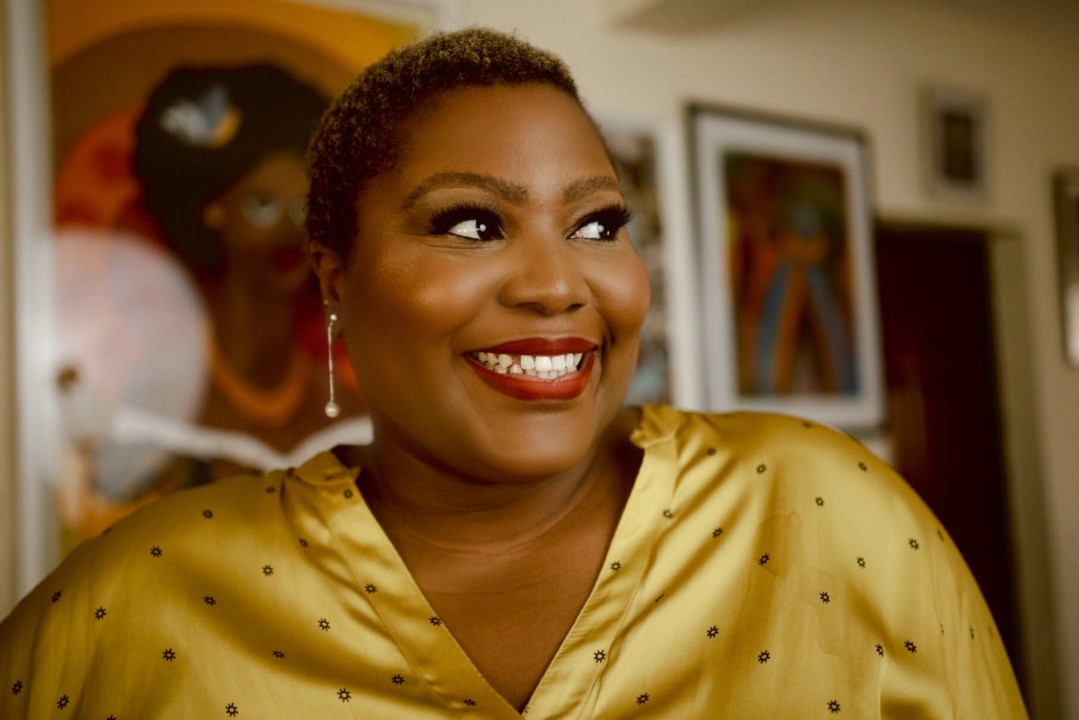
On July 31, 2026, Wana Udobang unveiled her fourth poetry album, “Dissonance.” This 14-track collection plunges listeners into the intricate depths of human existence, exploring the interplay of violence and repair.
Udobang, a multidisciplinary artist whose career spans poetry, journalism, and curation, describes her art as a direct invitation. She aims to forge meaning from life’s experiences, drawing her audience into the very process of making sense of it all alongside her. Her newest offering isn’t just an album; it’s a mirror reflecting the friction of modern life and the quiet negotiations required for survival.
Wana Udobang invites introspection
The album opens with “Are You Not Tired?”, a track just over a minute long that sets an urgent tone. Over a backdrop of drums, keys, and percussive rattles, Udobang’s voice poses a series of questions about life’s contradictions. She confronts the frustrations and the perpetual unfinishedness that shape the human journey.
Her repeated query, “Are you not tired? Of the self-loathing, Of the dissonance, Of being a work in progress,” resonates deeply. This initial track establishes the emotional rhythm for the entire album, guiding listeners through 13 subsequent pieces. Udobang weaves together seemingly opposing journeys, creating a seamless narrative that explores both darkness and light.
Six years have passed since her previous album, “Transcendence,” but this interval hardly feels like a pause in her prolific output. Udobang consistently translates the world around her into art, viewing each poetry album as an exploration of violence and repair. It’s a creative cycle that, much like the human experience, holds contrasting forces in constant tension.
Unpacking the Weight of Lived Experience
Wana Udobang approaches her themes not as premeditated concepts, but as reflections of lived reality. “I’m writing about the things that have happened in my life and the lives of other women around me,” she explains. She sees her body of work as fundamentally rooted in an exploration of violence against women.
This includes physical, political, economic, and what she calls “psychic violence,” which she believes is the most insidious form. Her earlier poetry albums, including “Dirty Laundry” (2013) and “In Memory of Forgetting” (2017), also engaged with these themes. “Dissonance” stands unmistakably as a feminist work, continuing this critical examination.
The album’s power, however, lies in Udobang’s ability to articulate raw, earnest truths. She gives voice to the hardships women endure, the lessons they are taught to swallow, and the emotional baggage they carry. This collection of women’s narratives forms the album’s emotional core.
The Cost of “Thick Skin”
“Thick Skin” is a pivotal track, firmly anchoring the album’s darker side. It recounts the story of a woman subjected to a series of deeply painful experiences. The poem renders trauma and depressive episodes with such intimacy that listeners are compelled to inhabit the sting of each memory.
One striking verse recalls a boarding school teacher whipping a child’s back “till the welts weeped with blood” to absorb lessons. Another describes a father asking his daughter to test tea for poison. These are the visceral moments that expose the brutality beneath the surface.
The societal response to such wounds is often a directive: “grow a thick skin.” Udobang transforms this common admonition into an artistic interrogation. The track questions the expectation that individuals should simply become tougher to survive pain, asking what happens when survival means becoming so desensitized that no one bothers to look beyond the surface, to the person still carrying the hurt.
From Trauma to the Tender Possibilities of Life
At the exact midpoint of “Dissonance” sits “When Will You Stop Writing About Trauma,” the seventh track. This piece marks a critical junction where the album’s two halves converge. Udobang expresses a desire to write about love, friendship, and peace, about the “good” things in life. Yet, she finds herself unable to reach these subjects without the intrusion of violence.
The question at its heart is profound: how does one write about repair in a world that relentlessly produces new sources of trauma? Despite this struggle, Udobang persists. What follows are poems like “Novena,” “Take Me Back,” “When Love Arrives,” and “A Manifesto for Friendship.” These tracks shift towards themes of self-love, romantic love, and the tender possibilities of human connection.
This second half of “Dissonance” is not an escape from the violence explored earlier. Instead, it serves as Udobang’s direct answer to it. The act of articulating love, tenderness, and connection becomes, in itself, a powerful form of repair. It highlights the agency in choosing tenderness even when circumstances dictate otherwise.
Expanding Beyond Personal Memory
While Udobang’s previous albums often centered on personal memory and individual healing, “Dissonance” broadens its scope. She notes that this album pays closer attention to the world beyond the self, to how global changes are reshaping collective human experience. It’s a recognition that personal battles are often entwined with larger societal currents.
This expansion mirrors a deeper understanding of interconnection. It acknowledges that the journey of repair is not solitary, but part of a wider human endeavour. Her work encourages listeners to consider the shared human condition.
The album warns, teaches, and comforts, embracing both darkness and light within the same artistic body. It allows these dualities to coexist without demanding that one negate the other. This nuanced perspective offers a profound insight into the human spirit, particularly when confronting confronting family’s past and societal pressures.
A Journey Forged in Words and Activism
Wana Udobang’s trajectory as an artist is deeply rooted in her diverse background. She earned a first-class degree in journalism from the University for the Creative Arts in England, which provided a foundational rigor to her storytelling.
Early in her career, she worked as a freelance features producer for the BBC World Service and a researcher for various production companies, honing her investigative and narrative skills.
Upon returning to Lagos, she spent six years as a radio presenter and producer at 92.3 Inspiration FM. This period immersed her in the rhythm of public engagement and communication. Her multifaceted career also includes event hosting, essay writing, and exhibition curation, demonstrating her command across various creative and communicative platforms.
Udobang’s commitment to her craft is further evidenced by her numerous fellowships and residencies. She is an alumna of Chimamanda Ngozi Adichie’s Farafina Creative Writers Workshop and participated in the 54th International Writing Program Fall Residency at the University of Iowa. These experiences have enriched her perspective and solidified her standing as a prominent literary voice.
Her previous works, particularly “Dirty Laundry,” which evolved into a powerful mixed-media installation, laid crucial groundwork for “Dissonance.” The “Dirty Laundry” project, supported by a Ford Foundation grant, used screen-printed poems on canvas to address gender-based violence. It invited audience participation, subverting the shame often associated with discussing personal trauma.
The Echo of Nigerian Voices
Wana Udobang is a vital figure within Nigeria’s burgeoning spoken word scene, a space where a new generation of poets uses verse for storytelling, activism, and self-expression. Young Nigerian women, in particular, have embraced poetry as a powerful medium to articulate grievances and challenge societal norms. Udobang’s work amplifies these voices, giving form to experiences often silenced.
Her art also sits firmly within the broader landscape of feminist art in Nigeria. Contemporary female artists actively explore womanhood, identity, bodies, and sexuality, frequently challenging patriarchal structures. Udobang uses her platform to question conventional notions of feminism and delve into intersectionality, making her a critical voice in this cultural movement.
Art, for Udobang, is a potent form of activism. She sees culture and creative expression as a “phenomenal portal” for navigating histories, processing traumas, and reimagining futures. Her work doesn’t just document; it actively seeks to transform understanding and experience. This dedication aligns with other Nigerian creative talent gaining international recognition for their impactful storytelling.
Ultimately, “Dissonance” leaves listeners with a powerful, communal message. Udobang wants her audience to know they are not alone in their struggles. Repair, she insists, isn’t a privilege reserved for those untouched by pain; it’s a universal entitlement. We are all, often unconsciously, participating in this process, simply by choosing joy, love, and friendship in a world that often urges us towards hardness.
