




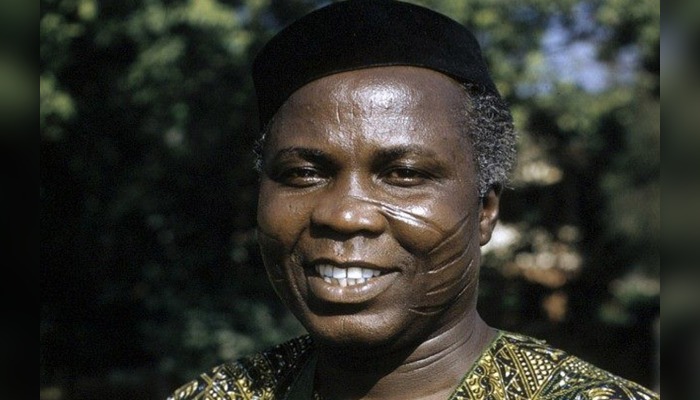
Samuel Ladoke Akintola, a pivotal figure in Nigeria’s pre-independence and First Republic politics, rose to prominence from a diverse background that began in 1910. Known for his sharp intellect and powerful oratory, Akintola eventually became the Premier of the Western Region, but his path there was far from conventional. His journey unfolded through teaching, journalism, and law, each step building towards his eventual leadership.
Akintola’s career trajectory exemplified the ambition and evolving opportunities available to educated Nigerians in the mid-20th century. He navigated various professional fields, gaining critical experience and refining the communication skills that would define his political influence. The story of his ascent reveals a complex interplay of education, media engagement, and legal acumen that shaped a national leader.
Samuel Ladoke Akintola’s early education
Samuel Ladoke Akintola was born on July 6, 1910, in Ogbomosho, in present-day Oyo State, to Akintola Akinbola and Akanke. His early childhood included a period in Minna, where his family relocated in 1914, and he commenced his education at C.M.S. Minna. This initial exposure to formal learning set the stage for his intellectual development.
He returned to Ogbomosho in 1922 to live with his paternal grandfather, continuing his studies at Baptist Day School until 1925. Akintola then attended Baptist College in Ogbomosho, completing his elementary education there and leaving in 1930. These formative years instilled in him a foundational understanding of Western education, which was gaining significant traction across southern Nigeria.
Following his studies, Akintola embarked on a teaching career at Baptist Academy, Lagos, from 1930 to 1942. This period proved crucial, as it exposed him to the vibrant, growing community of educated individuals in the colonial capital. These connections included emerging journalists, public intellectuals, and political organizers, broadening his perspectives beyond the classroom.
From Railways to the Press and the Bar
Akintola’s career took an unexpected turn after teaching. He briefly joined the Nigerian Railway service in 1942, a short-lived but formative experience before he gravitated towards journalism. This move marked a significant pivot, allowing him to directly engage with the pressing political and social issues of the era.
He joined Ernest Ikoli’s Nigerian Daily Service Newspaper, quickly rising through the ranks to become its editor in 1943. Beyond the Daily Service, Akintola demonstrated his entrepreneurial spirit by founding Iroyin Yoruba, a Yoruba-language newspaper. His work in the press cemented his reputation as a formidable communicator, capable of articulating arguments with clarity and force, a skill invaluable in the burgeoning nationalist movement.
His journalistic endeavors were not merely professional but deeply political. The Nigerian press served as a vital platform for educated Nigerians to challenge colonial policies, debate national questions, and disseminate political ideas to a widening readership. Akintola’s contributions strengthened his standing as an orator and public intellectual, honing his ability to persuade and engage in public discourse.
Pursuing Legal Studies in Britain
In 1946, Akintola received a British scholarship that transported him across continents to the United Kingdom for further studies. Initially enrolling for Public Administration at Oxford, he soon shifted his focus to law, a decision that profoundly altered his trajectory. He completed his legal studies by 1950, qualifying as a barrister and being called to the English Bar.
His years abroad were not solely academic. They immersed him in a fervent intellectual atmosphere, bringing him into contact with other West African students and political activists. These individuals engaged in intense debates about colonial rule, constitutional reform, and the future independence of their respective nations.
This environment solidified Akintola’s commitment to self-governance and prepared him for a direct role in Nigeria’s political future. Upon his return to Nigeria in 1949, he brought with him not just a legal qualification but also a sharpened political awareness forged in the crucible of international discourse.
Forging a Political Identity with the Action Group
Returning to Nigeria, Samuel Ladoke Akintola wasted no time establishing himself in legal practice. He later formed a partnership with fellow legal practitioners. This professional foundation provided him with a new platform to engage with public affairs, allowing him to tackle constitutional questions and legal matters directly, far beyond mere commentary.
His legal expertise and growing public profile brought him closer to Yoruba political and cultural organizations. This period marked a rapid evolution in Nigeria’s political landscape, with nationalists consolidating into parties to push for constitutional reforms and greater autonomy.
The Action Group (AG) emerged as a dominant force in the Western Region, spearheaded by Chief Obafemi Awolowo. Akintola swiftly became one of its most indispensable figures. His legal knowledge, impressive public-speaking abilities, and growing political experience were crucial in strengthening the party’s operations.
He initially served as the Action Group’s legal adviser and, following the death of Bode Thomas, ascended to the position of deputy leader in 1953.
Ministerial Roles and Federal Influence
Akintola’s influence extended beyond regional party politics into the federal government. He served as the parliamentary leader of the Action Group in the House of Representatives and later as the Leader of Opposition in the Federal House of Representatives. His ministerial appointments were particularly impactful, showcasing his administrative capabilities and commitment to national development.
He held significant portfolios as Minister of Labour in 1952, Minister of Health in 1953, and subsequently Minister of Communications and Aviation in 1957.
During his tenure as Minister of Health, Akintola played a pivotal role in allocating £10 million for the completion of the University College Hospital (UCH) in Ibadan, which moved to its permanent site in 1956. As Minister of Communications and Aviation, he was instrumental in establishing Nigerian Airways in 1957, breaking the British Airways monopoly.
He traveled to Holland to secure new aircraft, and Nigerian Airways officially launched on October 1, 1958, with a capital of £6 million sterling. These initiatives demonstrated his vision for a self-sufficient and modern Nigeria. The Nigerian civil war erupted a few years later, fundamentally reshaping the political landscape he helped define.
Ascension to Premier and the Western Region Crisis
Samuel Ladoke Akintola’s political zenith came in late 1959 when he became the Premier of the Western Region, effectively swapping roles with Obafemi Awolowo. This appointment placed him at the helm of one of Nigeria’s most economically vibrant and politically influential regions as the nation geared up for independence.
He continued to lead the Western Region’s government after Nigeria gained independence on October 1, 1960. His administration oversaw critical infrastructure projects and institutions that continue to impact Nigeria today.
Under his leadership, significant developments took shape, including the establishment of the University of Ife (now Obafemi Awolowo University) in 1962, where he also served as its first Chancellor.
Akintola was also responsible for the creation of the iconic Cocoa House in 1965 and actively supported the construction of the Premier Hotel and other notable monuments across the Western Region. These achievements underscored his dedication to regional development and modernizing the state’s infrastructure and educational capabilities.
However, the early 1960s saw a growing rift between Akintola and Obafemi Awolowo, his longtime political ally. Their disagreement centered on the Action Group’s political direction, its alliances, and internal power dynamics. This conflict escalated into a major crisis in 1962, leading to political disorder and disputes within the regional legislature.
The federal government intervened, declaring a state of emergency in the Western Region and appointing Senator Moses A. Majekodunmi as administrator. Akintola temporarily lost his position as Premier during this tumultuous period.
The political turmoil within the Western Region became a microcosm of the wider instability plaguing Nigeria’s First Republic. Akintola, undeterred, pursued a separate political path, forming the United Peoples Party (UPP), which later became the Nigerian National Democratic Party (NNDP).
This new party formed an alliance with the Northern People’s Congress (NPC), shifting the political balance. He returned as Premier on January 1, 1963, only for the 1965 Western Region election to be marred by allegations of rigging and violence, further eroding political stability.
The political influence behind Nigeria’s June 12 crisis decades later would echo some of these earlier challenges.
Legacy and the End of an Era
Beyond his political and administrative roles, Samuel Ladoke Akintola held the distinguished traditional title of Aare Ona Kakanfo of Yorubaland. This title, traditionally associated with military leadership and the defense of the Yoruba people, added another layer to his public identity. His appointment as a civilian politician to this esteemed position underscored his significant standing within both modern political and traditional Yoruba institutions.
By January 1966, Nigeria faced severe political tension, exacerbated by the disputed Western Region election and widespread dissatisfaction with the First Republic. On January 15, 1966, a group of military officers launched Nigeria’s first military coup. Akintola was in Ibadan, the capital of the Western Region, when the coup unfolded.
He was tragically killed during the military operation at the Premier’s Lodge on that day, alongside other senior political and military figures. His assassination marked a violent end to a multifaceted career and brought the First Republic to a close, ushering in decades of military rule.
Akintola’s journey from a teacher and journalist to a legal professional and ultimately the Premier of the Western Region exemplifies a defining era in Nigerian history. His early career, characterized by its varied professional experiences, showcases the pathways to influence and public service in a nation on the cusp of self-governance.
He was a visionary leader who championed education, infrastructure, and national autonomy. His life and work provide crucial insights into the ambitions and challenges of Nigeria’s foundational years. The impact of such foundational decisions continued to resonate, influencing discussions even about the 1999 Nigeria Constitution.
His story remains a testament to the transformative power of education and relentless ambition in shaping a nation’s destiny. Samuel Ladoke Akintola’s legacy, though intertwined with political rivalries and national upheavals, stands as a significant chapter in Nigeria’s political evolution, highlighting the diverse origins of its most influential leaders.
