



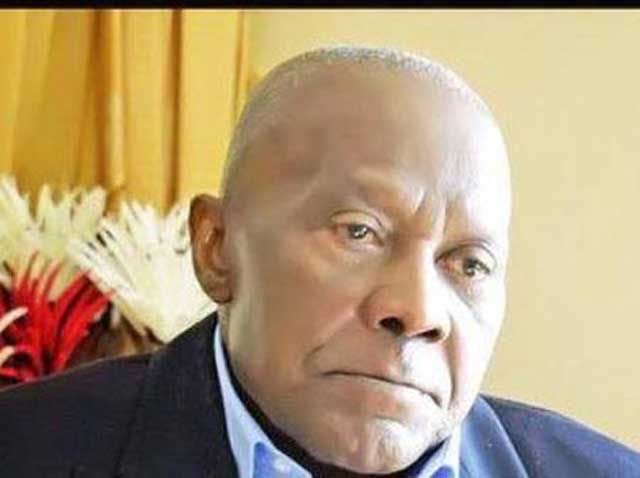
Arthur Nzeribe, the Nigerian political figure involved in the June 12, 1993 election annulment, was known for his wealth and profound influence. He commanded attention in the 1990s as a powerful and often divisive force. Many Nigerians knew him as a senator and a political strategist.
Before his notoriety within the Nigerian political landscape, Nzeribe’s journey began far from home with an unexpected career path. In 1958, he secured a scholarship from the Nigerian Ports Authority to study marine engineering in England, a formative experience that opened doors beyond academia.
Arthur Nzeribe builds an empire
By 1960, Nzeribe had pivoted significantly, engaging in commercial ventures rather than pursuing engineering. He found his initial success selling life insurance policies to Black immigrants across Britain. This early hustle laid crucial groundwork, providing him with vital contacts and hands-on commercial experience.
These formative years in Britain proved instrumental in shaping Nzeribe’s audacious entrepreneurial spirit. The connections and skills he developed ultimately led to the establishment of the Fanz Organization in 1969. This London-based enterprise grew into a sprawling international business, encompassing heavy construction, oil brokerage, publishing, and even arms trading.
This period coincided with Nigeria’s tumultuous post-independence years, including the Nigerian civil war, which significantly impacted the demand for arms and supplies.
The Fanz Organization’s ventures extended into the Middle East and Gulf states, showcasing Nzeribe’s ambition beyond Nigerian borders. His firm became a key player in various sectors, accumulating significant financial resources. By 1979, Fanz boasted an annual trading turnover of £70 million, cementing Nzeribe’s status as a formidable international businessman.
Nzeribe’s business acumen also saw him establish interests back home in Nigeria, including Sentinel Assurance. His country home in Oguta, aptly named “Heaven of Peace,” consisted of multiple mansions, a testament to his staggering wealth. By 2018, he was reportedly worth over $1.5 billion.
Early Ghanaian Deals and Political Entanglements
Nzeribe’s international dealings often intertwined with political environments, as seen in Ghana during the late 1960s. Through a London-based public relations firm, he forged connections with African diplomatic missions. These relationships introduced him to influential figures, most notably Ghana’s first president, Kwame Nkrumah.
Nzeribe reportedly worked on public relations activities for Nkrumah’s government, expanding his professional network across West Africa. But his position shifted dramatically after a military coup that overthrew Nkrumah. While initially losing influence, Nzeribe quickly adapted, developing a working relationship with the new National Liberation Council (NLC) government led by Lieutenant General Joseph Arthur Ankrah.
This adaptation, however, led to controversy. Nzeribe became embroiled in a bribery scandal in 1969 that eventually forced Ankrah’s resignation as Ghana’s head of state. Investigations revealed Ankrah had received money from Nzeribe, creating a serious conflict of interest. This episode, occurring early in his career, highlighted how his commercial interests often blurred with political influence.
Entry into Nigerian Politics and First Senate Term
His commercial success gave him immense financial resources and an expansive network of international contacts, all of which became crucial levers in his political activities back home. His journey from business to politics showed a pattern of significant personal investment, such as the N12 million he spent to win his first senatorial seat in 1983, a year when wages had a dramatically different purchasing power.
Nzeribe returned to Nigeria to contest the Orlu Senatorial seat in 1983. He won, entering the Senate in October 1983. However, his first tenure was brief, ending abruptly with a military coup in December 1983. This event dissolved the elected political institutions, cutting short Nzeribe’s nascent legislative career but cementing his political ambition.
The June 12 Annulment: A Defining Controversy
Nzeribe’s most controversial political chapter unfolded a decade later, in 1993, during General Ibrahim Babangida’s transition programme. He became the leading figure behind the Association for Better Nigeria (ABN), a political pressure group that actively campaigned against the scheduled return to civilian rule.
The ABN’s primary objective was to ensure Babangida remained in power for at least another four years, a position directly opposing the national yearning for democratic governance.
The ABN infamously obtained a controversial court injunction from Justice Bassey Ikpeme of the Abuja High Court on June 10, 1993, just two days before the presidential election. This order attempted to halt the poll. Despite the injunction, the election proceeded on June 12, with results indicating a clear victory for Abiola.
The ABN’s actions, including subsequent legal moves to stop the announcement of results, contributed to the political crisis that culminated in Babangida’s decision to annul the election. This annulment, widely seen as a betrayal of the electorate.
Later Political Career and Controversies
Following Nigeria’s return to civilian rule in 1999, Nzeribe re-entered the Senate, representing Imo West (Orlu Senatorial District) under the Peoples Democratic Party (PDP). He retained his seat in the 2003 elections, serving until May 2007. His return marked a continued presence in the National Assembly after the earlier military interruption.
He remained a vocal and often contentious figure within the Senate. In November 2002, Senate President Anyim Pius Anyim indefinitely suspended Nzeribe over allegations involving N22 million, though this was not a criminal conviction. Nzeribe also unsuccessfully attempted to initiate impeachment proceedings against President Olusegun Obasanjo in April 2000 and again later in his tenure, raising issues such as the government’s handling of religious tensions.
Nzeribe’s political influence waned towards the end of his senatorial career. In December 2006, he lost the PDP senatorial primary election to Osita Izunaso, ending his immediate prospects of returning to the Senate. Despite this, he was appointed to the PDP’s Board of Trustees in August 2007, maintaining a connection to the party’s structure.
Francis Arthur Nzeribe died on May 8, 2022, at the age of 83 in his Oguta home, following an extended illness. His death, caused by COVID-19, brought renewed focus to his complex legacy as a billionaire investment mogul and a central figure in Nigeria’s political controversies. He stood 5′ 6″ tall and weighed 154 pounds at the time of his passing.
What Nzeribe’s Origin Reveals
Arthur Nzeribe’s journey from a life insurance salesman in 1960s Britain to a powerful Nigerian senator and business magnate reveals much about ambition and Nigeria’s political landscape. His early commercial ventures abroad not only laid the financial foundation but also forged the international connections that proved invaluable in his later political maneuvering.
This origin story highlights how individual drive, combined with strategic networking, could propel a figure from relative obscurity to national prominence, often blurring the lines between business interests and political power.
