




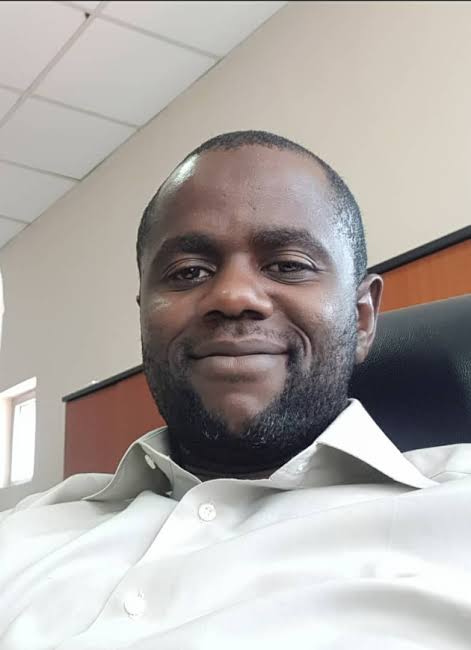
This individual honour, the Dele Giwa Prize for Editor of the Year, highlighted years of dedicated work within Nigeria’s demanding media landscape. His long tenure at Media Trust, the parent company of Daily Trust, established him as a pivotal figure well before this major recognition.
Nasiru L. Abubakar’s Early Years and Formative Education
Nasiru L. Abubakar, born on September 4, 1977, in Kaduna North Local Government Area, Kaduna State, began his formative years in northern Nigeria. His early education built a crucial academic foundation for his later professional life in media.
He pursued formal studies in Mass Communication, earning a Higher National Diploma (HND) from Kaduna Polytechnic. This initial qualification provided him with core journalistic principles and technical skills, critical for navigating the industry.
Abubakar then advanced his education at Bayero University, Kano (BUK), where he obtained a Postgraduate Diploma (PGD) in Mass Communication. This further study deepened his theoretical understanding of media dynamics and communication strategies.
Additionally, he secured a PGD in International Relations and Diplomacy. This diverse academic background uniquely equipped him with a broad perspective, merging practical media skills with a nuanced understanding of global affairs.
From Stringer to Senior Editor at Daily Trust
Abubakar’s professional journey in journalism formally began in August 2000 as a stringer for Weekly Trust. Before that, he gained early exposure at ABG Group and briefly interned with the Kaduna State Media Corporation (KSMC), establishing a diverse foundational experience.
His role as a stringer involved contributing reports without full-time employment status, sharpening his newsgathering and reporting skills under real-world conditions. This initial phase allowed him to master the fundamentals of journalistic practice.
By 2004, his evident dedication and burgeoning talent led to his appointment as a permanent staff member at Daily Trust. This marked a pivotal transition into a more structured newsroom, where he refined his craft under intense deadline pressure.
His methodical ascent within Media Trust, the parent company, showcased a sustained commitment to editorial excellence. He assumed the role of Acting Editor for Aminiya, a Daily Trust sister publication, in 2012, gaining his first taste of managerial oversight and publication strategy.
In 2014, Abubakar advanced to Deputy Editor at Daily Trust. This critical role demanded significant input into news selection, content direction, and the meticulous verification of facts, further preparing him for senior leadership within the organisation.
The pinnacle of this phase arrived in January 2016, when he was appointed the substantive Editor of Daily Trust. This prestigious position placed him at the helm of one of Nigeria’s most influential national newspapers, directly responsible for its entire editorial output and strategic direction.
As editor, Abubakar was tasked with coordinating a diverse team of reporters, sub-editors, and feature writers. He made critical decisions about news coverage, upheld the publication’s rigorous journalistic standards, and guided its daily operations through complex news cycles.
This demanding role required not only sharp journalistic judgment but also exceptional organizational skills. He ensured accuracy, relevance, and timely delivery across every edition, cementing Daily Trust’s reputation for credible reporting and in-depth analysis. This sustained performance positioned him for further industry recognition.
The 2016 Nigeria Media Merit Awards Recognition
The year 2016 marked a significant milestone for Nasiru L. Abubakar, culminating in his recognition at the Nigeria Media Merit Awards (NMMA). He was individually honoured with the prestigious Dele Giwa Prize for Editor of the Year, a powerful testament to his exceptional leadership at Daily Trust.
This award, announced around December 2016, specifically celebrated Abubakar’s individual professional capacity and editorial contributions. It underscored his adeptness at navigating complex news cycles and maintaining high journalistic standards within a leading national newspaper.
Notably, in the same year, Daily Trust newspaper itself received the Babatunde Jose Prize for Newspaper of the Year from the NMMA. While Abubakar’s award recognised his personal achievements, the newspaper’s accolade highlighted the collective success and quality under his editorial guidance.
Such dual recognition solidified Abubakar’s reputation within the Nigerian media community. It served as external validation of his strategic vision and consistency in news production, reflecting an editor focused on institutional growth rather than mere public attention.
Elevating to Management and Departing Daily Trust
Abubakar’s career trajectory continued its upward climb in September 2019, when Media Trust announced significant changes to its editorial leadership. He was elevated from Editor of Daily Trust to the broader role of Managing Editor.
This promotion placed him in a more expansive management position, overseeing a wider array of editorial operations beyond a single newspaper title. His responsibilities now extended to coordinating editorial teams and ensuring operational efficiency across the organisation.
The move also meant a transition from hands-on daily editing to strategic planning and institutional development. His years of experience, from stringer to editor, provided an invaluable foundation for these heightened leadership demands.
However, this new chapter at Media Trust was relatively short-lived. In September 2020, Abubakar resigned from his Managing Editor position, marking the end of a long and impactful tenure with the company where he had started two decades prior.
His departure signalled a clear intention to embrace new challenges within the evolving media landscape. This bold decision set the stage for his next significant professional move, shifting from traditional print to digital journalism.
Leading Dateline Nigeria in the Digital Age
The next phase of Abubakar’s career officially began on December 1, 2020, when Dateline Nigeria announced his appointment as Editor-in-Chief. This online publication, based in Abuja, welcomed him to its leadership.
As Editor-in-Chief, Abubakar assumed a critical leadership role in a digital-first environment, a growing segment of Nigerian journalism. This shift required adapting his extensive print media experience to the rapid-fire demands and unique opportunities of online news dissemination.
Dateline Nigeria focused on reporting news with a public interest mandate. Abubakar’s leadership was crucial in shaping its editorial direction and upholding verification standards in a fast-paced digital ecosystem.
His transition reflected a broader trend within the industry, where seasoned journalists brought their expertise to digital platforms. He continued to advocate for discipline, strategy, and institutional development, principles he championed throughout his career.
Under his guidance, Dateline Nigeria aimed to distinguish confirmed information from speculation. This commitment to accuracy provided readers with reliable news, extending his impact beyond the traditional boundaries of print journalism and into new digital frontiers.
A Legacy of Strategic Media Leadership
Nasiru L. Abubakar’s career illustrates a consistent philosophy centered on strategic planning and institutional contribution. His leadership style prioritised long-term organizational growth over individual public attention, a characteristic that guided his decisions at every stage.
He was noted for his unwavering discipline, clear strategic vision, and commitment to institutional development. These attributes were evident in his progression from a freelance reporter to a senior editorial manager and ultimately an Editor-in-Chief.
Beyond his direct editorial roles, Abubakar also contributed strategic guidance to various boards, including Premium Times Services Nig. Ltd. This involvement underscored his dedication to fostering quality journalism across the broader Nigerian media landscape.
His journey demonstrated how experience in traditional newspaper publishing could successfully transfer to digital media. The underlying responsibilities of verifying claims, treating sources responsibly, and providing reliable information remained paramount, regardless of the format.
Abubakar’s continuous evolution within the media industry, marked by significant awards and leadership positions, solidified his place as a respected figure. He remains an example of how a journalist can adapt and lead effectively through different eras of media development in Nigeria.
