




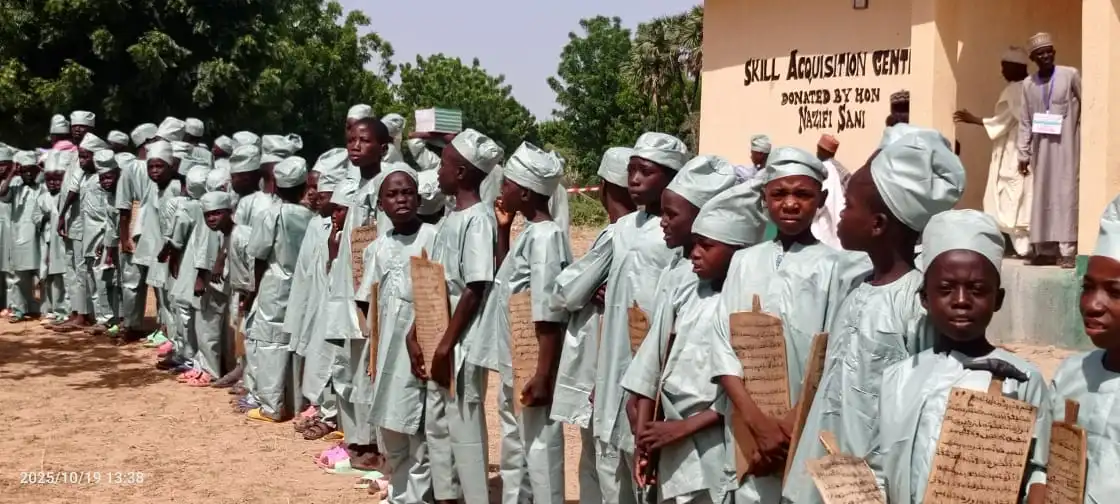
The Jigawa Built almajiri system has long been a defining social challenge across northern Nigeria, a familiar sight of young boys on the streets in search of Quranic knowledge and daily sustenance. For many decades, the problem seemed intractable, deeply embedded in societal structures.
But a surprising and successful almajiri education reform effort in Jigawa State found its origin in the unlikely ruins of a federal government project from 2012.
The Enduring Roots of the Jigawa Built Almajiri Challenge
This transformative journey began over a decade ago when President Goodluck Jonathan’s administration launched a pilot program to modernize the traditional system. That federal initiative established seven model boarding Tsangaya primary schools within Jigawa. However, the project was met with significant skepticism and resistance from some conservative Islamic clerics, who feared it would dilute authentic Islamic education.
The Almajiri tradition itself stretches back centuries, an indigenous system of Islamic education. It was originally designed to impart religious knowledge, with pupils often traveling to live with their teachers (Mallams) in search of learning. Over time, however, the system faced immense pressures.
Economic hardship and a lack of structured support mechanisms often forced young Almajirai to beg for food and money. This exposed them to exploitation and denied them access to formal schooling. The sight of these children on the streets became a stark symbol of Nigeria’s out-of-school children crisis, drawing national and international concern.
A Derided Federal Plan Seeds Future Success
In 2012, the federal government under President Jonathan attempted to address this complex issue. They introduced a pilot project that included the establishment of new model Tsangaya primary schools. These facilities were designed to offer both religious and Western education, a novel concept at the time.
Despite its ambitious goals, the initiative struggled to gain widespread acceptance. Many viewed it with suspicion. Conservative Islamic clerics worried about the erosion of traditional values and the purity of Quranic instruction. This initial resistance meant the federal plan largely floundered, becoming widely seen as a missed opportunity, leaving behind physical structures but little immediate impact. Federal initiatives often faced complex local dynamics.
However, the concept of integrating formal education with religious studies quietly took root. Hamisu Adamu, a spokesperson for traditional Tsangaya schools in Jigawa, later acknowledged the initiative brought positive change. He noted it paved the way for later, more successful reforms by demonstrating what was possible.
Jigawa’s Strategic Overhaul and Budgetary Commitment
Jigawa State recognized the potential in those initial, derided efforts. In 2024, the state established the Jigawa State Tsangaya Education Board (JISTEB) to spearhead structural reforms. This board gained legal authority and budgetary autonomy, signaling a serious commitment to change.
Abubakar Hamisu took the helm as Executive Secretary of JISTEB, tasked with transforming the system. The state significantly increased its financial allocation for these reforms. The budget for the traditional Tsangaya school system surged from ₦1.82 billion in 2025 to a substantial ₦3.5 billion in 2026. These funds directly supported capital projects and recurrent programs designed for Almajiri children.
The new curriculum was a critical component of Jigawa’s integrated approach. It masterfully blended Qur’anic memorization with essential academics like English, mathematics, and science. This integration was delivered under the federal Accelerated Basic Education Programme, ensuring alignment with national standards.
Beyond academics, the program introduced vital vocational skills, recognizing the need for practical knowledge. Students received training in plastering, carpentry, plumbing, and electrical installation. Tailoring and calligraphy were also included, providing diverse pathways for future employment. Ultimately, the program aimed to prepare pupils for O’Level certificates through the National Board for Arabic and Islamic Studies (NBAIS).
From Streets to Schools: The Begging-Free Zone
A flagship initiative within Jigawa’s reform strategy was the “Almajiri Begging-Free Zone” Programme. This bold undertaking sought to transition children directly from the streets into government-owned Tsangaya schools. It directly confronted the issue of street begging and reduced the number of out-of-school children.
By December 2025, the program had successfully transitioned 2,000 children into formal learning environments. This included major hubs like Dutse, Hadejia, and Gumel. Jigawa State set an ambitious target to enroll approximately 5,000 Almajiri pupils into formal learning programs.
To support this, 3,000 pupils enrolled in model Tsangaya schools, while another 2,000 were slated for two new mega schools. Three such mega Tsangaya schools were under construction in Dutse, Kafin Hausa, and Ringim, each designed to accommodate 1,500 children. Economic realities often underscored the urgency of these interventions.
The state also expanded existing model centers in Dutse, Ringim, and Kafin Hausa Local Government Areas. Additional active integration hubs operated in Hadejia, Kazaure, Gumel, Taura (Gujungu), Maigatari, and Kiyawa (Shuwarin) LGAs. Furthermore, the state government approved ₦480 million for the renovation of the seven modern Tsangaya schools originally built during the Goodluck Jonathan administration, breathing new life into the old infrastructure.
Strengthening Support and National Alignment
Teacher training formed another pillar of Jigawa’s comprehensive reform. The state collaborated with the National Board for Arabic and Islamic Studies (NBAIS) to provide six months of intensive training. Nearly 100 Qur’anic teachers received certification through this program, enhancing their pedagogical skills and curriculum delivery.
The 2026 budget also provided for the recruitment of 500 new Tsangaya teachers, alongside ongoing phased training programs. Recognizing the crucial role of traditional Islamic teachers, the government provided support through farming programs.
This included fertilizer and other agricultural inputs, aiming to empower Mallams to produce food for children under their care and lessen reliance on street begging. The government also planned to provide solar-powered lighting to Tsangaya schools not directly managed by the state.
To guide its efforts, Jigawa conducted a comprehensive non-formal education census across all 27 local government areas. The survey identified 10,197 non-formal centers, catering to 1,116,289 learners across various programs, including Islamiyya and Tsangaya schools, adult literacy centers, and vocational training initiatives.
This data revealed stark realities: 66% of Almajiri students depended on community support for daily meals, and a staggering 61.1% of sleeping quarters required major repairs, with 3.5% deemed entirely unusable.
Data from Jigawa’s Bureau of Statistics also indicated that 38.5% of children aged 5 to 14 and 32.3% of youths aged 15 to 17 were out of school.
These state-level efforts aligned with broader federal reforms. The Federal Government rolled out a comprehensive National Policy for the Enhancement of Almajiri Education, approved under the Federal Ministry of Education. This policy banned the practice of sending pupils to beg or engage in menial jobs, with sanctions including school closures for violations. Strong leadership often proved crucial in such policy shifts.
The federal reforms introduced compulsory literacy, numeracy, digital education, and vocational skills into Qur’anic learning centers nationwide. They also mandated registration of all Almajiri learning centers, biometric capture of learners, and nationally recognized certification for graduates.
In 2023, the National Commission for Almajiri and Out-of-School Children Education (NCAOOSCE) was established to coordinate these interventions, aiming to integrate Qur’anic education with literacy, entrepreneurial training, and life skills.
The focus on child welfare was paramount in both state and federal initiatives. Minimum operational standards for both day and boarding Almajiri schools now included health screenings and periodic checks for facilitators. Registration with public health facilities, functional first aid boxes, adequate water, sanitation, and proper ventilation became requirements, along with preventing overcrowding.
Separate learning spaces for male and female learners and minimum hostel standards in boarding schools were also prescribed.
Jigawa’s journey showed how perseverance and strategic implementation could transform a derided federal blueprint into a localized success. The state demonstrated that with sustained political will and financial commitment, the challenges embedded within the Almajiri system could be addressed.
It underscored a fundamental lesson about national development: even seemingly failed initiatives could provide the foundation for future progress, reflecting an enduring Nigerian spirit of adaptation and reform.
