




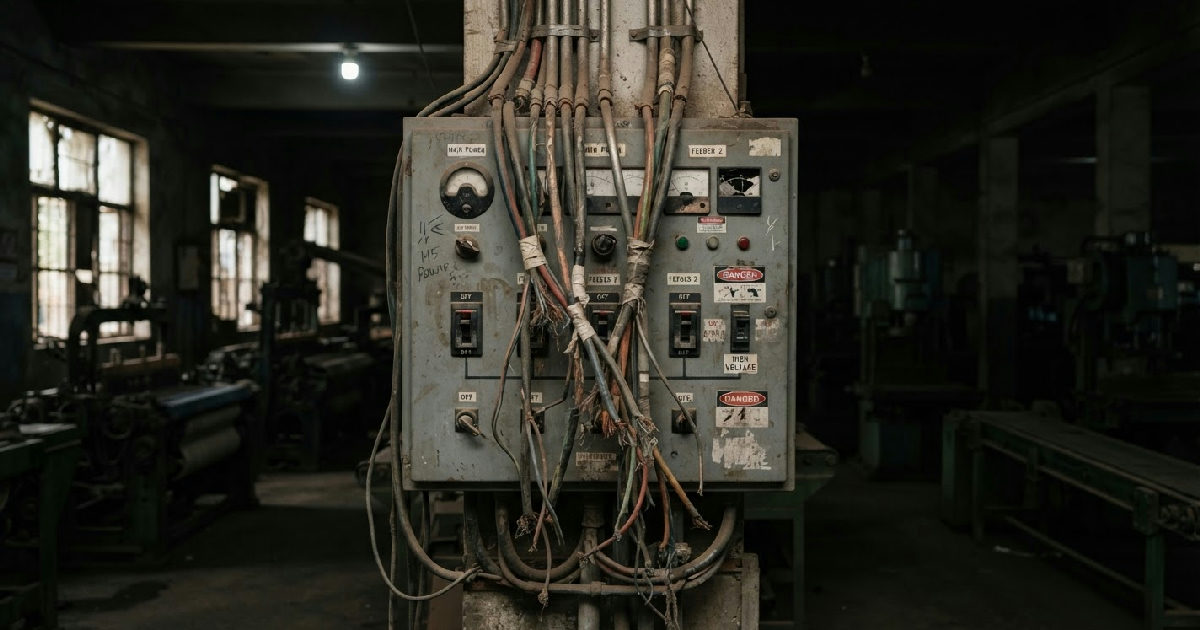
Nigeria embarked on an ambitious journey to privatize its electricity sector, hoping to spark an industrial revolution. However, this privatization effort inadvertently became a significant Nigeria industrial bottleneck, hindering the very progress it aimed to achieve.
It was a system designed to be temporary, a stopgap, yet it calcified into a permanent obstacle. This “single-buyer trap” became a critical bottleneck, preventing industries from securing reliable and affordable electricity.
Understanding the Nigeria industrial bottleneck
After the fall of the Berlin Wall, a powerful belief swept through global development institutions like the World Bank: states were poor managers, and markets held the key to efficiency. This philosophy reshaped how nations approached public services, particularly electricity, pushing for its commercialisation.
Nigeria embraced this paradigm “almost line by line,” breaking up its state-owned utilities. The plan was to privatise power plants and distribution networks, fostering a competitive wholesale market. But a crucial element, the Nigerian Bulk Electricity Trading Plc (NBET), entered the scene as a provisional measure.
NBET: From Stopgap to Stranglehold
NBET was created because newly privatised Distribution Companies (DisCos) lacked the financial strength and credit history to sign long-term Power Purchase Agreements (PPAs) directly with generators (GenCos). It was meant to bridge this gap, signing sovereign-backed take-or-pay agreements with GenCos and reselling power to DisCos.
However, this temporary intermediary evolved into a perpetual one, blocking direct commercial ties between electricity producers and consumers. This structural flaw ensured that NBET bore the brunt of a broken system, becoming a permanent middleman.
The DisCos, meanwhile, struggled to collect revenue, often remitting only 30% to 50% of their monthly invoices to NBET. Compounding this, retail tariffs remained politically suppressed, held below cost. The gap, inevitably, fell to NBET to cover.
The consequences were staggering. NBET found itself reliant on the Federal Treasury and the Central Bank of Nigeria for massive financial interventions, starting with a N701 billion Payment Assurance and escalating into multi-trillion naira lifelines. This created a circular-debt crisis, where poor payment discipline crippled the entire value chain.
A Legacy of Crippled Infrastructure
The financial strain on NBET rippled throughout the sector, weakening gas supply and maintenance across the system. Generation companies often received only about 27% of their bills, hindering their ability to invest in upgrades or even maintain existing equipment.
Nigeria possesses an installed generating capacity estimated at 13,500 megawatts, yet historically delivers only a fraction of this through the national grid. The Association of Power Generation Companies (APGC) has repeatedly highlighted that infrastructure deficits mean available capacity often cannot be evacuated.
This idle capacity directly impacts GenCos’ ability to serve customers and repay investments. Poor infrastructure, coupled with high transmission losses, leads to frequent blackouts, forcing businesses and households to seek costly alternatives. Many Nigerian industries operate their own expensive diesel generators, a significant “industrial tax” on their productivity.
This chronic power instability has profound economic consequences. Small firms, particularly, divert precious capital to fuel costs, leaving less for hiring or expansion. The World Bank reported that over 60% of Nigerians were below the national poverty line in 2025, a figure rising to around 63% after inflation and other pressures; unreliable power only exacerbates this.
Rethinking the Power Paradigm
Minister of Power Joseph Tegbe, taking office in June 2026, quickly diagnosed the sector as constrained across its entire value chain. He stated that rather than tariff increases, the focus must be on improving supply and strengthening the sector’s financial and physical foundations. The interplay of policy and power often creates unforeseen precedents.
Under the Electricity Act of 2023, and with renewed commitment from officials like Minister Tegbe and the Nigerian Electricity Regulatory Commission (NERC), Nigeria is now charting a new course. The central aim is clear: to dismantle NBET’s entrenched monopoly as the buyer of last resort and transition towards a more dynamic, contract-driven bilateral trading market.
This means allowing generators and buyers to establish direct commercial relationships, bypassing the problematic middleman. It’s a move designed to introduce real market discipline and reduce the sovereign’s exposure to the sector’s financial risks. Such structural changes are critical for industrial growth.
Diversifying Energy for Industrial Clusters
Beyond reforming the national grid, several concurrent initiatives aim to diversify Nigeria’s energy landscape. States like Lagos, Edo, and Kaduna are leveraging a recent constitutional amendment to establish their own localised electricity markets. This decentralised approach promises more tailored solutions for specific industrial needs.
The Federal Government is also tackling the mountain of legacy debt through securitisation, aiming to clean up balance sheets and encourage fresh investment. Parallel to this, the Rural Electrification Agency (REA) is scaling up productive-use renewable mini-grids. These provide direct solar power to farming clusters, rice mills, cold rooms, and market centres, sidestepping the strained national grid entirely.
For instance, developing industrial clusters like Otun, with its planned groundbreaking, exemplifies this blended approach. It seeks to combine grid power, gas, renewables, and other sources to ensure reliable electricity at the point of use. Nigeria’s diverse energy portfolio, including fossil fuels, hydro, wind, and tidal power, can support this broader economic transformation.
The Path to Industrial Revival
Nigeria aims for universal access to affordable electricity by 2030, a monumental task requiring connections for 500,000 to 800,000 new households annually. This target underscores the urgency of systemic reform, not just patching up existing problems. The objective is not merely capacity on paper, but reliable electricity delivered where it’s needed most.
The circular debt, caused by a system that couldn’t sustain itself, is being actively addressed. Minister Tegbe noted that poor payment discipline weakens gas supply and maintenance, which in turn leads to unreliable supply and depressed collections, further deepening the debt cycle. This vicious circle has to be broken.
Addressing the core power issues demands a multi-pronged strategy. This includes gas-to-power projects, expanding hydropower, deploying solar solutions, investing in storage, and strengthening regional transmission networks. The Ajaokuta-Kaduna-Kano pipeline, for example, represents a vital artery connecting energy resources to inland industrial centres.
The journey away from the single-buyer trap is complex, but the path is clear: embrace direct commercial relationships, empower states to develop localised solutions, and invest in a diverse energy mix. Only then can Nigeria truly power its industrial future and shed the unexpected bottleneck created by yesterday’s solutions.
The learning: even the most logical solutions, when divorced from practical market realities and allowed to stagnate, can inadvertently create new and more profound problems than they were intended to solve.
