




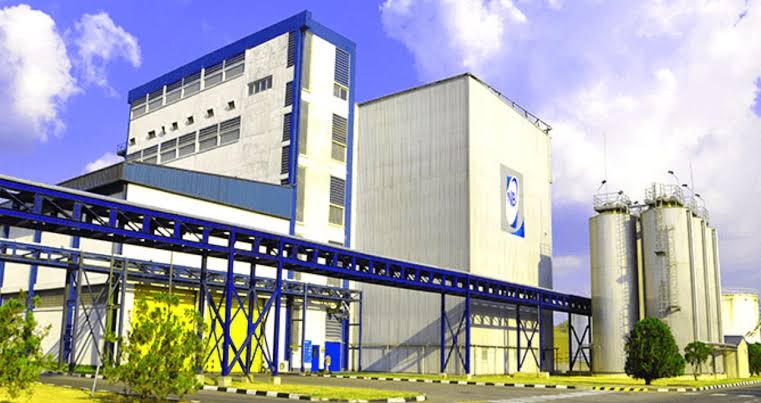
In 1957, Nigerian Brewery Limited commissioned its second brewery in Aba, a commercial hub in Nigeria’s Eastern Region.
The Aba Plant didn’t just brew beer; it embodied the complex interplay of foreign capital, local entrepreneurship, and evolving consumer habits that would come to define Nigeria’s economy. Its story helps us understand the foundational systems that shaped modern industrial Nigeria.
Establishing a Brewing Giant in Colonial Nigeria
The journey towards industrialisation in Nigeria gained significant momentum in the mid-20th century. At its core was the formation of Nigerian Brewery Limited on November 16, 1946, a venture born from a collaboration between the United Africa Company (UAC) and the Dutch brewing behemoth, Heineken.
This partnership combined UAC’s extensive commercial networks and capital with Heineken’s brewing expertise. Though incorporated locally, the company’s ownership and technological underpinnings retained strong international links.
Early Partnerships and Local Production Shift
The formation of Nigerian Brewery Limited reflected a broader economic trend: internationally connected companies were increasingly setting up manufacturing operations within Nigeria. They moved away from solely importing finished products, choosing instead to produce goods closer to their emerging markets.
For Nigerian consumers, this meant a gradual change in how goods reached them. Products once shipped from overseas could now be manufactured and bottled locally, then distributed through Nigerian commercial networks.
The company’s first brewery was constructed at Iganmu in Lagos, laying the groundwork for one of the country’s most recognised industrial enterprises. It was here, in 1949, that commercial brewing operations truly began.
Star Lager and the Battle for Market Share
June 1949 saw the first bottle of Star lager roll off the Lagos bottling lines, though historian Simon Heap pinpoints July 14, 1949, for Star’s initial production, attributing the earlier June date to ginger ale. Either way, 1949 marked the critical entry of locally brewed lager into the Nigerian market.
Star Lager stepped into a market already familiar with imported beers and alcoholic beverages. Local production didn’t instantly eliminate these imports; instead, it competed alongside them in an expanding consumer economy.
Figures from government trade and industrial reports, compiled by Heap, reveal significant growth. Locally produced beer and stout climbed from approximately 2.407 million gallons in 1957 to 3.06 million gallons in 1958, and then to 4.455 million gallons in 1959.
Despite this rise, imports remained dominant. Nigeria brought in roughly 6.16 million gallons in 1957, 6.27 million in 1958, and 6.83 million in 1959. This period showed rapid domestic production growth, but foreign beer still commanded a major slice of the market.
This dynamic illustrates that the push for local industrialisation was an expansion of capability, not an immediate replacement of foreign supply. This colonial economic context also saw other industries grappling with external influence and the burgeoning demand for local content.
Aba’s Strategic Role in Eastern Industrialisation
The year 1957 was crucial, not just for Nigerian Breweries Limited, but for the Eastern Region’s economic landscape. That year, the company commissioned its second brewery in Aba, extending its production footprint beyond Lagos.
This expansion prompted the company to adopt the plural name, Nigerian Breweries Limited, reflecting its move from a single-brewery operation to a geographically broader enterprise. Aba was a natural choice for this next step.
Establishing a Regional Footprint in 1957
Aba had already cemented its status as a major commercial centre, making it an ideal location to establish brewing capacity. Placing production facilities in the Eastern Region meant the local market no longer had to rely solely on supplies from Lagos.
Simon Heap documented the Aba brewery under construction during this time, with Nigerian Breweries Limited actively promoting its growing geographical presence through newspaper advertising. A 1957 Daily Times campaign, featuring photographs of the Aba brewery under construction, proudly declared, “East and West, Star is Best.”
The initial installed capacity of the Aba Brewery was 500,000 hectoliters per annum (HL/annum). This was a substantial contribution to the nation’s brewing output.
At this stage, Lagos maintained an annual production capacity of about 2.5 million gallons, while Aba added one million gallons. Together, these breweries met a significant portion of Nigerian demand and even supported limited exports, demonstrating Aba’s importance as a genuine industrial production facility.
Economic Web and Foreign Influence
The Nigerian Breweries Aba Plant required a vast array of supporting systems: water, electricity, bottles, transport, warehousing, labour, and distribution networks. Its operations formed a complex economic web, connecting manufacturing with transport, commerce, and urban consumption.
But industrialisation within Nigeria didn’t automatically equate to Nigerian control over the capital or technology driving it. Nigerian Breweries, from its inception, maintained strong international corporate ties, particularly through UAC and Heineken N.V. of the Netherlands.
The Aba Brewery, therefore, vividly illustrated two parallel developments in the late colonial economy: the growth of manufacturing capacity within Nigeria and the persistent influence of foreign capital and technical expertise in shaping this industrial expansion.
This historical context is vital for understanding how many of Nigeria’s core systems were established. It reveals the origins of an economy still grappling with complex influences that span decades.
From Independence to Modern Expansion
As Nigeria neared independence in 1959, the rapid growth in beer production was a clear indicator of a broader economic transformation. Urban populations were swelling, wage employment was taking root, and commercial networks were becoming increasingly sophisticated.
The increase in local beer and stout production from 2.407 million gallons in 1957 to 4.455 million gallons by 1959 was particularly revealing. In just two years, output surged by more than two million gallons.
Continued Growth and Nationwide Network
Imports, however, remained substantial, highlighting that Nigeria’s industrial transformation was far from complete. The country still relied heavily on overseas goods, imported machinery, foreign investment, and external technical expertise.
The brewery in Aba didn’t end Nigeria’s dependence on foreign capital or imported goods, but it demonstrated an industrial economy already in considerable flux. The trend of expansion continued post-independence.
Following Aba, Nigerian Breweries commissioned another brewery in Kaduna in 1963, extending its manufacturing network into Northern Nigeria. This solidified its status as a truly national brewing enterprise.
This period also saw a burgeoning media landscape, with the launch of publications that helped shape national identity and consumer habits.
The N18 Billion Transformation of the Aba Plant
Fast forward to the 21st century, the Aba Plant, located in the Industrial Layout, has remained a cornerstone of Nigerian Breweries’ operations. However, the physical technology has changed dramatically since the 1950s, following a major reconstruction and expansion project from 2012 to 2014.
This ambitious undertaking, costing N18 billion, more than doubled the plant’s previous production capacity of 1.2 million hectoliters per annum.
The expanded ultra-modern Aba Brewery, with a new capacity of 2.4 million hectoliters per annum, was officially commissioned on February 10, 2015. President Goodluck Jonathan, represented by Minister of Trade and Investment Dr. Olusegun Aganga, attended the significant event alongside then-Abia State Governor Theodore Orji.
Dr. Aganga lauded the project, stating it reinforced Nigerian Breweries’ commitment to the country’s economic development. He highlighted the creation of over 279,000 direct and indirect jobs, with 85 percent directly linked to production.
Managing Director Nicolas Vervelde underscored the company’s “Winning with Nigeria” philosophy, noting that the Aba Brewery was not only the most modern in Nigeria but also ranked among the best within the Heineken Group worldwide. He proudly stated that this entire ultra-modern facility is managed and operated 100 percent by Nigerians.
Enduring Legacy and Future Resilience
Unlike many industrial ventures of Nigeria’s mid-20th century, the Aba Brewery has remained a continuous part of the Nigerian Breweries production network. It is still identified as a key facility at Industry Road, Aba, with upgrades noted as recently as 2014.
This continuity gives the site unusual historical significance, linking Nigeria’s late colonial period with the modern industrial economy of Aba. It’s a tangible connection to how far the nation has come.
Technological Advancements and Environmental Commitments
The technology within the plant has, naturally, evolved dramatically since the 1950s. Modern production methods, sophisticated energy systems, updated packaging, improved logistics, and refined corporate structures are now standard.
The Aba Plant today boasts an ultramodern malting plant, acquired in 2008, capable of processing 35,000 tons of raw sorghum into malted sorghum. It also includes a maltose syrup production plant, which can process 10,000 tons of raw sorghum into malted syrup.
Beyond production, the facility includes a wastewater treatment plant capable of handling 3,300 cubic meters of effluent daily. The use of renewable biogas from these treatment plants significantly reduces the environmental footprint, saving approximately 600 tonnes of CO2 per year.
This commitment to modern infrastructure extends to its canning lines, which produce 57,000 cans per hour. These advancements show a company that has continually invested in efficiency and sustainability.
Challenges and Sustained Operations
Even with its impressive history and modern infrastructure, the Aba Plant has faced recent challenges. On April 10, 2026, a fire broke out at a leased external warehouse facility located opposite the brewery.
The warehouse was used for storing empty plastic crates. This incident serves as a reminder that even established industrial operations must contend with unforeseen events and the constant need for risk management.
More Than Just a Brewery: A Lens on Nigeria’s Economy
The Nigerian Breweries Aba Plant is best understood not just as a factory, but as a system that mirrors Nigeria’s broader industrial journey. Its establishment and evolution highlight the transition from an import-dependent economy to one with growing local manufacturing capabilities.
Its story encapsulates the dynamics of urbanisation, the expansion of wage employment, and the increasing complexity of commercial networks on the eve of independence and beyond. It also demonstrates the enduring role of foreign direct investment in shaping Nigeria’s economic landscape.
The plant contributed significantly to its region, accounting for 51% of products in the South-South area of Nigeria in 2013, and 21% of Nigerian Breweries Plc’s total product volume. This makes it a crucial case study in regional economic impact.
Ultimately, the Aba Brewery
