



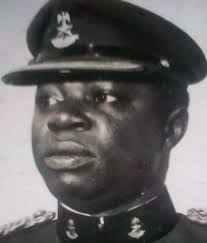
On March 31, 1969, Lieutenant Colonel Ogbugo Kalu launched a determined assault on Owerri, a city federal forces had held since September 1968. As commander of Biafra’s 14th Division, Kalu spearheaded the sustained offensive that would, by April 25, 1969, see the strategic city return to Biafran control, marking a pivotal moment in the Nigerian Civil War.
Born on November 18, 1935, in Ohafia, British Nigeria, Kalu’s military journey took him from a promising young officer in the Nigerian Army to a critical field commander for the secessionist state. His leadership during the bitter struggle for Owerri cemented his legacy as one of Biafra’s most remarkable figures, influencing Nigeria’s military system for generations.
Ogbugo Kalu’s path to Owerri recapture
Ogbugo Kalu embarked on his military career in September 1958, joining the Nigerian Army and receiving his foundational training abroad. He studied at the Regular Officers Special Training School in Ghana before attending the prestigious MONS Officer Cadet School in Britain.
By November 1959, he had earned his commission as a Second Lieutenant, entering an officer corps that would soon face immense internal strife. Kalu’s early service included deployments as an infantry officer, notably participating in operations related to unrest in Cameroon and United Nations peacekeeping efforts in the Congo.
He steadily rose through the ranks, achieving the substantive rank of Major in the first half of the 1960s. Major General Johnson Aguiyi-Ironsi promoted him to Acting Lieutenant Colonel in May 1966. This placed Kalu among a generation of Nigerian officers whose professional lives were dramatically reshaped by the tumultuous political landscape of the era.
Caught in the upheaval of 1966
Nigeria’s first military coup on January 15, 1966, dramatically altered the nation’s trajectory and Kalu’s career. The coup led to the assassination of prominent leaders like Prime Minister Abubakar Tafawa Balewa and Northern Premier Sir Ahmadu Bello, alongside several senior military officers.
Among those killed was Colonel Ralph Shodeinde of the Nigerian Military Training College in Kaduna. In the aftermath, Major Ogbugo Kalu was appointed Commandant of the Nigerian Military Training College. He wasn’t implicated in the coup plot, but the deepening ethnic and political tensions in the military made his position increasingly perilous.
The July 1966 counter-coup, orchestrated by Northern officers and soldiers, intensified the crisis. Major General Ironsi was killed, as were numerous officers of Eastern Nigerian origin. Widespread anti-Igbo violence in Northern Nigeria prompted a mass exodus of Easterners back to their home region.
Accounts describe Kalu’s daring escape from Northern Nigeria, concealed within the water tank of a goods train, a journey made possible by Nigeria’s railway infrastructure. This desperate journey marked the end of his career within the federal army and the beginning of a new chapter in the nascent Biafran military.
Forging a new military force in Biafra
By early 1967, with political relations crumbling, the Eastern Regional government began building its own military apparatus. Kalu played a foundational role in this effort.
He took command of the 8th Battalion, based in Port Harcourt, one of two infantry battalions created in February 1967. His responsibilities spanned a crucial southern sector that included Bonny, Calabar, Ahoada, and Oron.
As the conflict escalated and Biafra declared its independence on May 30, 1967, Kalu found himself commanding forces against his former comrades. He briefly led the Biafran 52nd Brigade, engaging federal forces under the 3 Marine Commando Division, particularly around Bonny, from December 1967 to January 1968.
Despite his efforts, the strategic situation around Port Harcourt deteriorated. In late April 1968, Kalu was removed from command of the 52nd Brigade. This reshuffling, however, couldn’t prevent the city’s fall to federal forces in May 1968, a significant blow to Biafra’s war effort. Yet, his leadership qualities were not forgotten.
Kalu’s resurgence: From guerrilla to division commander
The loss of Port Harcourt didn’t end Ogbugo Kalu’s operational career. He returned to the field, leading the Biafran 63rd Brigade of the 11th Division. In this role, he demonstrated the enduring spirit of the Biafran army.
Kalu commanded successful guerrilla operations, penetrating behind federal lines across the River Niger. His troops attacked Nigerian positions around Asaba, Ogwashi-Uku, and Igbuzo. These actions proved Biafra could still mount offensive operations despite severe territorial losses, boosting morale.
But the true test of his leadership came after federal forces captured Owerri in September 1968. In a dramatic turn, President Chukwuemeka Odumegwu Ojukwu appointed Kalu to command the Biafran 14th Division, replacing Colonel Sylvanus Nwajei.
Ojukwu reportedly sent Kalu a stern letter, reminding him of previous setbacks and demanding he clear federal forces from Obinze within 24 hours or resign. Kalu, undeterred, ordered a counter-attack and recaptured Obinze with the assistance of the Ogbunigwe mine.
The siege and recapture of Owerri
With Owerri under federal control, Kalu set his sights on its recapture. The city, defended by approximately 3,000 Nigerian soldiers of the 16th Brigade under Colonel E. A. Etuk, became the focal point of a prolonged and brutal siege that lasted from October 15, 1968, to April 25, 1969.
Under Kalu’s strategic direction, the Biafran 14th Division, supported by the 63rd and 60th Brigades under Colonel Lambert Ihenacho and Colonel Azum Asoya respectively, tightened its grip. Biafran forces began manoeuvring around the federal positions, gradually cutting off ground communications and isolating the Nigerian garrison.
The siege was characterized by intense fighting. On December 3, 1968, Kalu’s forces captured Eziama and Elelem. Two days later, a main assault on Owerri saw the expenditure of over 50,000 rounds of ammunition, 300 mortars, 200 howitzer shells, and 20 anti-tank weapons. This assault lasted two days.
By January 6, 1969, the Biafran 60th Brigade had captured Umuakpu, Umuagwo, and Omanelu, with the 68th Battalion seizing Obinze on the same day. Biafran troops effectively controlled much of the Port Harcourt road, strategically blocking Nigerian reinforcements.
They dug ditches, planted mines, and laid felled trees, further strangling federal supply lines. The Nigerian 16th Division, cut off and facing severe food shortages, became increasingly dependent on hazardous aerial resupply. But the Swedish pilot Carl Gustaf von Rosen and his “Biafra Babies” fighter squadron constantly harassed Nigerian air drops, making food supplies scarce for the besieged federal forces.
On March 31, 1969, Lieutenant Colonel Kalu’s 14th Division launched its decisive attack on Owerri, swiftly securing control over 70% of the city. As the siege intensified, a chilling discovery emerged: Biafran soldiers intercepted radio communications indicating the Nigerian 16th Brigade planned to execute Biafran prisoners of war due to lack of provisions.
On April 20, Major Ted Hamman, Colonel Etuk’s second-in-command, was killed by a Biafran sniper, highlighting the grim reality within the besieged federal position. Facing overwhelming pressure and dwindling supplies, the remaining 300 Nigerian soldiers under Colonel Etuk attempted a desperate breakout on April 24, escaping to Nigerian lines.
The Biafran 16th Division ambushed the retreating forces on April 25, inflicting further casualties. With their withdrawal, the city formally returned to Biafran control on April 25, 1969. The silent signal of military rule had now been met with a powerful counter.
The recapture of Owerri was a monumental psychological victory for Biafra. At a time when the secessionist state had lost significant territory, including Enugu, Calabar, and Port Harcourt, Kalu’s achievement demonstrated that Biafran forces remained capable of complex, sustained counter-offensives against a better-supplied adversary.
For his instrumental role in this triumph, Ogbugo Kalu was promoted to Brigadier, a well-deserved recognition of his strategic genius and battlefield tenacity.
From triumph to surrender and enduring legacy
Despite the significant morale boost from the Ogbugo Kalu Owerri recapture, the victory didn’t fundamentally alter the war’s strategic balance. Biafra remained encircled, its territory continued to shrink, and its population endured immense hardship from displacement and severe shortages.
By January 1970, federal forces launched their final offensive, Operation Tail-Wind. Owerri, once a symbol of Biafran resilience, fell again to federal troops as the war rapidly drew to a close. Kalu remained commander of the 14th Division during this final, devastating phase.
In a poignant moment, he was among the senior Biafran officers who accompanied Major General Philip Effiong as he announced the end of organized resistance on January 12, 1970, after Ojukwu had left Biafra. Kalu was present during the surrender process, moving through Amichi and Owerri with Effiong.
On January 15, Effiong formally accepted the authority of Nigeria, declaring the Republic of Biafra ceased to exist. Kalu survived the war and lived for more than three decades after the conflict. He passed away in February 2004 and was buried in his hometown of Ebem-Ohafia, Abia State, on February 28, 2004.
Unlike many prominent figures of the war, Ogbugo Kalu left no widely accessible memoirs, leaving his personal account of these defining events largely untold.
His career, from a Nigerian Army officer trained for a unified nation to a leading commander in a fight for secession, mirrors the tumultuous journey of Nigeria itself in its first decade of independence.
His story is a testament to the individual courage and difficult choices made during a period that continues to shape the nation.
