




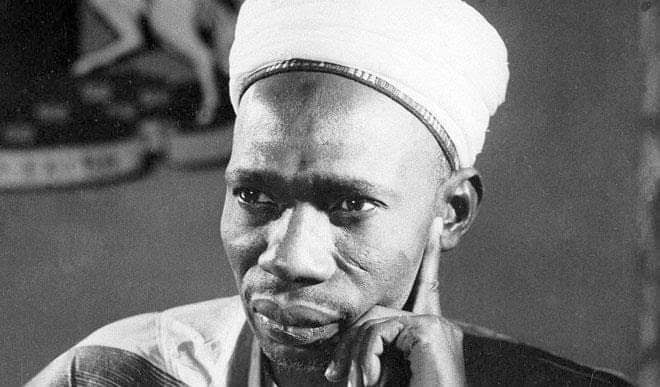
On November 30, 1964, Sir Abubakar Tafawa Balewa, the first Prime Minister of Nigeria, stood in Maiduguri to commission the newly completed railway extension into the city. This pivotal moment marked the culmination of a massive infrastructure project that had begun years earlier, financed in part by the World Bank, and spanned Nigeria’s dramatic transition from British colonial rule to full independence.
The arrival of the Maiduguri Railway transformed the capital of Borno State, connecting its rich agricultural lands and bustling markets to the wider national network. It reinforced Maiduguri’s status as the commercial heart of northeastern Nigeria, fulfilling a promise first made in 1958 to integrate a vital region.
The 1958 promise: connecting Nigeria’s northeast with the Maiduguri Railway
Six years before Maiduguri heard the first locomotive whistle, on May 2, 1958, the International Bank for Reconstruction and Development, better known as the World Bank, announced a substantial $28 million loan. This was a critical moment for Nigeria, as it represented the World Bank’s inaugural loan to the nation.
This foundational financial agreement marked a new chapter for Nigeria’s development and its relationship with global economic partnerships. Still under British colonial administration at the time, Nigeria’s Federation received a guarantee from the United Kingdom for the loan.
The funds were earmarked for the Nigerian Railway Corporation (NRC), intended for a comprehensive railway improvement and expansion initiative. The program had two primary objectives. Firstly, it aimed to modernize parts of Nigeria’s existing rail system. Secondly, it sought to extend the railway into the country’s north-eastern provinces, with Maiduguri as its ultimate terminus.
Contemporary World Bank documents described this new line as approximately 400 miles long, tracing a path from Kuru on the Jos Plateau through Bauchi and the then-Bornu Province. It adopted the standard 3 feet 6 inches (1,067 millimetres) narrow gauge already prevalent across much of the Nigerian network.
More than the loan: a national railway vision
The $28 million injection from the World Bank was undoubtedly important, but it represented only a fraction of the total railway development effort. The larger program, as estimated by World Bank documentation, carried an approximate price tag of $116 million.
Of this broader sum, around $62 million was dedicated to upgrading existing railway infrastructure. The remaining $54 million was specifically allocated to the Bornu Extension, highlighting the scale of the new line. This meant the World Bank loan covered roughly a quarter of the entire enterprise.
The Nigerian Railway Corporation’s own resources and loans from the Nigerian government supplied the bulk of the remaining capital. This underscores that the Maiduguri Railway wasn’t simply a foreign-built project, but a significant national investment.
Financing a national network
Beyond laying new track, the modernization component of the program involved significant procurement. It included 28 main-line diesel-electric locomotives and four diesel shunting locomotives, signaling a move towards more efficient operations. The network also acquired approximately 1,400 freight cars and cabooses, along with about 260 coaches, sleeping cars, and baggage vans.
Two diesel railcar sets were also part of this overhaul. The project intended to relay about 240 miles of existing main-line track, often using heavier rails for enhanced durability. Upgrades also extended to stations, railway yards, workshops, and vital communication systems across the national network.
Economic drivers: connecting the agricultural heartland
The strategic push to extend the railway into north-eastern Nigeria was rooted firmly in economic logic. Planners at the time saw immense agricultural and livestock potential in the region.
Groundnuts, cotton, and various grains were consistently highlighted in contemporary assessments as key products poised for increased output. The region’s substantial livestock production also presented a compelling case for improved transport.
Efficient transportation was a major bottleneck. While roads and rudimentary air services could move people and some goods, railway proponents argued that only a heavy-duty rail system could effectively transport large volumes of agricultural produce and other commodities over the necessary long distances.
The railway, therefore, became a central plank in a development strategy aimed at boosting access to markets and stimulating greater production and trade. It was an ambitious attempt to physically integrate the north-east more closely into Nigeria’s nascent national transport system.
These economic projections from 1958 framed the justification for such a significant investment. The ultimate impact on agricultural output, commodity prices, and regional trade would only be measurable with later economic data, but the intent was clear.
From colonial blueprint to independent reality
The Maiduguri Railway project is particularly notable for spanning one of the most defining periods in Nigerian history. Construction began in August 1958, more than two years before the nation achieved independence.
Sir Abubakar Tafawa Balewa, then Prime Minister of the Federation of Nigeria, ceremonially launched the railway construction in Maiduguri in 1958. His speeches from the era consistently emphasized the project’s significance and its anticipated role in transforming transport links between the northeast and the rest of the country.
Building through political change
Nigeria gained its independence from Britain on October 1, 1960. Yet, the work on the north-eastern railway continued unabated, making it a unique example of infrastructure bridging constitutional divides. The financial framework, including Britain’s guarantee of the World Bank loan, was established during colonial rule.
However, much of the actual construction took place after 1960, with Nigeria now a sovereign state responsible for its own development priorities. This trajectory means the Maiduguri Railway doesn’t neatly fit into a strictly colonial or post-colonial category.
Parliamentary records from the 1960s confirm that construction on the Kuru to Maiduguri line, initiated in August 1958, proceeded well into the post-independence period. The railway became a physical manifestation of continuity, a shared asset inheriting plans from one era and executing them in another.
This cross-era construction lends the line particular significance in the broader history of Nigerian development, showcasing how major undertakings can transcend political transformations.
Maiduguri’s transformation: a new hub emerges
While the original timetable projected completion in late 1963, the Maiduguri Railway officially inaugurated on November 30, 1964. World Bank staff member Giuseppe Morra, who traveled on the inaugural journey, chronicled the event in his article, “Destination Maiduguri,” describing his experience joining the special train in Kaduna.
The six-year effort of planning and construction culminated with this event. Maiduguri, which in 1958 had been beyond the reach of Nigeria’s railway network, now stood as the north-eastern terminus of the nation’s narrow-gauge system.
The political landscape had shifted profoundly during those years. The Nigeria that began the railway project was still a dependent federation, but the nation welcoming the new rail line was an independent state charting its own course. This transformation solidified Maiduguri’s role as a vital commercial center, linking to Gombe, Jos, and Lagos.
The year 1964 also represented a peak performance for the Nigerian Railway Corporation, which transported over 11.28 million passengers and three million metric tonnes of freight. The Maiduguri line played a crucial role in moving agricultural products, coal, and minerals for export, accelerating the city’s economic development.
The earlier air connection
Maiduguri wasn’t entirely isolated before the railway’s arrival. The Federal Airports Authority of Nigeria (FAAN) records indicate an airfield was established in Maiduguri in 1950, predating railway construction by eight years.
This early airstrip, roughly 1,000 meters by 28 meters, was located where the Nigerian Air Force headquarters now stands. While air travel came first, the railway promised a different kind of connectivity, essential for the heavy freight movement vital to economic growth.
The modern challenge: rehabilitation, not expansion
More than six decades have passed since the Maiduguri Railway was inaugurated, and Nigeria now confronts a starkly different challenge. The era of building new rail lines to connect cities like Maiduguri for the first time has given way to the complex task of restoring and sustaining existing infrastructure.
After peaking in 1964, the Nigerian Railway Corporation experienced a swift decline from the 1970s onwards. Underinvestment, persistent corruption, and a severe lack of maintenance led to widespread deterioration of the network, including the vital eastern line.
Efforts to revitalize Nigeria’s railways have been ongoing since 2009. The existing Port Harcourt to Maiduguri main line, stretching approximately 1,443 kilometers, is a central focus of these rehabilitation projects. In late 2020, the Federal Government awarded a significant rehabilitation contract to China Civil Engineering Construction Corporation (CCECC).
This $3 billion project aims to restore sections of the old Eastern narrow-gauge network, starting northwards from Port Harcourt. By March 2025, the Federal Ministry of Transportation reported that the Port Harcourt to Aba section had been completed, with train services resuming there. However, progress on sections further north, towards Enugu, has been slower due to identified funding constraints.
The ministry has segmented the primary rehabilitation corridor into four major sections: Port Harcourt to Aba, Aba to Kafanchan, Kafanchan to Kuru, and Kuru to Maiduguri. In January 2024, the Nigerian Railway Corporation’s Managing Director, Mr.
Fidet Okhiria, stated that track laying for the entire Port Harcourt-Maiduguri railway project is expected to be completed within three years. This effort, however, faces significant hurdles including inadequate funding, rampant vandalism, and damage from environmental factors like washouts.
It’s critical to distinguish between restoring specific sections and achieving dependable passenger service across the entire Port Harcourt to Maiduguri route. The challenges today are not just about rebuilding tracks, but about ensuring the operational longevity and security of the rail system.
Lessons from the tracks: continuity and endurance
The story of the Maiduguri Railway offers profound insights into Nigeria’s development trajectory. It illustrates the late-colonial drive to expand transport networks into economically promising but underserved regions, recognizing their potential contribution to the broader economy. This initiative represents an enduring legacy.
Moreover, it highlights the growing role of international development finance in shaping the nation’s infrastructure. The 1958 railway loan wasn’t just a financial transaction; it was the genesis of a long-standing financial relationship that continued to evolve long after Nigeria achieved self-governance. It foreshadowed the complex web of global partnerships that would define many future projects.
Perhaps most importantly, this railway project underscores the remarkable continuity that often persists across periods of immense political change. Governments may fall, constitutions may change and countries may become independent, yet major infrastructure projects frequently bridge these historical divides.
The railway, conceptualized and financially initiated during Nigeria’s final colonial years, commenced service after independence, becoming an integral part of the new nation’s inherited infrastructure. It was a tangible asset passed from one era to the next, serving generations of Nigerians.
Its current difficulties in maintenance and funding reveal another crucial historical lesson: building infrastructure is merely the initial step. Railways, indeed all major public utilities, demand sustained maintenance, consistent financing, robust rolling stock, comprehensive security, a skilled workforce, and uninterrupted institutional support to thrive for generations.
The challenges of preserving such an asset are as significant as those of its initial construction, reflecting the enduring struggle to maintain what has been built. This enduring effort to sustain foundational systems is also evident in the preservation of deep-rooted Nigerian cultural traditions, which continue to shape national identity.
The Maiduguri Railway’s journey, from a promising blueprint to a vital but struggling artery, is a microcosm of Nigeria’s ongoing historical process. It’s a story not just about steel and sleepers, but about the enduring economic visions, political transitions, and the constant human effort required to build, and crucially, to sustain a nation’s foundational systems.
