




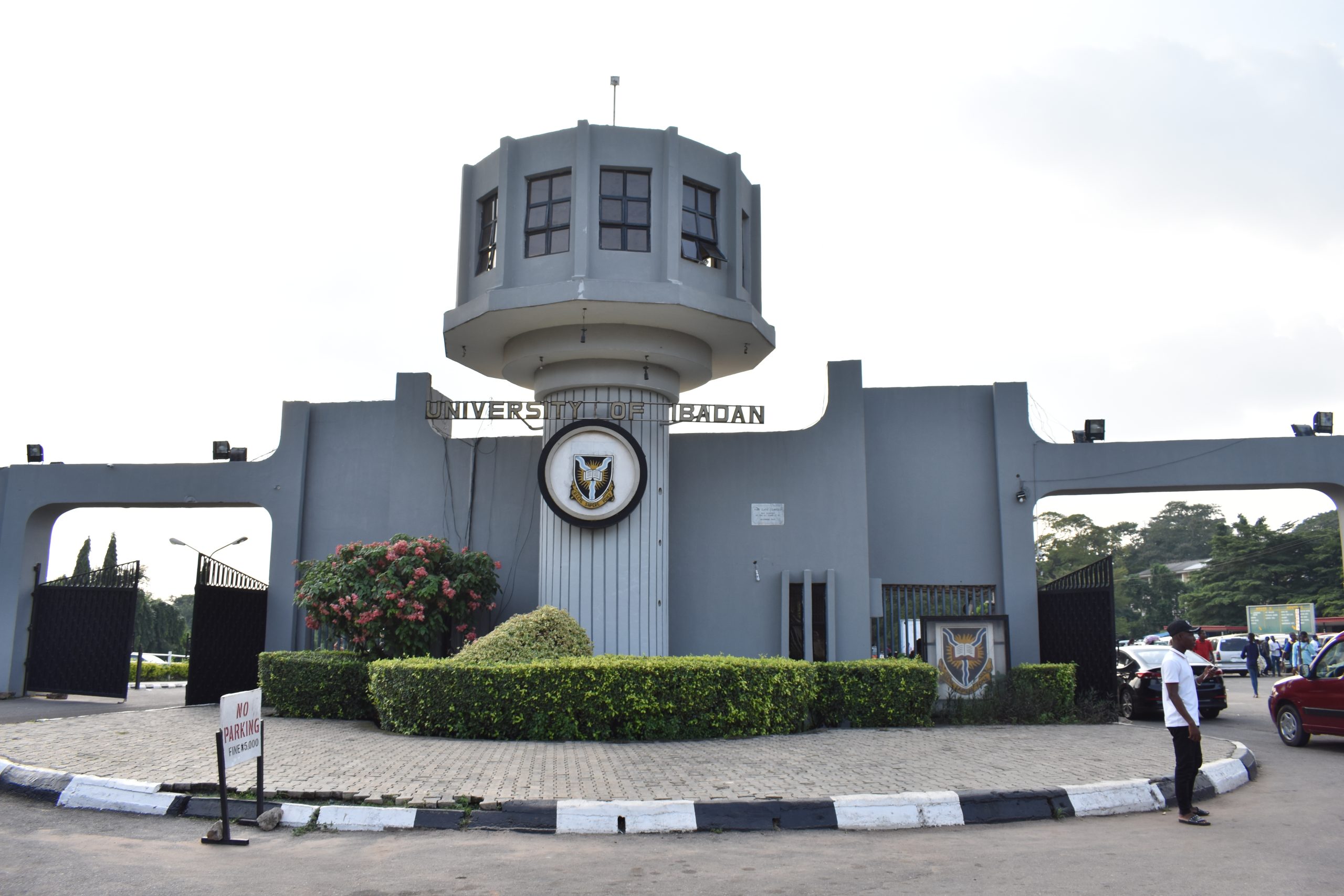
On January 18, 1948, 104 pioneering students began their studies at University College, Ibadan (UCI).
Just over two months later, on March 25, the institution celebrated its formal opening, cementing its place in the nation’s educational landscape. Later that year, on November 17, British Secretary of State for the Colonies, Arthur Creech Jones, would turn the first sod for the permanent site, bringing the vision of a sprawling academic hub closer to reality.
University College Ibadan 1948 and colonial demand
The establishment of University College, Ibadan, was a direct response to a growing demand for higher education in Nigeria and across British West Africa. It represented a crucial step away from the more limited vocational training offered by institutions like Yaba Higher College.
Instead, it aimed for a full university experience, modelled on the rigorous standards of British universities. This period of intense planning and rapid development laid the groundwork for what would become one of Africa’s most respected academic centres, echoing formative changes brought about by the Ransome-Kutis family in shaping Nigeria’s conscience.
The genesis of University College, Ibadan, can be traced back to the broader post-World War II discussions within the British colonial administration regarding university education in its territories. These conversations intensified with the establishment of the Asquith and Elliot commissions in 1943.
These commissions were tasked with charting the future of higher learning across the colonies. Both underscored the urgent need for university colleges that would uphold high academic standards while maintaining affiliations with established British institutions.
For Nigerians, the yearning for advanced education wasn’t new; it had been a consistent demand for decades. Yaba Higher College, founded in Lagos in 1932, had been an important early step, providing post-secondary vocational training.
But its limited scope frustrated many nationalists and aspiring scholars who sought access to full university education comparable to that available overseas. UCI thus emerged from this dual pressure: colonial policy considerations and relentless local advocacy.
kenneth mellanby’s challenging mandate
The task of transforming ambitious plans into tangible reality fell to Kenneth Mellanby, appointed Principal-designate on May 8, 1947. He arrived in Nigeria just two months later in July, only to find what he famously described as “no college, no building, no student body, no staff, no governing body.”
It was an extraordinary challenge: prepare a functioning university for teaching before its permanent campus even began construction. Mellanby, a British scientist and administrator, embraced this daunting mission.
His immediate solution was the provisional campus at Eleiyele, located approximately eight kilometres from the designated permanent site. Buildings of the former 56th Military General Hospital were quickly repurposed. Old hospital wards became lecture halls, laboratories, and student accommodation.
Crucially, staff and equipment from Yaba Higher College were transferred to Ibadan, providing essential resources and an institutional link to Nigeria’s earlier tertiary education efforts. This transfer ensured a degree of continuity and expertise.
the inaugural class of 1948 and london affiliation
The 104 foundation students who began their academic journey on January 18, 1948, formed the vanguard of Nigeria’s university system. Academic work began across the faculties of Arts, Science, and Medicine. Some of these students, along with several staff members, had transferred directly from Yaba, making for a smooth transition in certain academic areas.
The specific breakdown of students across all programs, including any female scholars among them, is not detailed in available records.
The formal opening of University College, Ibadan, held on March 25, 1948, was a significant public event, solidifying its presence. That same year, the University of London formally approved a “special relationship” with UCI. This arrangement meant that while Ibadan provided the instruction, students would ultimately be awarded degrees by the University of London.
This guaranteed academic quality and international recognition. The affiliation would continue until 1967, shaping the academic rigorousness of the nascent institution.
building a permanent academic landscape
Even as classes commenced at the temporary Eleiyele site, work on the permanent campus north of Ibadan pressed forward. On November 17, 1948, Arthur Creech Jones, the British Secretary of State for the Colonies, performed the symbolic sod-cutting ceremony, officially inaugurating construction. This date would later become the institution’s celebrated Foundation Day, commemorating the tangible beginning of its future home.
The chosen site, spanning over 1,030 hectares (2,550 acres), was generously leased for 999 years by the chiefs and people of Ibadan, underscoring local support for the project.
Eminent modernist architects Maxwell Fry and Jane Drew were commissioned to design the campus buildings. Their work became synonymous with tropical modernist architecture in West Africa. They created structures that not only looked distinctive but also responded thoughtfully to the local climate and environment.
Kenneth Mellanby remained at the helm as Principal until 1953, overseeing this crucial period of expansion and transition. He transformed improvised facilities into a fully established academic community, complete with purpose-built lecture halls, residences, and support infrastructure.
The impact of these early designs can still be seen in the university’s iconic architecture today, a lasting physical embodiment of its formative years. This development also mirrors the growth and transformation seen in other historical Yoruba cities. Tradition and modernity often intersected there, a pattern explored in Ibadan’s ancient Oloolu masquerade tradition.
the collective effort behind a national institution
While Kenneth Mellanby’s administrative leadership was central to University College, Ibadan’s early success, its creation was the culmination of efforts from many individuals and historical forces. It wasn’t a singular achievement but a broad historical process, reflecting persistent Nigerian demands for higher education, colonial policy debates, and the recommendations of influential commissions.
The institution also benefited significantly from resources and experienced personnel transferred from Yaba Higher College. Mellanby himself, in his 1958 memoir, The Birth of Nigeria’s University, documented the considerable challenges he faced, including bureaucratic hurdles, financial constraints, and political pressures.
His role was primarily one of implementation, transforming blueprints and proposals into a fully functioning college. He supervised the practical establishment of academic departments, laboratories, and administrative systems. The university’s foundational strength was truly built on the contributions of countless academics, administrators, students, builders, and the unwavering support of the surrounding Ibadan community.
This collective ownership ensured that the dream of a Nigerian university became a reality.
mellanby’s memoir and institutional memory
The institutional memory of University College, Ibadan, is significantly shaped by Kenneth Mellanby’s own account. Mellanby published The Birth of Nigeria’s University in 1958, five years after concluding his principalship. This memoir offers a direct window into the establishment and early growth of the university.
It delves into the planning difficulties, bureaucratic challenges, administrative tensions, financial problems, and political pressures that shaped the institution’s initial years. This firsthand narrative provides crucial insights into the complexities of founding Nigeria’s first university.
Mellanby’s book recounts the challenges and decisions faced during this formative period. It stands as a vital historical record, detailing his efforts to transform theoretical plans into a functioning college. Mellanby described turning abstract proposals into actual classrooms, laboratories, residences, and administrative systems.
The memoir is a testament to the practicalities and vision required to lay the groundwork for such a significant national institution. It sheds light on how such foundational structures are built, much like the evolving discussions around Nigeria’s revenue allocation formula.
from college to autonomous university of ibadan
University College, Ibadan, steadily expanded its reputation and influence throughout the 1950s, maintaining its special relationship with the University of London. The move towards full autonomy became inevitable as Nigeria approached and then achieved independence.
This transformation culminated with the University of Ibadan Act of 1962. This legislative milestone formally established the University of Ibadan as the successor to University College, Ibadan. It transferred all property and institutional responsibilities to the newly independent body. While the Act marked the legal transition, the precise dates of its assent and commencement are not detailed in available records.
While the University of Ibadan officially identifies 1962 as the year it became a fully autonomous institution, it consistently retains 1948 as its foundation year. This continuity acknowledges the direct lineage and the enduring legacy of the initial vision for higher education that began at Eleiyele.
The university’s institutional histories meticulously trace its roots back to that pivotal moment in 1948, recognising the profound impact of those early years on its subsequent growth and standing as a premier educational establishment in Nigeria and beyond.
The shift from a colonial-affiliated college to a fully independent Nigerian university mirrors the broader national journey towards self-determination.
kenneth mellanby’s enduring footprint
Kenneth Mellanby left University College, Ibadan, in 1953, returning to Britain to continue his scientific career. His significance to Nigerian educational history is intrinsically linked to his foundational role in UCI. He provided critical administrative direction at a time when plans had to rapidly materialise.
This included turning abstract proposals into actual classrooms, laboratories, student residences, and functional academic departments. Without his pragmatic leadership, the ambitious project might have floundered in its crucial early stages.
But the story of UCI, and indeed the University of Ibadan today, remains a vibrant testament to the combined aspirations of many. Its foundations were built on Nigerian desires for quality education, the lessons learned from earlier institutions like Yaba College. Strategic colonial commissions, governmental decisions, and the diligent work of a diverse group of individuals also contributed.
Mellanby’s contribution, captured in his writings, symbolizes the moment when a long-held national ambition took its first physical and academic form. This forever altered the trajectory of higher education in Nigeria, inspiring countless future generations of students and scholars alike.
