




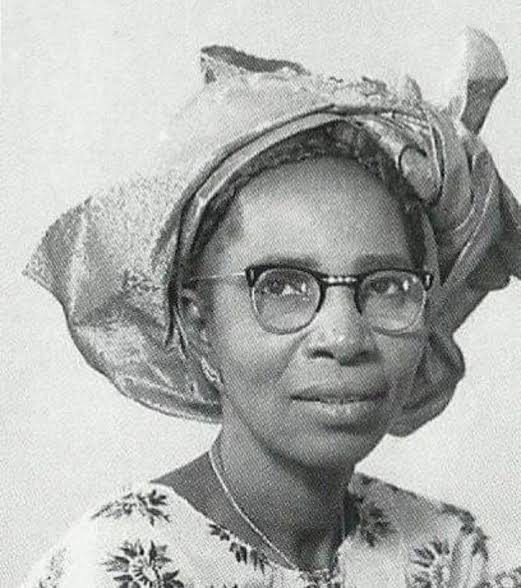
In 1960, Chief Wuraola Adepeju Esan stepped into Nigeria’s federal Senate, a lone female figure among 47 men, marking a pivotal moment in the nation’s nascent parliamentary democracy. Her appointment as the first female senator was not just a symbolic breakthrough; it heralded a public career that seamlessly wove together the threads of Western education, modern politics, and traditional Yoruba authority.
Esan, born in March 1909 in Calabar, had already dedicated decades to empowering girls through schooling, establishing an institution that would become the renowned People’s Girls Grammar School. She’d go on to challenge gender norms within the legislature and eventually embrace a significant traditional title, becoming the 10th Iyalode of Ibadan in 1975.
The Early Life of Wuraola Esan Nigerian Senator
Wuraola Adepeju Esan’s story began with parents who, despite lacking extensive Western schooling themselves, championed education for their children. Her father, Thomas Ojo-Ade, a First World War veteran and former Regimental Sergeant in the Royal West African Frontier Force, was a notable figure in Ibadan public life.
Her mother, Madam Ajike Ojo Aina, known as Iya Gbogbo, was a self-made businesswoman whose trade routes stretched from Calabar to Onitsha.
This early parental support proved crucial, offering Esan opportunities that many Nigerian girls of her generation simply did not have. She navigated several institutions during her formative years, attending Sacred Heart Convent in Ibadan and Calabar between 1921 and 1925. She also studied at Idi-Aba Baptist Girls School in Abeokuta from 1926 to 1927.
Her educational journey culminated at the United Missionary College in Molete, Ibadan, from 1927 to 1929. There, she honed skills in English, arithmetic, elementary science, and domestic science, preparing her for a teaching profession. These years instilled in her a profound understanding of both the potential and the limitations placed on female education during the colonial period.
Her initial teaching posts included the Akure Women’s Centre and later the Methodist Girls’ School in Lagos. At these institutions, women were typically taught literacy alongside domestic skills like sewing, laundering, and cookery. This curriculum often reinforced societal expectations that largely confined women to home-making roles, a limitation Esan would later work to dismantle.
building the People’s Girls Grammar School
One of Esan’s most enduring contributions to Nigerian society began during the Second World War. On August 8, 1944, colonial authorities granted her permission to establish the Ibadan People’s Girls School and the Dorcas Memorial Nursery School, based on a recommendation from Gertrude Plummer, then Superintendent of Education in the Oyo Provinces.
The Ibadan People’s Girls School opened its doors in January 1945 with just 18 pupils, initially located at Amen House in the Agbokojo area of Ibadan. Esan and one female assistant made up the entire teaching staff. The school even had to temporarily admit boys to ensure its financial viability, as girl enrollment was initially too low.
But Esan’s perseverance paid off. The school expanded, moving to a larger site in Molete, on the outskirts of Ibadan, by 1950. It gradually developed through different educational levels, culminating in its major transformation on March 21, 1965. On this date, the People’s Girls School officially became a full secondary institution, renamed People’s Girls Grammar School.
Her daughter, Yetunde Omisade, a University College Ibadan graduate who had worked in the Ministry of Information, took on the role of pioneer principal for the newly established grammar school. The institution prepared its students for the challenging West African School Certificate examination, a testament to Esan’s unwavering commitment.
This journey from 18 pupils to a recognized secondary school over two decades showcases the sheer scale of her educational vision and resilience.
from Ibadan civic life to national politics
Esan’s work in education naturally drew her into a broader sphere of civic and political activity. By the 1950s, she was deeply involved in Ibadan’s public affairs and became a prominent member of the Action Group (AG), one of late colonial Nigeria’s major political parties. The Action Group, a pan-Yoruba political group, dominated politics in the Western Region during this era.
Her political engagement wasn’t limited to party mobilization. In 1958, she achieved another significant milestone, winning election to the Ibadan Urban District Council. This experience provided her with direct exposure to formal local government operations just before Nigeria gained its independence.
Women played an indispensable role in Nigerian political campaigns, often through party women’s organizations, market associations, and various civic groups. However, leadership positions within the formal structures of government remained largely inaccessible to them. Esan, though, was about to challenge this barrier at the federal level.
She was also a founding member of the National Council of Women Societies (NCWS), a crucial umbrella organization that brought together various Nigerian women’s groups. This platform allowed her to advocate vigorously for women’s rights and educational advancement. Indeed, the new era for northern Nigerian women writers and activists owes a debt to pioneers like Esan.
nigeria’s first female senator makes her mark
On January 8, 1960, Wuraola Esan made history by becoming the first female member of the Nigerian National Assembly, serving as a nominated senator representing Ibadan West. Her appointment, made by the Western Region under Awolowo’s Action Group party, took place at a joint sitting of the Western House of Assembly and the House of Chiefs in Ibadan. This placed her among 47 male senators.
It’s crucial to understand the constitutional framework of the time. The Senate, as established by Nigeria’s 1960 Independence Constitution, did not consist of directly elected members from modern geographical constituencies. Section 37 of the Constitution stipulated that each region would select twelve senators from persons nominated by the regional governor.
So, while she didn’t win a popular election like Franca Afegbua would in 1983, her entry into the upper federal legislative chamber was a landmark.
advocating for representation in parliament
Esan did more than simply occupy a historic seat; she actively used her platform to champion women’s issues. On March 30, 1961, during a Senate discussion on parliamentary procedure, she highlighted the glaring absence of women on the committee responsible for preparing the chamber’s Standing Orders.
Her intervention forcefully raised a fundamental question about fair representation: institutional rules affecting everyone were being shaped exclusively by men.
Just days later, on April 4, 1961, she shifted her focus to economic matters, speaking during a debate on the Governor-General’s address. Esan drew particular attention to Nigeria’s petty traders, specifically the women working in prominent Lagos markets like Eko, Balogun, and Jankara.
She argued these market women were vital participants in the country’s economy and deserved inclusion in development programs designed to improve commerce and living standards.
championing northern women’s political rights
Esan’s Senate interventions grew especially significant when electoral rights were discussed. Women in much of Northern Nigeria did not possess the same practical political franchise available to their Southern counterparts during the First Republic. Esan repeatedly challenged this inequity, making their exclusion a federal legislative matter.
During the debate on the Electoral Bill on August 23, 1962, she passionately argued for Northern women’s full participation in political life. Her stance went beyond mere education, insisting that women should stand shoulder-to-shoulder with men in public affairs.
She carried this issue into subsequent debates, again challenging the political exclusion of Northern women in April 1963, bringing the concerns of millions directly to the federal legislature.
Her dedication extended to the composition of Parliament itself. On January 10, 1964, Esan contended that the existing political environment made it difficult for women to compete on equal terms with men.
She stressed that Nigeria possessed many capable women who were worthy of parliamentary seats and believed that a larger female presence would make it harder to overlook women’s interests. Her pioneering efforts in the Senate laid groundwork for future political generations and influenced the discussions around families that shaped Nigeria’s conscience.
from federal senator to Iyalode of Ibadan
After her impactful parliamentary career, Wuraola Esan’s public life took yet another turn, moving from modern political institutions into one of Ibadan’s most esteemed traditional female offices. In 1975, she achieved the distinguished title of the 10th Iyalode of Ibadan, succeeding Iyalode Adebisi Abeo. This role allowed her to blend her political and educational ambitions with the heritage of a traditional noblewoman.
The Iyalode institution has historically provided a recognized and powerful position for prominent women within Yoruba political and social structures. Ibadan, in particular, has seen some of its most influential women hold this title. Esan’s accession represented a unique convergence of her diverse experiences, bridging the colonial education system, partisan politics, and the ancient authority of the Ibadan chieftaincy.
She held the Iyalode title from 1975 until her death on January 1, 1985, at the age of 75. Her decade as Iyalode brought her public career full circle, concluding a journey that had begun in colonial classrooms more than half a century earlier.
Her ability to operate effectively across such distinct societal spheres highlights her exceptional adaptability and influence, reflecting the nuanced layers of Nigerian culture and governance.
a legacy woven through institutions and advocacy
Chief Wuraola Adepeju Esan’s impact on Nigeria transcends her celebrated status as the nation’s first female senator. Her life offers a compelling narrative of perseverance, vision, and a deep commitment to advancing opportunities for women. She didn’t just break barriers; she built the very foundations upon which future generations could stand.
Her journey began in the classroom, transforming from a teacher into the architect of an educational institution. The Ibadan People’s Girls Grammar School, which started modestly with only 18 students, evolved under her steadfast leadership into a recognized secondary school. This dedication to education for girls, at a time when such opportunities were scarce, marks a profound contribution to national development.
Esan understood that true empowerment required more than just access to education; it demanded a voice in governance. Her transition from local civic engagement to the federal Senate was a natural progression, each step building on the previous. In every role, she demonstrated an unwavering resolve to challenge existing inequalities and advocate for the marginalized.
Her time in the Senate was marked by a fierce commitment to representation and equity. She didn’t shy away from pointing out the male-dominated nature of legislative committees or from championing the economic rights of market women. Perhaps most significantly, she was a vocal critic of the political disenfranchisement of Northern Nigerian women, a courageous stance that underscored her belief in universal suffrage.
The culmination of her public service, embracing the traditional role of Iyalode, cemented her unique legacy. It showed her deep understanding of Nigeria’s multifaceted identity, proving that modern progress and traditional authority were not mutually exclusive. Esan’s story serves as a powerful reminder that leadership takes many forms, and that lasting change is often forged through a lifetime of determined effort across diverse spheres.
