




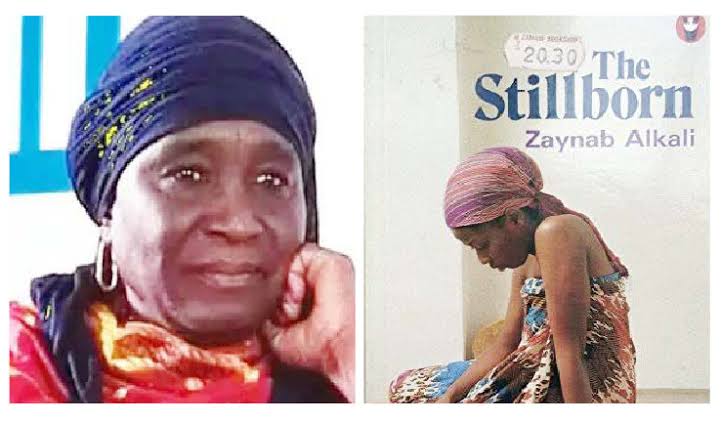
In 1984, a quiet but profound shift occurred in Nigerian literature, marked by the emergence of Zaynab Alkali, who paved the way for a new generation of Northern Nigerian women writers.
Her work immediately began to reshape perceptions of women’s lives in a region often misunderstood. Before her, the stories and aspirations of Northern Nigerian women largely went untold in the national literary scene. Alkali stepped into this void, offering nuanced portrayals of struggle and resilience.
Zaynab Alkali A Ground-Breaking Voice Emerges from the North
Zaynab Alkali’s debut novel, The Stillborn, did more than just introduce a new author; it opened a crucial window. Published as part of Longman’s Drumbeat series, the book quickly garnered attention for its unflinching look at societal expectations and personal desires.
It explored themes like marriage, education, and the persistent tensions between ancient traditions and modern life. The story follows Li, a young woman navigating complex family expectations and her own intense need for independence. Her journey reflected the lived experiences of many women at the time, resonating deeply with readers.
The novel’s impact was immediate and substantial. In 1985, just a year after its release, The Stillborn won the Association of Nigerian Authors’ (ANA) prose prize. It also took home the ANA prize for Best Novel of the Year, firmly establishing Alkali as a significant new literary force.
Her unique perspective brought a fresh dimension to African women’s writing in the 1980s. She delved into the inner lives of her characters, giving them agency and complex motivations often overlooked in broader narratives. Alkali showed that Northern Nigerian women were not a monolith.
Academic rigor meets literary craft
Before her literary breakthrough, Zaynab Alkali built a solid academic foundation. Born on February 3, 1950, her family originally hailed from Borno State but settled in Garkida, Adamawa State, where she was born. This dual heritage likely enriched her understanding of diverse cultural nuances.
She attended Queen Elizabeth Secondary School in Ilorin, an institution known for its academic excellence. Her pursuit of higher education led her to Ahmadu Bello University, Zaria, and then to Bayero University, Kano. There, she earned a B.A. in English in 1973 and an M.A. in African Literature in 1980.
Alkali further solidified her academic credentials with a Doctorate in African Literature/African Studies, also from Bayero University Kano. This rigorous intellectual background clearly informed the depth and structure of her narratives. Her academic career flourished alongside her writing, creating a unique synergy.
She spent over two decades at the University of Maiduguri, teaching English, African Literature, and creative writing. As a senior lecturer in the English department for twenty years, she shaped a generation of students. Her influence wasn’t confined to the classroom.
Later, Alkali joined Nasarawa State University, Keffi, as a professor. She took on significant administrative roles there, serving as Dean of the Faculty of Arts and then as Deputy Vice-Chancellor (Admin) from 2005 to 2009. She even briefly acted as Vice-Chancellor in 2006, demonstrating her leadership capabilities.
Between 2015 and 2016, she occupied the post of Director for Gender Studies, a role that dovetailed perfectly with the themes often explored in her literary work. Her commitment to education and institution-building went beyond the university lecture halls.
She also worked for three years at the National Primary Health Care Development Agency (NPHCDA) in Abuja, starting in 2000. Alkali even established and runs Zyba Model Nursery and Primary School in Keffi, and oversees Zyba Farms.
Challenging traditions on the page
Alkali’s protagonists often challenge deeply entrenched patriarchal norms, particularly within Northern Nigerian society. Her female characters assert their independence, seeking education and personal fulfillment beyond traditional roles. They navigate the complexities of polygamous marriages and societal expectations with remarkable fortitude.
In novels like The Virtuous Woman (1987) and The Descendants (2005), Alkali continued to explore these intricate dynamics. Her characters frequently find strength and self-awareness through their struggles, emerging with a strong sense of self. This focus on internal growth resonated with many.
She addressed sensitive topics such as child marriage, child abuse, and unemployment, providing a voice for those often marginalized. Her literary approach, however, was not overtly political. During a 2018 panel at the Kaduna Books and Arts Festival, Alkali revealed she initially turned to writing due to a “phobia of public appearances.”
She said empowering women through her writing “came much later,” and that her first work was published “somewhat by accident.” This candidness reflects her focus on storytelling as a means to explore human experience rather than an ideological platform. Even so, her narratives inevitably champion female agency.
Alkali’s literary style blends traditional oral storytelling, influenced by her maternal grandparents, with modern literary techniques. She draws inspiration from authors like Thomas Hardy, Ernest Hemingway, Chinua Achebe, and Ngugi wa Thiong’o. This fusion gives her work a unique texture and universal appeal.
The personal journey behind the prose
Zaynab Alkali’s life outside her writing also shaped her perspective. She was married to the late Mohammed Nur Alkali, who served as a former Vice-Chancellor of the University of Maiduguri. Together, they had six children. This personal experience of family life undoubtedly informed her narratives about domestic dynamics and parental expectations.
Her ability to balance a prolific writing career, demanding academic positions, and family responsibilities speaks volumes about her dedication. It also provides a practical counter-narrative to the very constraints she explores in her fiction. Her life itself stands as an example of what her characters often strive for.
While she has sometimes distanced herself from the term “feminist,” preferring “womanism,” her impact remains significant for women’s rights advocates. Womanism, as she and others define it, often emphasizes the improvement of women within their cultural contexts.
This approach, rather than a direct confrontation with existing patriarchal structures, allows her work to engage a wider audience.
Her works have been translated into multiple languages, including German, French, Arabic, and Spanish, broadening her reach globally. This international recognition underscores the universal resonance of her themes. Despite specific cultural settings, the human desire for dignity and self-determination transcends borders.
An enduring legacy in Nigerian letters
Zaynab Alkali’s contribution to Nigerian literature is undeniable. She didn’t just break ground as the first female novelist from Northern Nigeria; she cultivated a rich literary landscape where women’s voices could thrive.
Her five novels—The Stillborn, The Virtuous Woman, The Descendants, The Initiates, and Invisible Borders—alongside her short story collection Cobwebs & Other Stories, form a formidable body of work.
Her consistent focus on the complex realities faced by Northern Nigerian women has inspired subsequent generations of writers. They now have a precedent, a path carved by Alkali, to tell their own stories with authenticity and depth. Her characters, like Li, have become archetypes for resilience and self-discovery.
Alkali’s literary achievements are not merely academic; they are deeply cultural. She helped to challenge monolithic perceptions of Northern Nigeria, presenting it as a place of diverse human experiences and inner lives. This expanded understanding contributes significantly to the broader Nigerian narrative.
Her influence extends beyond direct literary imitation; it lies in the very permission she granted for certain stories to be told. The awards she has received, totaling over 40 to date, are a testament to her profound impact. Alkali continues to be a beacon for aspiring writers, particularly those from underrepresented regions.
What remains compelling about Zaynab Alkali’s story is how a desire to overcome personal shyness led to such a public and powerful voice. Her journey shows that sometimes, the most profound changes begin with the most unassuming intentions. Her legacy asks us to consider what other vital stories might be waiting for someone brave enough to simply begin writing them.
