



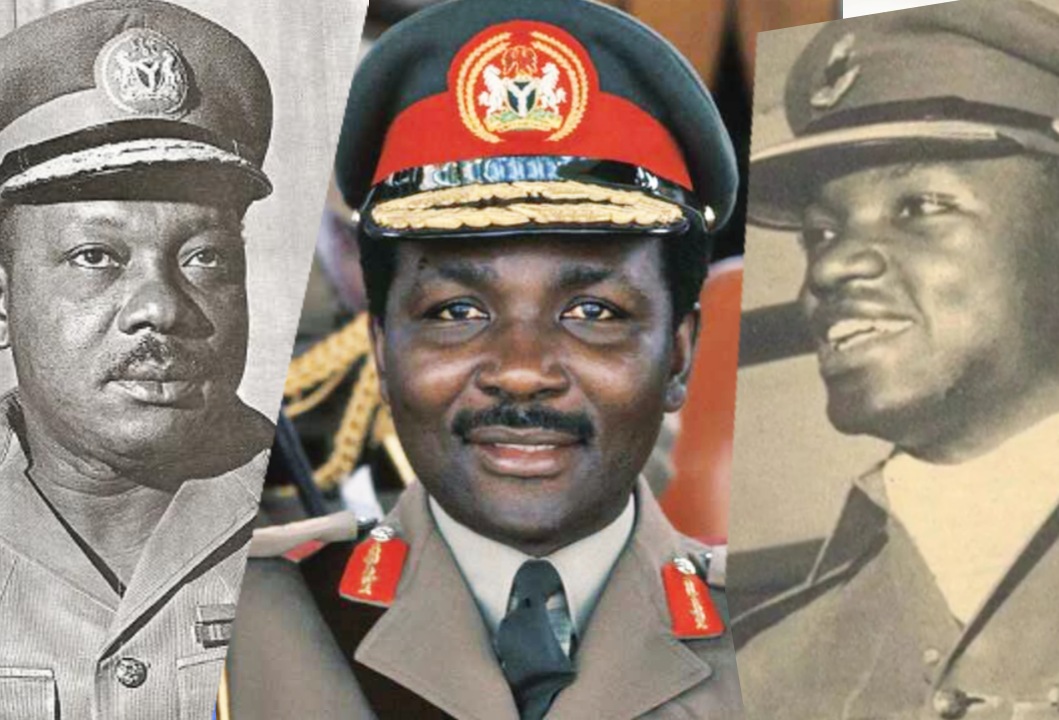
In the pre-dawn hours of January 15, 1966, armed soldiers surrounded the Broad Street Telecommunications Building in Lagos, disrupting phone lines across the city. This sudden military presence at a critical communications hub marked the dramatic opening act of Nigeria’s first military coup, an event that swiftly dismantled the civilian government of the First Republic and ushered in decades of military rule.
The coordinated actions by mutinous soldiers, led by figures like Major Chukwuma Kaduna Nzeogwu and Major Emmanuel Ifeajuna, targeted key cities including Kaduna, Ibadan, and Lagos.
the fragile foundations of the first republic
Their revolt claimed the lives of 22 people, including Prime Minister of Nigeria, Alhaji Tafawa Balewa, Premier of Northern Nigeria, Sir Ahmadu Bello, and Federal Finance Minister, Chief Festus Okotie-Eboh, effectively decapitating the nation’s political and military leadership within hours. This single, violent episode forever altered the country’s trajectory.
Nigeria had only achieved independence from British rule on October 1, 1960, becoming a republic three years later on October 1, 1963. President Nnamdi Azikiwe and Prime Minister Sir Abubakar Tafawa Balewa stood at the helm of a young nation grappling with the immense challenges of unity.
But by January 1966, the political system was under severe strain. The fledgling First Republic had become deeply fractured by intense regional rivalries, widely disputed elections, and escalating political violence that undermined public trust. Pioneering figures like Wuraola Esan navigated this tumultuous period in the First Senate.
The federal election of December 1964 proved particularly contentious, fueling widespread accusations of electoral fraud. Tensions flared further after the regional election in the Western Region in October 1965, which plunged parts of the region into disorder as political opponents clashed violently for control. This climate of mistrust extended into the Nigerian Army itself, where regional, ethnic, and professional divisions were growing.
the plotters’ strike and immediate chaos
It was against this backdrop of simmering unrest that a group of primarily middle-ranking army officers decided to act. They cited rampant corruption, widespread electoral fraud, ethnic favoritism, and pervasive political instability as their primary motivations, believing their actions would cleanse the nation.
The revolt, which began on the night of January 14 and continued into January 15, 1966, was meticulously planned to target specific political and military leaders. In Kaduna, Major Nzeogwu led the operations that resulted in the killing of Sir Ahmadu Bello, Premier of Northern Nigeria, and several senior officers.
Simultaneously, in Ibadan, Chief Samuel Ladoke Akintola, Premier of the Western Region, was killed. In Lagos, Prime Minister Sir Abubakar Tafawa Balewa and Federal Finance Minister Chief Festus Okotie-Eboh were abducted and later found dead. The violence also claimed the lives of senior military officers, including Brigadier Zakariya Maimalari and Brigadier Samuel Ademulegun, along with Mrs. Latifat Ademulegun, the Brigadier’s wife, and protective sentinels.
broad street: a nerve centre under guard
The choice to seize the Broad Street Telecommunications Building highlighted the critical role of communications infrastructure in any power struggle. On the morning of January 15, telephones in Lagos suddenly went silent, a clear signal of the coup’s unfolding.
Soldiers surrounded the central telephone exchange on Broad Street, as well as the cable office at the Marina and the Nigeria Broadcasting Corporation (NBC) studio in Ikoyi. Even the Prime Minister’s residence at Onikan was subjected to military operations. These actions were not random; they were part of a broader strategy to control the flow of information and command.
By 11:30 a.m. on January 15, telephone services in Lagos were reportedly restored, and Nigerian External Telecommunications began accepting cablegrams by early afternoon. But the swift disruption, even if temporary, underscored the strategic vulnerability of such installations. The soldiers guarding Broad Street were, in essence, securing one of the state’s most sensitive points.
the unexpected turns of a failed takeover
While the conspirators succeeded in eliminating much of the country’s political and military leadership, their grand plan to establish themselves as the new national government ultimately faltered. Their coordination, particularly in Lagos, proved insufficient to seize key institutions like army headquarters or effectively utilize broadcasting facilities.
Major Nzeogwu, leading the northern contingent, was reportedly enraged when he discovered that no rebel radio broadcast had been made from Lagos, revealing a crucial operational breakdown. This failure to secure and exploit national communication channels, particularly radio, proved a significant misstep, as historical accounts suggest radio was the dominant communication instrument during coups at the time.
Amidst the chaos, a pivotal figure emerged: Major-General Johnson Aguiyi-Ironsi, the senior Nigerian Army commander. Ironsi, who was not part of the initial conspiracy, quickly rallied troops loyal to the existing command. As the coup plot unraveled, he became the most powerful surviving military authority, stepping into the void left by the fallen leaders.
from civilian rule to military decree
By January 16, Major-General Johnson Aguiyi-Ironsi had assumed leadership, marking the official end of the First Nigerian Republic. The Council of Ministers, under immense pressure, reportedly agreed to transfer administrative power to the armed forces. Acting President Nwafor Orizu formally announced this transfer in a national broadcast that same night.
This was more than a temporary security measure; it was the birth of military rule. On January 17, 1966, the Constitution (Suspension and Modification) Decree No. 1 formally took effect. It suspended significant parts of both federal and regional constitutions, granting the Federal Military Government sweeping powers to legislate for any part of Nigeria on any matter.
The decree explicitly barred courts from questioning the validity of military decrees, solidifying the new power structure. This transformation did not merely respond to a crisis; it fundamentally reconfigured the Nigerian state, placing military authorities in a position of power previously held by constitutional civilian institutions, a legacy that profoundly shaped Nigeria’s military system for years to come.
the deepening ethnic fault lines
The ethnic composition of the January coup quickly became a profound and lasting political legacy. A substantial number of the leading conspirators were Igbo officers, while many of the prominent victims were northern political and military leaders, including Sir Ahmadu Bello and Prime Minister Sir Abubakar Tafawa Balewa. Several senior northern officers also perished in the violence.
Although the conspiracy wasn’t exclusively Igbo, and Major-General Johnson Aguiyi-Ironsi, an Igbo himself, survived to become Head of State, the pattern of casualties fueled intense suspicions in Northern Nigeria. These suspicions, deeply political, profoundly shaped the reception and opposition to Ironsi’s subsequent government.
The responsibility for the coup lay with the individual officers involved, not an entire ethnic group. But the perception of a targeted ethnic agenda created deep-seated resentment that festered, contributing to an already volatile national mood. This underlying tension would prove difficult to defuse.
unification attempts and growing northern opposition
Ironsi’s government moved quickly to restructure the Nigerian state. On May 24, 1966, the Constitution (Suspension and Modification) (No. 5) Decree, widely known as Decree No. 34, was enacted. This decree aimed to abolish Nigeria’s federal structure, renaming the country simply the Republic of Nigeria and transforming the existing regions into groups of provinces.
Ironsi presented these unification policies as a necessary step to curb destructive regionalism and bolster national administration. However, in large parts of Northern Nigeria, Decree No. 34 was perceived as a direct threat, intensifying fears of political centralization and potential southern domination.
The failure to prosecute the detained coup participants only exacerbated these suspicions, particularly given the killings of January. Nigeria’s political and military crisis continued its dangerous descent, with each action by the new military government further polarizing the populace. This growing unrest set the stage for further upheaval, demonstrating the fragile nature of unity in the face of deep-seated mistrust and unresolved grievances.
the july counter-coup and the path to war
The simmering discontent finally boiled over on July 29, 1966, when northern soldiers launched a brutal counter-coup. Major-General Johnson Aguiyi-Ironsi, who was visiting the Western Region at the time, was seized in Ibadan along with the Western Region Military Governor, Lieutenant-Colonel Francis Adekunle Fajuyi. Both men were killed.
The violence surrounding this counter-coup extended far beyond the leadership, claiming the lives of numerous Igbo military officers. Lieutenant-Colonel Yakubu Gowon, who had served as Army Chief of Staff under Ironsi, subsequently emerged as the new head of the military government, but the change in leadership did little to quell the rising tide of unrest.
Instead, relations between Nigeria’s various regions deteriorated even further. The ethnic violence that erupted in Northern Nigeria during 1966 led to widespread deaths and triggered a mass exodus of Easterners back to their home region, creating a humanitarian crisis. The Federal Military Government under Gowon and the Eastern Region, led by Lieutenant-Colonel Chukwuemeka Odumegwu Ojukwu, found themselves on an increasingly hostile collision course.
Attempts to resolve the crisis through diplomacy, such as the major meeting held at Aburi in Ghana in January 1967, ultimately failed due to disagreements over interpretation and implementation. Then, on May 27, 1967, the Federal Military Government abolished the four-region structure and created twelve states.
Just three days later, on May 30, Ojukwu proclaimed the Eastern Region the independent Republic of Biafra, escalating the constitutional confrontation into outright secession. Full-scale hostilities commenced on July 6, 1967, as federal forces began military operations against Biafra, plunging Nigeria into a devastating civil war.
a legacy etched in a building’s silhouette
The silent vigil of soldiers outside the Broad Street Telecommunications Building in January 1966 remains a powerful symbol of a nation teetering on the brink. Control over telephones and broadcasting facilities proved crucial, not just for issuing orders, but for asserting authority and communicating with a stunned populace.
The January coup, while ultimately failing in its original intent by the plotters, decisively shattered the First Republic and its civilian leadership. It paved the way for Major-General Johnson Aguiyi-Ironsi to assume control, initiating Nigeria’s first taste of military governance. But the consequences of that initial bloody dawn were immense and far-reaching.
Ethnic suspicions, fueled by the pattern of killings, festered into deep resentment. Ironsi’s subsequent centralizing policies further alienated parts of the North, culminating in the brutal July counter-coup and the deaths of many Igbo officers and civilians.
This tragic sequence of events—mass displacement, constitutional deadlocks, and failed negotiations—inexorably pushed Nigeria towards secession and the bitter conflict of the civil war.
The Broad Street building stands today as a stark reminder of the moment Nigeria’s parliamentary order gave way to military authority, fundamentally reshaping its political destiny for decades to come, and raising questions about how Nigeria divides its resources and power.
