




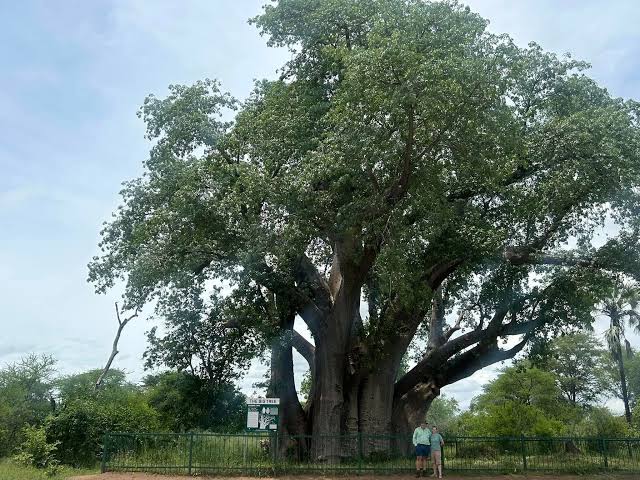
Beneath the sprawling canopy of an ancient baobab, elders gathered, their voices weaving tales of migration, healing, and divine protection. This wasn’t just any tree; it was an Igi Ose, the sacred Adansonia digitata, a living monument rooted deeply in the history and soul of Yorubaland.
For centuries, these majestic ‘upside-down trees’ have served as more than mere landmarks. They’ve been epicentres of worship, repositories of ancient medicine, and silent witnesses to the formation of communities like Iseri-Olofin, connecting generations through shared memory and spiritual practice.
Igi Ose’s enduring place in Yoruba culture
The African baobab, known botanically as Adansonia digitata, has always commanded respect. Its enormous trunk, broad crown, and remarkable ability to thrive in dry environments make it an unmistakable feature across tropical Africa, including Nigeria.
The Yoruba people, for their part, have long referred to this tree as ose or igi-ose. This naming tradition has a deep historical footprint, appearing in records like J. R. Ainslie’s 1937 publication, A List of Plants Used in Native Medicine in Nigeria, from the Imperial Forestry Institute at the University of Oxford.
Ainslie’s work confirms that the tree held an important place in indigenous botanical knowledge. But its significance stretched beyond mere utility, often acquiring profound religious meaning within many communities.
These particular baobabs became sites of worship, associated with fertility rites, communal identity, and protection. The name itself, “Ose,” suggests a sacred and powerful essence, linking it to longevity, healing, and robust spiritual energy in the Yoruba worldview.
Ancient baobabs: living libraries of memory
The extraordinary longevity of African baobabs contributes immensely to their symbolic power. Some specimens can live for hundreds to thousands of years, with some estimated to be over a thousand years old, and some living for up to 5000 years or more.
This immense lifespan means a single baobab can remain rooted in the same landscape while entire societies transform around it. It accumulates stories, ceremonies, and traditions, becoming a tangible link between ancestors and their descendants.
These trees become natural landmarks of memory, embodying the continuity of a people’s history. They stand as silent, steadfast anchors in a constantly shifting world.
From shrines to remedies: the baobab’s sacred and practical uses
The dual nature of Igi Ose, as both a spiritual sanctuary and a source of practical resources, is clear throughout Yoruba history. Many baobabs became sacred sites, while others were cherished primarily for their medicinal properties or as vital geographical markers.
Fertility shrines near Ibadan
One compelling example of the baobab’s sacred role can be found near Ibadan, where these trees have been associated with fertility shrines. These sites often served as centers of worship.
In fact, some African cultures believe the baobab connects heavens and earth, serving as a bridge between spiritual and physical realms. In Hausa tradition, baobabs are both feared and venerated, with stories warning of spirits residing inside their hollow trunks.
These sacred trees form part of a wider Yoruba landscape where natural features acquire spiritual meaning. They become places of prayer, sacrifice, or community gathering, their longevity allowing generations to attach memories and traditions to the same physical landmark.
Medicine beneath the baobab’s bark
Beyond spiritual veneration, the Igi Ose has a rich history in traditional medicine. Ainslie’s 1937 record detailed the use of various parts of Adansonia digitata, including its bark, leaves, and fruit pulp, highlighting a vast indigenous system of plant knowledge passed down through generations.
Traditional medicinal practices extensively document the leaves, bark, fruit, and other plant materials of the baobab. This provides an important window into the botanical knowledge of Yoruba communities, showing how plants were incorporated into everyday health and wellbeing approaches.
Every part of the baobab tree offers health benefits. Its leaves and fruit are rich in Vitamin C and antioxidants, valuable for boosting the immune system. The bark and fruit pulp aid in addressing constipation, stomach cramps, and indigestion.
Baobab leaf tea cools the body and reduces fever, while its calcium-rich leaves support bone health, offering relief from arthritis and rheumatic pains. Women also use baobab leaf baths and decoctions for postpartum recovery, helping to restore strength and lost nutrients.
Awori heritage: Igi Ose and ancestral settlement
The Igi Ose also played a crucial role in the historical narratives of community settlement and migration. This is particularly evident in the Awori accounts of the early history of the Lagos region, especially around Iseri-Olofin.
Iseri-Olofin is deeply embedded in the Awori origin story, linked to the founding of the Awori people by Olofin Ogunfunminire in the 15th century. This association signifies the community’s origins and long history.
The Awori are a Yoruba-speaking people whose historical communities extend across areas now divided between Lagos and Ogun States. Their traditions preserve connections with Ile-Ife and describe movements through settlements north of the lagoon, before the development of communities nearer Lagos Island.
Olofin Ogunfunminire is central to these traditions, his figure linking ancestral origins in Ile-Ife to the establishment of settlements in the region. Accounts collected during the early twentieth century placed him among ancestral figures, solidifying his role in Awori historical memory.
Such narratives became vital components of written historical literature, as historians recorded and compared oral accounts preserved by Awori communities. These stories helped remember founders, royal lineages, migrations, and relationships between settlements, shaping the development of literary traditions.
Trees as markers of collective identity
This deep connection between trees and historical memory isn’t exclusive to Igi Ose; it’s a broader pattern across south-western Nigeria. Many settlements, streets, and neighbourhoods bear names reflecting the importance of significant trees within their identity. Idi-Ose itself is a prime example of this naming convention.
Before modern road signs and detailed maps, prominent natural landmarks like a large tree provided easily recognisable points of orientation. They identified meeting places, markets, shrines, or boundaries for communities, acting as the very first signposts of a growing civilization.
When spiritual meaning became attached to such a landmark, its place within community life deepened immeasurably. A tree could become associated with ancestors, fertility, protection, or ritual obligations, transforming it from a natural object into a powerful symbol of collective identity.
The Isinkan Baobab in Akure South, for example, has provided shade for a market for approximately 600 years. Isinkan mythology claims Oba Iralepo Olusi planted this particular Igi Ose. It served as a market point for trade with communities from Isolo, Oba, Akure, and Oda.
In Oyan City, Osun State, a very old Igi Ose stands at the Oba’s market square, believed to have a motherly spirit. Sango worshipers conduct rituals there during Egungun and Agba festivals, and local belief even suggests a village exists inside the tree.
Another baobab, reportedly over 372 years old, can be found in front of the Asinigbo Palace in Isinigbo. These examples highlight the enduring presence and cultural importance of specific baobabs across Yorubaland, much like a merchant’s commercial legacy defines a city.
The enduring question: how do we nurture living history?
The story of the Igi Ose is far more than just the tale of a tree. It’s a compelling narrative about how communities use their living landscapes to remember founders, organise sacred space, and transmit vital knowledge across generations. The baobab stands as a powerful reminder that Nigerian history isn’t confined to written chronicles or archaeological digs.
Instead, it thrives in the everyday environment, imbued with meaning by the people who have lived alongside it for centuries. The sacred baobabs of Yorubaland show how religion, medicine, and memory can converge around a single living landmark. Awori traditions surrounding Iseri-Olofin illustrate the profound importance of oral history in understanding the early settlement of the Lagos region.
So, as Nigeria looks to the future, how do we ensure these living historical markers continue to flourish? How do we balance modern development with the preservation of these ancient, spiritual anchors that have shaped identity and tradition for millennia? The enduring presence of the Igi Ose asks us to consider not just what we build, but what we protect for future literary history.
