



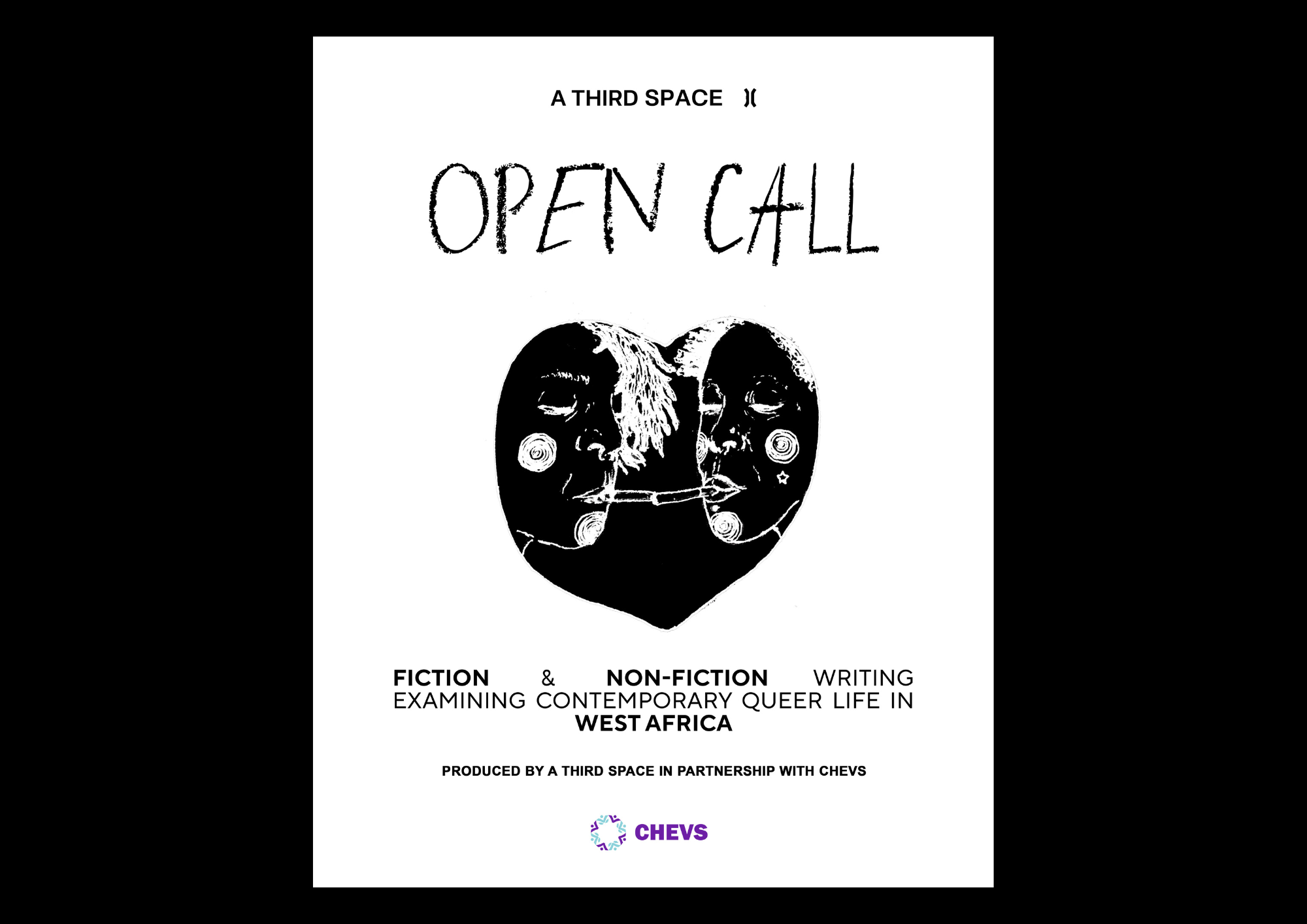
Today, August 10, 2026, A Third Space, in collaboration with CHEVS, officially opened submissions for its ambitious new project: Mismemories: Contemporary Writing from Queer West-African Voices. This forthcoming anthology seeks to capture and amplify the diverse narratives of LGBTQIA+ individuals across the region, promising a dedicated microsite and a limited print run through Elekere Press.
The initiative, part of A Third Space’s Long Story Project, marks a significant moment for literary representation. It invites writers aged 18 and older, currently residing in and originating from West African nations, to contribute fiction and nonfiction that explores love, desire, class, and ambition through a queer lens. The deadline for submissions is September 30, 2026, with each selected contributor receiving a $100 honorarium.
Defining identity in African storytelling
The launch of Mismemories isn’t just about publishing new stories; it’s about deliberately shaping the historical record. For decades, queer voices have often been relegated to the margins, if not outright silenced, within mainstream African literature. This new anthology aims to correct that imbalance, asserting a space for narratives that challenge conventional understandings of identity and experience.
It’s a familiar struggle, one that mirrors broader conversations about who gets to tell their story and how those stories are preserved for future generations. Projects like Mismemories become crucial historical artifacts, documenting lived experiences that might otherwise be overlooked or deliberately erased from the national consciousness.
The “Third Space” concept in cultural formation
The very name of the organizing body, A Third Space, draws from a powerful theoretical concept. Originating from postcolonial theorist Homi K. Bhabha, the “third space” refers to a hybrid site where new cultural meanings and identities emerge, often from the intersection of different cultures or, in this context, marginalized experiences. It’s a place of negotiation, resistance, and ultimately, creation.
In the context of queer West African identity, this third space is particularly resonant. It suggests a realm where individuals can articulate identities that transcend inherited colonial norms or traditional societal expectations. It’s where the personal becomes political, and where individual stories collectively begin to rewrite the dominant narrative. This intellectual underpinning provides a robust framework for the anthology’s mission.
Queer narratives within Nigeria’s literary evolution
Nigeria, a nation grappling with complex social and legal frameworks concerning LGBTQIA+ rights, has seen a gradual but persistent emergence of queer themes in its literary output. Though often met with resistance, Nigerian writers have increasingly dared to explore these nuanced realities, reflecting the diverse fabric of the country itself.
While West African in scope, this anthology welcomes writers from Senegal, Ghana, and Nigeria. This inclusivity suggests a broader engagement with the region’s literary landscape, adding to the country’s evolving canon. However, the project particularly encourages contributions from historically underrepresented countries like Benin, Mali, Sierra Leone, and others.
The history of Nigerian literature itself is one of continuous redefinition, from the post-colonial giants grappling with national identity to a new generation exploring gender, sexuality, and urban life. Platforms like Brittle Paper, founded by Ainehi Edoro, have historically played a vital role in nurturing these newer, often experimental, and marginalized voices.
They’ve acted as incubators for stories that challenge and expand what “African literature” can be, including works focused on queer, feminist, and other socially marginalized perspectives.
The journey for these narratives hasn’t been easy. Many writers and artists have had to contend with shrinking civic spaces, facing societal pressures and legal constraints that limit overt expression. Yet, the persistent act of storytelling itself becomes a form of defiance, an insistence on existence and recognition.
Expanding reach: beyond the printed page
A Third Space and its partners envision Mismemories as more than just a collection of written works. The anthology will first appear on a dedicated micro-site, ensuring digital accessibility, and then in a limited print edition, giving it physical permanence. But the project’s ambitions extend further into the public sphere.
Plans include readings and small-scale staged productions, transforming the written word into live, communal experiences. This multi-platform approach isn’t accidental; it recognizes that storytelling takes many forms and that reaching diverse audiences requires engaging them where they are. It also ensures the stories have a life beyond traditional publishing models, fostering a broader cultural conversation.
The Long Story Project, A Third Space’s editorial arm, has a history of commissioning work across various mediums, from text and audio to oral tradition and visual art. This track record suggests a deliberate strategy to leverage different artistic expressions to tell complex stories, ensuring the narratives within Mismemories resonate deeply and widely.
A deliberate push for diverse voices
The call for submissions makes a point of encouraging writers from countries often overlooked in the broader West African literary conversation. Nations like Benin, Mali, Sierra Leone, Côte d’Ivoire, The Gambia, Cabo Verde, Niger, Togo, Burkina Faso, Guinea, and Liberia are specifically mentioned, alongside the more established literary hubs like Nigeria, Ghana, and Senegal.
This deliberate outreach reflects an understanding that true representation requires active inclusion.
It acknowledges that the experiences of queer individuals are not monolithic across West Africa, nor are the challenges or opportunities for expression. By prioritizing these voices, Mismemories hopes to paint a more complete and authentic picture of queer life in the region, countering stereotypes and offering nuanced perspectives.
The submission guidelines are clear: writers can choose between fiction and nonfiction, with standard entries between 1,500 and 3,000 words, and novellas up to 8,000–12,000 words. French-language submissions are also welcome, provided they include an English descriptor, ensuring the project embraces the linguistic diversity of West Africa.
The option for anonymous submission via pseudonym further demonstrates a commitment to writer safety and comfort, particularly in regions where speaking openly about queer identity carries significant risks. This kind of nuanced approach is essential in complex socio-political contexts.
The enduring power of shared stories
Ultimately, Mismemories seeks to connect individual lives to a larger tapestry of West African experience. It’s an assertion that queer lives are integral to the region’s past, present, and future, and that their stories deserve to be told, heard, and celebrated.
Such literary projects help to normalize and humanize experiences that might otherwise remain misunderstood or demonized. This is especially vital as African economies navigate complex global forces, where internal social cohesion can be challenged by geopolitical shocks.
By fostering a collective space for these narratives, A Third Space isn’t just publishing an anthology; it’s helping to build a communal memory, a record that ensures the rich, complex, and often overlooked histories of queer West Africans are woven into the broader narrative of the continent.
The project leaves us with a potent question: what new understandings will emerge when these voices, long unheard, finally find their rightful place in our shared literary landscape?
