




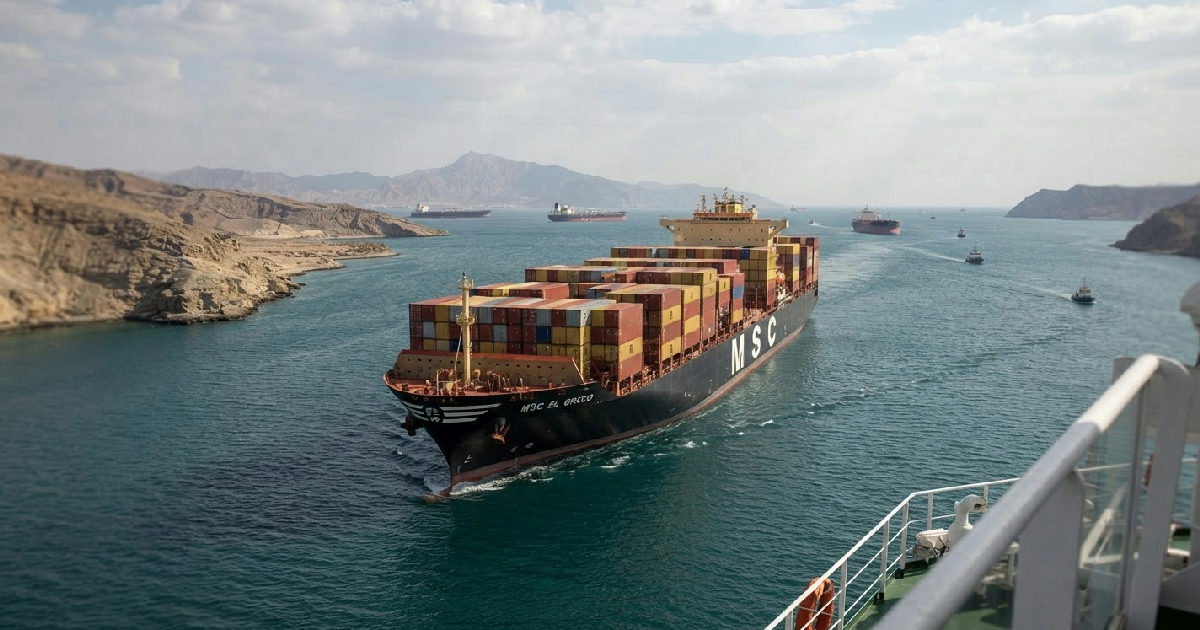
Disruption of shipping through the Strait of Hormuz has laid bare a profound vulnerability in Africa’s economic structure.
This stark reality underscores an urgent need for African nations to fundamentally rethink their path to prosperity. The traditional approach, often called structural transformation, aims to shift workers from low-productivity roles such as subsistence farming into more productive jobs within manufacturing and modern services. Yet, the global economic landscape has dramatically changed, presenting both heightened challenges and new opportunities for the continent’s long-term development.
A geopolitical jolt: the Hormuz disruption
February 28, 2026, marked the beginning of a significant shift for global trade and, by extension, African economies. Following US-Israeli air strikes against Iran and Iran’s subsequent retaliation, Iran’s Revolutionary Guard Corps (IRGC) initiated a prolonged blockage of the Strait of Hormuz. This involved blocking passage, boarding merchant ships, and laying sea mines, effectively choking a vital artery for global commerce.
The fallout was swift and severe for the world oil market. Brent crude prices surged, experiencing their largest monthly increase in March 2026 since the 1970s energy crisis. Tanker traffic through the Strait plummeted to near zero, with overall shipping declining by 70%.
Other critical commodities like liquefied natural gas (LNG), fertilizer, aluminum, and helium were also severely affected, highlighting the interconnectedness of global supply chains.
For African nations, the elevated fuel prices created an immediate crisis. Countries such as Seychelles, which imports 99.0% of its petroleum from Hormuz-sourced oil, and Uganda, importing 61.5%, faced immense pressure. Governments had to choose between letting pump prices skyrocket or incurring fiscally costly subsidies, a dilemma exacerbated by events like the Egyptian pound’s 7% depreciation due to reduced Suez Canal revenue.
Even oil-producing countries like Nigeria, which export crude but lack sufficient domestic refining capacity, were not immune. They still had to reimport refined products at these inflated global prices, revealing a deeply entrenched vulnerability that extends beyond simple resource abundance. This disruption served as a potent, real-time lesson in the dangers of external dependence.
The fading promise of manufacturing-led growth
For decades, the East Asian model of industrialization served as a benchmark for developing economies. Countries like Japan, South Korea, Taiwan, China, and Vietnam successfully expanded exports of labor-intensive manufactured goods—garments, footwear, furniture, and electronics. This strategy created millions of jobs for workers with limited formal education and gradually built technological capabilities, productive firms, and efficient logistics networks.
This success was largely predicated on a relatively stable global trading system. Trade barriers generally fell, demand for manufactured goods expanded, and richer countries steadily moved out of low-wage industries as their incomes increased. This predictability allowed governments to focus on becoming more competitive without constant external shocks.
Persistent internal hurdles
Africa, however, never fully capitalized on this opportunity. Manufacturing still accounts for only about 10% of GDP in sub-Saharan Africa, a stark contrast to East Asia and the Pacific’s 22%. The continent’s share of global manufacturing has actually fallen from roughly 3% in the 1970s to less than 2% today.
Several long-standing factors held it back even when global trade was more open. These included unreliable electricity, high transport and logistics costs, and small, fragmented domestic markets. Weak industrial capabilities, limited access to finance, and unpredictable policy environments also played a significant role in stifling manufacturing growth.
As a result, many African economies remained heavily dependent on commodity exports, importing the majority of their manufactured goods. This created a cycle of vulnerability, where external price fluctuations in raw materials could destabilize entire national budgets and development plans. Such historical challenges still remain, now compounded by a new set of global dynamics.
New global realities reshaping industrialization
The world has changed in fundamental ways, rewriting the rules for industrialization. Trade itself has become a geopolitical tool, with countries increasingly using export controls, financial sanctions, and control over strategic technologies to achieve national security objectives. The Strait of Hormuz disruption is a clear, recent example of this weaponization of global trade.
Secondly, manufacturing can no longer create jobs on the same scale it once did. Automation has significantly reduced the demand for low-skill factory jobs that historically absorbed millions of workers in industrializing nations.
This is a critical issue for sub-Saharan Africa, which is expected to account for roughly half of all new entrants to the global labor force by 2030—around 15 million young people each year.
Creating productive employment will require growth across manufacturing, modern services, and higher-value agriculture, rather than relying on factories alone. Then there’s China, which has remained exceptionally competitive in labor-intensive manufacturing. Many economists anticipated that rising wages in China would prompt a relocation of clothing, textiles, and footwear production to lower-income countries.
But China continues to dominate these sectors, making it much harder for African producers to enter these traditional entry-point industries.
Finally, artificial intelligence (AI) is rapidly becoming a general-purpose technology that can help economies move labor and capital into more productive activities. AI-powered tools can assist farmers with decisions on weather, pests, input use, and market prices, potentially revolutionizing agriculture. Businesses can also leverage AI to reduce costs, improve quality, and enhance their participation in regional and global value chains.
Crafting a new blueprint for African development
Despite these complex shifts, the core need for better-paying jobs and higher productivity to alleviate poverty and improve living standards across Africa hasn’t changed. What has shifted is the most effective route to achieving those goals. A new blueprint is emerging, focusing on collective economic security and strategic investments.
The AfCFTA’s crucial role
A key priority for African governments is to pursue economic security collectively rather than individually. Structural transformation demands that firms invest in new industries, but they are less likely to do so if export markets are uncertain or supply chains are easily disrupted. A larger, integrated market dramatically reduces these risks, fostering an environment where businesses can thrive.
Acting together also grants African countries greater bargaining power. This is particularly important as global powers like the United States, China, and Gulf states compete to invest in the continent’s digital and physical infrastructure.
The full implementation of the African Continental Free Trade Area (AfCFTA), which aims to create a market of 1.2 billion people with a combined GDP of US$2.5 trillion, is more urgent than ever. Its potential to boost intra-African trade and lift millions out of poverty by 2043 is significant.
Powering prosperity: the electricity deficit
Investment in reliable electricity remains foundational for both industrialization and the burgeoning digital economy. Manufacturing, digital services, and AI-enabled industries simply cannot grow without consistent power. Yet, electricity continues to be one of the most significant constraints across the continent. Over 600 million Africans lack access to reliable and affordable electricity, a severe impediment to progress.
In sub-Saharan Africa, a staggering 78% of businesses experience routine power outages. These outages lead to tangible losses, with businesses losing an average of 8.4% of annual sales, compared to a global average of 5.2%.
The impact is particularly acute in Nigeria, where 86% of businesses own or share a generator, highlighting a widespread dependence on expensive, imported fuel. Kenya sees 65% of businesses using generators, and South Africa 63%, underscoring a continent-wide challenge.
This reliance on diesel generators only further increases vulnerability to external fuel price shocks, creating a difficult cycle for economic stability and growth. Addressing this power infrastructure deficit is paramount.
Leveraging Africa’s strengths and looking ahead
To succeed, Africa must compete where it possesses genuine comparative advantages. This involves focusing on industries linked to its abundant natural resources and rapidly growing domestic markets. Opportunities lie in areas such as processing critical minerals, agro-processing, construction materials, and pharmaceutical manufacturing.
Recognizing agriculture as central to structural transformation, rather than separate from it, is also crucial. About half of sub-Saharan Africa’s workforce is employed in farming. Boosting farm productivity not only raises rural incomes but also releases labor for more productive activities and generates demand for manufacturing and services. Here, AI can play a transformative role, helping farmers make better, data-driven decisions that accelerate agricultural growth.
The disruption in the Strait of Hormuz has had an unexpected side effect: a rerouting of shipping around the Cape of Good Hope. This increased traffic presents an opportunity for African ports like Cape Town and Lamu to capture more shipping activity, potentially creating new logistical hubs.
Moreover, the crisis may spur a much-needed acceleration in expanding domestic refining capacity across Africa, reducing reliance on imported refined products. Angola, for instance, is already investing US$6 billion to expand its Lobito Oil Refinery to process 200,000 barrels per day. Such strategic investments could insulate economies from future external shocks.
Connecting these new global realities with the long-standing goal of moving workers and resources into higher-productivity activities is the key. Those countries that successfully adapt their economic strategies to this altered landscape will be best positioned for sustained and inclusive growth.
The questions now are how quickly these nations can pivot, and what political will they can muster to ensure their people benefit from these necessary transformations.
