




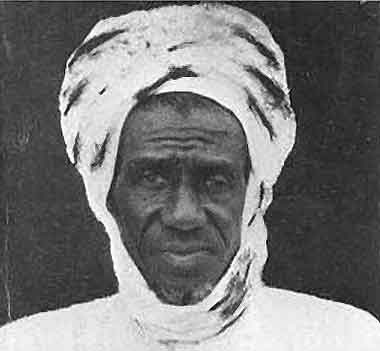
Alhassan Dantata, a pivotal figure in Kano’s commercial history, surveyed his domain in 1955, shortly before his death on August 17. His life’s work laid the foundation for a lasting legacy that shaped the region’s economic landscape.
Alhassan Dantata’s remarkable journey began in 1877 in Bebeji, within the Kano Emirate. He transformed from a traditional caravan trader into a pivotal figure in the colonial groundnut economy. His commercial acumen and innovative infrastructure utilization would lay the foundational stones for a family legacy that continues to shape Nigerian business, notably through his great-grandson, Africa’s wealthiest man, Aliko Dangote.
The commercial legacy of Alhassan Dantata
Alhassan Dantata was born into an Agalawa trading family, a hereditary group of long-distance merchants in the Hausa empire. His father, Abdullahi, was a respected “Madugu” or caravan leader, renowned for trading Kano-dyed cloth, cattle, and even slaves for kola nuts.
After his father’s death around 1885 and his mother’s in Accra around 1908, Dantata’s inheritance was diminished. He started his trading career modestly, buying goods in Bebeji and selling them in Accra, Gold Coast. He soon focused on kola nuts, efficiently moving them north from the forest belt.
Adapting to new economic forces
The early 20th century brought significant change to Kano, with new railway lines, banking institutions, and an expanding export economy. Dantata, with his keen business sense, saw these shifts not as threats but as opportunities. By 1906, he began diversifying his interests into beads, necklaces, and European cloth, anticipating the evolving market.
The European interest in groundnut exports intensified by 1912. This new commodity, fueled by international demand and facilitated by colonial infrastructure, became the cornerstone of Dantata’s burgeoning empire. His ability to navigate this new landscape, bridging traditional Hausa trading networks with colonial economic demands, set him apart.
Building the groundnut empire in Kano
Dantata’s importance stemmed from his exceptional organizational skills. He built an extensive network of clients, agents, and commercial associates who purchased produce directly from growers and local markets across Northern Nigeria. This allowed him to operate on a scale few indigenous merchants could match.
By 1918, the Royal Niger Company, a powerful European trading interest, approached him to purchase groundnuts. This relationship, later with the United Africa Company (UAC), solidified his position. Unconfirmed accounts suggest he bought about half of all groundnuts purchased by UAC in Northern Nigeria, demonstrating his pivotal role.
His wealth grew rapidly. By 1922, Dantata was recognised as Kano’s richest businessman. He acquired urban land, paying an annual fee of £20 for two plots in 1917, and invested in warehouses to store his vast quantities of produce.
In 1929, when the Bank of British West Africa opened its doors in Kano, Alhassan Dantata became its very first customer. He made a staggering deposit of 20 camel-loads of silver coins. This action underscored his immense capital and his willingness to embrace modern financial systems, even while maintaining traditional practices like operating interest-free for religious reasons.
By the 1940s, his operations were formidable, buying and selling approximately 20,000 tons of groundnuts annually. Kano Province alone contributed almost half of Nigeria’s total groundnut production during this period. The iconic groundnut pyramids of Kano, symbols of agricultural prosperity, were largely a creation of merchants like Dantata, serving as temporary storage for his harvested nuts.
The hidden cost of the groundnut boom
The groundnut boom in early colonial Kano, while creating immense wealth for figures like Dantata, also belonged to a period of significant social change and complex labour relations. Historian Mohammed Bashir Salau’s research reveals that slave labour played a role in parts of this expanding agricultural economy.
British conquest did not immediately abolish slavery; instead, its gradual decline allowed older labour relationships to persist and influence agricultural production. Wealthy merchants, including Dantata, benefited from a system where slave labour, tenancy, wage labour, and smallholder cultivation co-existed.
This dynamic highlights the multifaceted forces shaping the groundnut economy: African entrepreneurship, colonial economic policies, global demand, railway expansion, and the evolving labour landscape. Dantata’s career emerged from this intricate web, navigating its opportunities and its ethical complexities.
The sons’ divergent paths and diversified interests
Alhassan Dantata’s passing in 1955 marked the end of an era, but not the end of the family’s commercial influence. His five sons – Aminu, Ahmadu, Mamuda, Mudi, and Sanusi – inherited a substantial commercial foundation and a respected name, but they charted their own courses in a rapidly changing Nigeria.
Ahmadu Dantata initially took the helm, becoming a leading figure and managing director of Alhassan Dantata & Sons. Aminu Dantata, who joined the family business as a produce buyer in 1948, became deputy managing director. When Ahmadu died in 1960, Aminu assumed leadership.
Under Aminu Dantata, the family business diversified far beyond agricultural produce. He expanded into sectors like construction, manufacturing, petroleum, and investment, becoming one of Nigeria’s most renowned businessmen. Aminu Dantata recently died on June 28, 2025, at 94, and was buried in Madinah, Saudi Arabia, a testament to his enduring impact.
The Dangote connection
Sanusi Dantata, another of Alhassan’s sons, developed significant business interests independently. He holds a unique place in the family narrative as the maternal grandfather of Aliko Dangote. After Dangote’s father died when Aliko was young, Sanusi played a crucial role in his upbringing, instilling a deep commercial ethos.
Aliko Dangote, therefore, grew up in an environment where commerce was not just a profession but a way of life. While the modern Dangote Group operates separately from Alhassan Dantata & Sons, it clearly draws from the same extended commercial lineage. Dangote began in commodity trading, much like his great-grandfather, but scaled it into large-scale manufacturing and industry.
Today, the Dangote Group’s operations in cement, sugar, and petroleum refining signify a colossal industrial enterprise. This operates on a scale and in sectors vastly different from the colonial produce network established by Alhassan Dantata. However, the entrepreneurial spirit and strategic vision remain unmistakably linked.
A commercial tradition spans generations
The Dantata family’s history is a compelling narrative of adaptation and resilience across dramatically different periods of Nigerian economic development. Alhassan Dantata built his position by leveraging the opportunities presented by colonial rule, railway expansion, and global demand for agricultural commodities.
His sons and their descendants inherited not just assets, but invaluable commercial knowledge, relationships, reputation, and access to capital. They didn’t simply inherit wealth; they inherited a framework for creating it. This allowed them to pivot and thrive in new political and economic climates.
The longevity of this commercial heritage demonstrates how social capital and business acumen can persist across generations. Individual businesses may change, diversify, or even develop along separate paths, but the underlying entrepreneurial drive endures. It shows how the past continues to inform the present in Nigeria’s economic landscape.
From the bustling markets of colonial Kano to the modern industrial complexes that dot Nigeria today, the Dantata legacy underscores a fundamental truth about wealth creation in the nation. It’s a story less about static inheritance and more about the dynamic transmission of entrepreneurial spirit, commercial intelligence, and strategic adaptability.
