




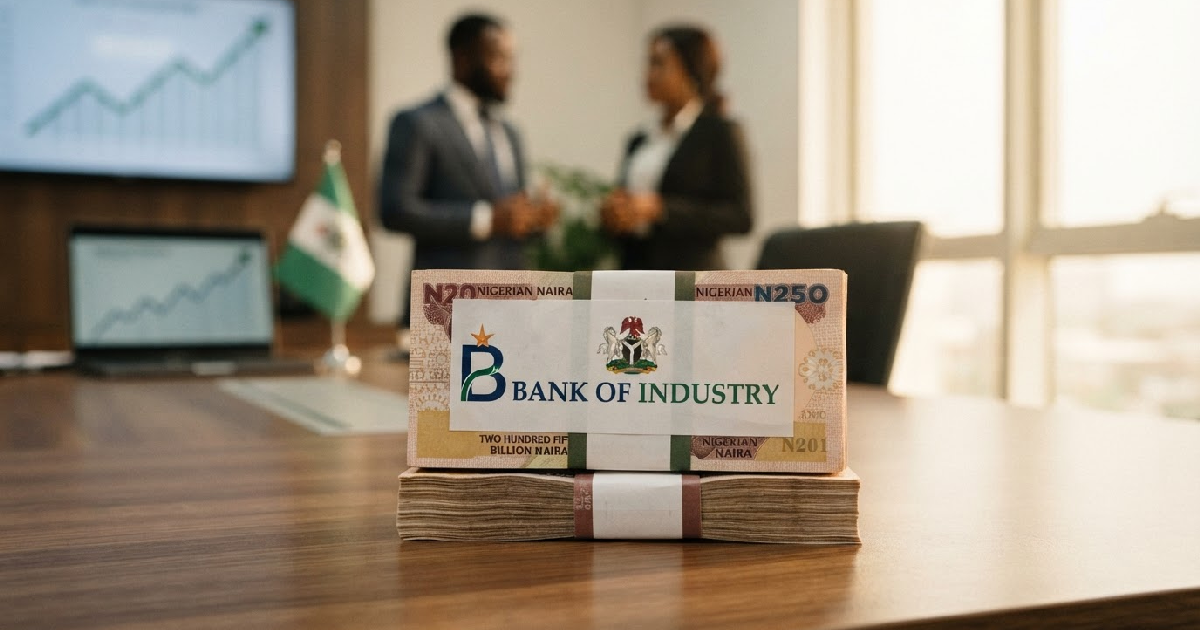
On August 5, 2026, the Bank of Industry opened subscriptions for its inaugural Series 1 Fixed Rate Bond, a N250 billion issuance aimed at fueling Nigerian business growth.
The offer, which closes on August 11, 2026, presents institutional and qualified investors with yields between 17.35% and 17.50% over a five-year period. It marks a significant move by Nigeria’s foremost development finance institution to broaden its funding base and deepen its impact across key sectors.
Catalysing industrial growth through targeted funding
The proceeds from this bond offer are earmarked for a wide array of eligible businesses and projects that are vital to Nigeria’s economic future. These include agriculture and food processing, healthcare, engineering and technology, and the burgeoning renewable energy sector.
Funds will also support petrochemicals, oil and gas, creative industries, and solid minerals. This targeted approach reflects a clear strategy to stimulate growth where it matters most, moving beyond traditional economic mainstays.
The BOI anticipates this funding will significantly improve access to medium and long-term capital for Nigerian enterprises. Officials expect it to expand productive capacity, create and preserve jobs, and increase local value addition across domestic supply chains.
Ultimately, the initiative aims to support import substitution efforts and boost exports. It’s a strategic play to build a more resilient and self-sufficient economy.
Inside the N250 billion bond offer
This Series 1 Fixed Rate Bond is the first under BOI’s larger $1 billion multi-currency instruments programme. It sets a precedent for how the institution plans to secure capital in the coming years.
The bond carries semi-annual interest payments, providing a steady return for investors. Its structure includes a two-year principal moratorium period, with principal repayments beginning in the third year and continuing in equal semi-annual amortised instalments until its maturity in 2031.
Crucially, the bond is exempt from tax, making it an attractive option for investors looking to maximise their fixed-income returns. This fiscal incentive aims to draw significant interest from institutional and qualified investors, who must subscribe a minimum of N5 million, with additional investments accepted in multiples of N1 million.
The Securities and Exchange Commission (SEC) granted approval for the issuance on August 3, 2026. This regulatory green light underscores the robust oversight governing the transaction.
Securing investor confidence with top ratings
Confidence in the BOI bond offer is bolstered by its impressive credit ratings. Both Agusto & Co. and Intelligence Africa have assigned the bond AAA ratings.
These top-tier ratings reflect the Bank of Industry’s strong capitalisation, consistent profitability, robust liquidity, and stable ownership structure. They signal a high degree of creditworthiness.
Further reinforcing this standing, S&P Global Ratings assigned BOI a ‘B-/B’ global scale rating with a positive outlook in January 2026. This assessment aligns with Nigeria’s sovereign rating, highlighting the near-certainty of government support for the institution.
Once issued, the bond will be listed on the FMDQ Securities Exchange. This listing ensures transparency and provides a secondary market for investors.
The Bank of Industry’s evolving mandate
The Bank of Industry has long stood as a pillar of Nigeria’s economic development. Established in 1959 and reconstituted in 2001, it is the country’s oldest and largest Development Finance Institution (DFI).
Its mission has consistently centred on transforming Nigeria’s industrial landscape. The BOI provides financial and advisory support for businesses of all sizes, from large corporations to Micro, Small, and Medium Enterprises (MSMEs).
The institution is predominantly owned by the Ministry of Finance Incorporated (MOFI) Nigeria, holding 94.80% equity, with the Central Bank of Nigeria (CBN) accounting for 5.19%. Dr. Olasupo Olusi, appointed in October 2023, currently serves as its Managing Director and CEO, steering its strategic direction.
With operational hubs spread across 34 states and the Federal Capital Territory, BOI’s influence extends far and wide. It plays a pivotal role in ensuring that development financing reaches various corners of the nation.
A track record of financial strength and impact
The Bank of Industry boasts a strong financial performance, demonstrating its capacity to drive economic change. Between 2023 and 2025, BOI disbursed over N1.27 trillion, supporting more than one million enterprises nationwide.
The year 2025 alone saw the bank disburse a record N636 billion to over 7,000 businesses. This marked its largest annual disbursement in history, funnelling funds into manufacturing, agribusiness, and the creative sector.
The financial institution’s gross earnings saw a 36% compound annual growth rate between 2021 and 2025. Interest income alone surged by 64% to N884 billion in 2025, up from N538 billion in the preceding year.
These figures reflect a healthy and expanding financial base. Such growth allows BOI to maintain its significant lending capacity.
BOI’s capital adequacy ratio stood at an impressive 39% in 2025. This is nearly four times the regulatory minimum of 10%, highlighting the bank’s exceptional financial stability and ability to absorb potential losses.
Furthermore, its non-performing loan ratio was a remarkably low 1.7%, well below the CBN’s prudential limit of 5%. This indicates effective risk management and a sound loan portfolio.
These robust financial indicators confirm BOI’s standing as a reliable partner in Nigeria’s economic journey. Its operations contributed to the creation and retention of 1.6 million jobs in 2025, alongside an estimated annual reduction of over 20,000 tonnes of CO₂ emissions through various projects. This long-term commitment contributes significantly to overall national economic health.
The bond in Nigeria’s economic landscape
This BOI N250 billion bond offer arrives amidst a complex economic climate, defined by ongoing efforts to diversify Nigeria’s revenue streams beyond crude oil. The nation has long sought to bolster sectors like manufacturing, agriculture, and solid minerals, aiming for sustainable growth.
The bond’s yield, ranging from 17.35% to 17.50%, must be viewed in the context of Nigeria’s broader interest rate environment. As of July 21, 2026, the Central Bank of Nigeria’s benchmark interest rate stood at 26.50%.
This difference means the BOI offers a competitive, albeit lower, return than the benchmark, reflecting its development mandate and the stability associated with its AAA ratings. It suggests a strategic balance between attracting investors and providing affordable capital to businesses.
The focus on funding priority sectors is a direct response to national economic blueprints. It signals a governmental commitment to build internal capacity and reduce reliance on imports, which has been a recurring theme in national development discussions.
Investing in agriculture, for instance, isn’t just about food security; it’s about creating value chains that employ millions. Supporting renewable energy projects helps address power deficits and positions Nigeria for a greener future. These investments aim to improve access to long-term funding, expand productive capacity, and boost exports, contributing to a more resilient business environment.
A question for future growth
The success of the BOI bond offer hinges not just on its subscription rate but on its long-term impact on the businesses it finances. Will these funds genuinely translate into expanded production, sustained job growth, and meaningful contributions to Nigeria’s Gross Domestic Product?
The offer represents a critical juncture for Nigeria’s industrial policy. It poses the question of how effectively development finance can serve as a catalyst when aligned with national priorities. Its success could provide a template for future domestic capital mobilisation efforts.
The bond also highlights a broader shift in how Nigeria approaches its economic challenges, moving towards structured financial instruments to attract investment. It’s a testament to confidence in indigenous institutions like BOI that domestic capital is being sought for foundational economic reforms.
As the subscription period closes, all eyes will be on how effectively these N250 billion are deployed. The stories of the businesses that benefit will ultimately write the next chapter in Nigeria’s industrial journey. This initiative holds the potential to significantly impact various sectors and foster broader development projects across the nation.
