



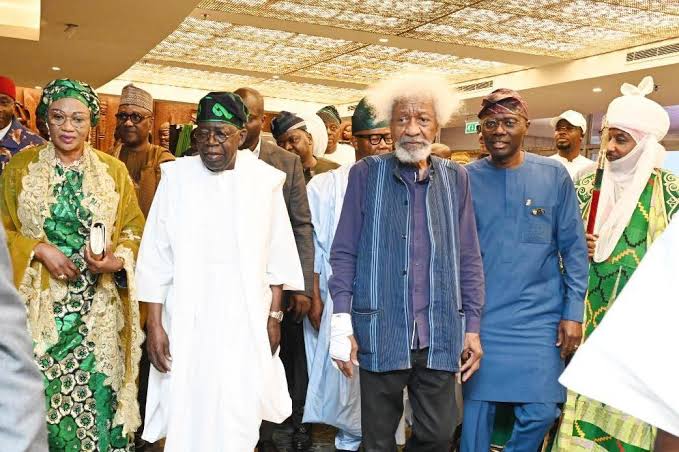
On Saturday, July 25, 2026, the premiere of Return of Jero brought Wole Soyinka’s classic dramatic satire to a new generation at the J. Randle Centre for Yoruba Culture and History in Onikan, Lagos. Playwright and producer Babatunde Odubanwo staged this contemporary adaptation to celebrate Professor Wole Soyinka’s 92nd birthday.
Directed by Omololu Sodiya, the performance received Wole Soyinka’s official endorsement, marking the 40th anniversary of his Nobel Prize in Literature. This artistic reimagining follows a long tradition of pioneering social crusaders who used local performance to interrogate society, transporting the classic beach prophet into the complexities of present-day Nigeria.
Reimagining Wole Soyinka’s satire in Return of Jero
The original satire, The Trials of Brother Jero, premiered in April 1960 in Ibadan when Wole Soyinka was only 26 years old. That early piece targeted the self-proclaimed prophets who dominated the Lagos bar beaches. These charismatic figures routinely exploited followers who were seeking spiritual or financial miracles.
In the 2026 adaptation, Babatunde Odubanwo updates this setting to reflect a modern Nigerian society where public morality and commerce collide. The production retains the wit, satire, and intellectual sharpness of the original script. It places the iconic beach prophet directly into the modern complexities of contemporary Lagos life.
This updated context demonstrates how little the underlying human inclination toward illusion has changed over six decades. While the humor remained a central element of the show, beneath the laughter lay pointed questions about leadership and deception. The performance challenged spectators to look past the comedy to see their own vulnerabilities.
By keeping the central wit intact, Omololu Sodiya ensured the performance preserved its philosophical depth. The team integrated contemporary characters and modern choreography to resonate with younger theatregoers. The resulting production felt familiar to the diverse crowd that filled the Onikan venue.
Reimagining classic theatre at the J. Randle Centre
Staging the production at the J. Randle Centre for Yoruba Culture and History added significant cultural weight. The center, which opened its doors in 2024, aims to preserve Yoruba history, spirituality, and customs. Its physical spaces are specifically designed to encourage active engagement with heritage.
This institutional effort to protect cultural memory echoes classic eras when creative endeavours on television helped shape national stories. Yet, this stage production remained an independent effort, sustained by sponsors and free registration. The venue became an active partner in bridging the past with the present.
Within the exhibition spaces, the performance combined compelling acting with carefully choreographed movements and live musical interpretations. The producers utilized immersive stagecraft and thoughtful costume design to deliver a reflective theatrical experience. This approach succeeded in capturing the attention of a highly diverse Lagosian audience.
The production team blended traditional Yoruba theatrical expression with modern production techniques. This visual storytelling reinforced the play’s dual identity as both a historical tribute and a contemporary critique. The adaptation proved that classic African literature can be reinterpreted without compromising its original philosophy.
The enduring legacy of Wole Soyinka’s satire
Professor Wole Soyinka became the first Black African to win the Nobel Prize in Literature in 1986. His works have consistently critiqued authoritarian leadership and examined the social complexities of post-colonial Nigerian life. His writing remains a vital reference point for understanding the continent’s social systems.
In 1973, Wole Soyinka published a sequel titled Jero’s Metamorphosis, which depicted the prophet turning his church into a commercial venture. This sequel anticipated the massive commercialization of faith that continues to shape modern West African communities. Return of Jero draws heavily from the satirical spirit of both texts.
During his post-performance address, Babatunde Odubanwo emphasized that the issues Soyinka examined decades ago have not disappeared. Instead, these societal challenges have simply evolved over time. The play serves as both a celebration of Soyinka’s legacy and an invitation to interrogate current realities.
This celebratory event reminded the public of the enduring power of creative dissent. Throughout his long career, Professor Soyinka used his plays to challenge civil abuses and military regimes. This latest production suggests that theatre must continue to hold a mirror to contemporary society.
How the Lagos theatre scene bridges generational divides
Connecting older academics with younger, digitally native audiences was a primary goal for the producers. This generation-spanning appeal has defined Nigerian performance art, tracing back to early concert tours that energized local culture decades ago. The play successfully captured this diverse demographic.
By keeping admission free through online registration, the organizers removed financial barriers that often restrict access to live theatre. Students sat alongside foreign diplomats and veteran actors, sharing a collective space. This democratic access is essential for keeping live performance relevant to younger audiences.
The younger spectators reacted enthusiastically to the contemporary music and choreographic elements integrated into the show. These modern additions did not distract from the script’s intellectual sharpness. Instead, they made the heavy themes of leadership, ambition, and faith more engaging for the audience.
The staging also highlighted the growing confidence of Nigeria’s contemporary theatre movement. Emerging actors and technical professionals worked alongside seasoned veterans to deliver a highly polished, energetic performance. This collaboration provides vital mentorship opportunities for the next generation of creative practitioners.
The next chapter for independent theater in Nigeria
Despite the successful premiere in Onikan, independent theatre in Nigeria still faces significant infrastructural hurdles. Many historic performance spaces require rehabilitation, and funding remains highly competitive. Staging productions of this scale requires immense dedication and collaboration from creative teams.
However, the sustained applause and strong turnout at the J. Randle Centre suggest a robust public appetite for live drama. Audiences want stories that address their daily realities with humor and intellectual honesty. This demand offers a viable path forward for directors willing to take risks.
Following the Lagos debut, the producers announced plans to explore additional performances and institutional collaborations. They intend to bring the reimagined play to other Nigerian cities and various international festivals. This expansion will ensure that Soyinka’s vital social commentary reaches a much wider audience.
Ultimately, this production demonstrates that classic literature is not a static historical artifact. It remains a living, breathing guide that helps explain our present circumstances. By reimagining the trials of Brother Jero, the creators have ensured that Soyinka’s critique remains active and urgent.
