




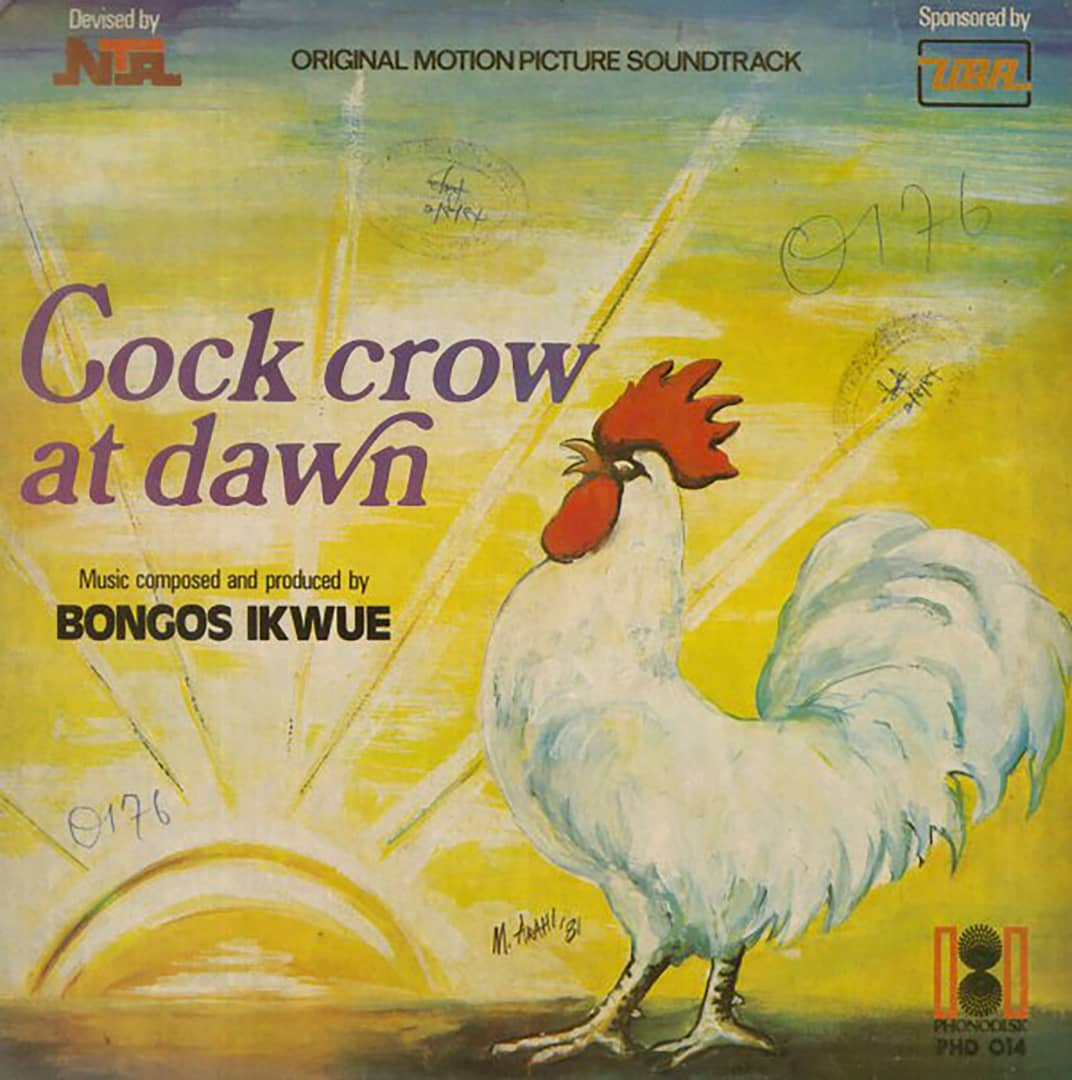
The Cock Crow at Dawn premiere in April 1980 at 8:00 PM on NTA brought Nigerian families a groundbreaking farm drama.
This was the night of the Cock Crow at Dawn premiere, a drama that would come to define an era of Nigerian broadcasting and turn a government policy into a national conversation.
The Cock Crow at Dawn premiere and its policy roots
At its heart, the show was a government commission. President Shehu Shagari’s administration was pushing its ‘Green Revolution’ programme, an ambitious attempt to revive the nation’s agricultural sector. But a policy needs a story to capture the public imagination. NTA, working with writer Peter Igho, created a series that did more than just promote farming; it made it the stuff of compelling human drama.
The arrival of Cock Crow at Dawn came at a moment of deep national anxiety about food. The oil boom of the 1970s had shifted Nigeria’s economic centre of gravity, but it cast a long shadow over agriculture. Successive governments worried about food production and rural decline.
General Olusegun Obasanjo’s military government had launched ‘Operation Feed the Nation’ in 1976. Shagari’s ‘Green Revolution’, inaugurated in 1979, was the civilian successor to that impulse.
The NTA, established just three years earlier in 1977, saw its mandate as more than just news and entertainment. It was a vehicle for national development. The authority sought programming that could translate the abstract goals of the Green Revolution into something personal.
The idea was to use storytelling to market large-scale farming to a skeptical middle and upper class, and the history of Sir Bernard Bourdillon’s wired broadcasts shows how state media has long been used to shape national conversations.
The task fell to Peter Igho to write the script. The challenge was to create characters, not slogans. This vision was backed by a crucial partnership. United Bank for Africa (UBA) co-financed the production, a decision that grounded the show’s aspirational message in the practical reality of agricultural credit.
The series wasn’t just saying ‘go and farm’; it was implicitly talking about the capital needed to make it happen.
From Lagos to Jos: Crafting a new Nigerian drama
The genius of Peter Igho’s script lay in its central conflict. The story revolved around Bello, a successful businessman played by George Menta, who makes the radical decision to move his family from the comforts of Lagos to a rural village to start a farm. This urban-to-rural migration was the engine of the entire drama, creating a fish-out-of-water story that resonated with millions.
The family he brought with him became iconic. Ene Oloja played his wife, Zemaye, who became universally known to viewers as ‘Mama Bitrus’. Their children were the rebellious son Bitrus, a career-defining role for Sadiq Daba, and their daughter Lare, played by Tola Awobode. Along with characters like the memorable Uncle Gaga, played by Kasimu Yero, the ensemble cast gave the series its heart.
Director Matt Dadzie and Igho made a pivotal decision that set the show apart: they filmed it entirely on location. Instead of a Lagos studio, the production was based in Sabon Garin Tarria, a village about 20 kilometers outside Jos in Plateau State.
This commitment to authenticity meant the farms, the open land, and the rural environment were not just backdrops; they were central to the story. This was a clear break from the past, as even the biggest agricultural showcases were often static events, a far cry from this lived-in world.
The focus on rural enterprise echoed earlier efforts like the Abakaliki Agricultural Show from the independence era, but framed it for a modern television audience.
The music and the message
When the show aired, its impact was immediate. The combination of family drama and developmental themes was unlike anything on television. It dominated the national conversation. But it was the show’s theme song that sealed its place in Nigeria’s cultural memory. Peter Igho commissioned the legendary musician Bongos Ikwue to create the music, and the result was unforgettable.
The theme, a 4-minute and 32-second piece of music, became synonymous with the show itself. Its folksy, evocative melody perfectly captured the rural atmosphere, the sense of morning, work, and the rhythm of the land.
For the millions who watched every Friday, Ikwue’s voice was the signal that for the next hour, they would be transported to Bello’s farm. The music transformed an agricultural message into something emotionally resonant.
This effect was amplified by the power of NTA as a singular national network. In an era before satellite dishes and streaming services, a popular NTA programme was a truly shared national experience.
From Sokoto to Calabar, Nigerians were watching the same story unfold at the same time, making the characters part of a collective consciousness. This power of state media would be felt in other ways throughout the decade, including through more restrictive measures like the infamous Decree No. 4 of 1984.
An enduring legacy and an unexpected return
The characters of Cock Crow at Dawn became household names, but none more so than Bitrus. The role turned Sadiq Daba into a national star. For decades after the show ended its 104-episode run, Daba, a respected broadcaster and producer in his own right, was still ‘Bitrus’ to the generation that grew up with him.
His later success, including an Africa Movie Academy Award for the film October 1, never fully eclipsed the television role that made him famous.
Many of the original cast are now gone. Tola Awobode passed away in 2010, George Menta in 2012, and Sadiq Daba himself in 2021. Yet the show’s legacy endures as a powerful example of ‘entertainment education’—using popular storytelling to drive social change. It demonstrated that public television could tackle serious national issues without sacrificing compelling drama and memorable characters.
That legacy is so powerful that a revival is now underway. On October 6, 2025, NTA signed a co-production agreement with Natives Filmworks and Innovative Television Kontent (ITK) to remake the series. The new version, planned for an initial 104 episodes, is set to begin filming in its original heartland of Jos in 2026.
The project brings together talent like veteran producer Steve Gukas, though it was tragically marked by the death of attached filmmaker Dimbo Atiya in August 2026.
The decision to bring back a 46-year-old programme speaks volumes. It’s a recognition of the original’s deep cultural footprint. But it also raises a persistent question.
The fact that a show about food security, rural enterprise, and agricultural investment feels just as relevant today as it did in 1980 suggests that the problems Bello and his family faced are still very much with Nigeria. The cock crows again, it seems, because the dawn is yet to fully break.
