




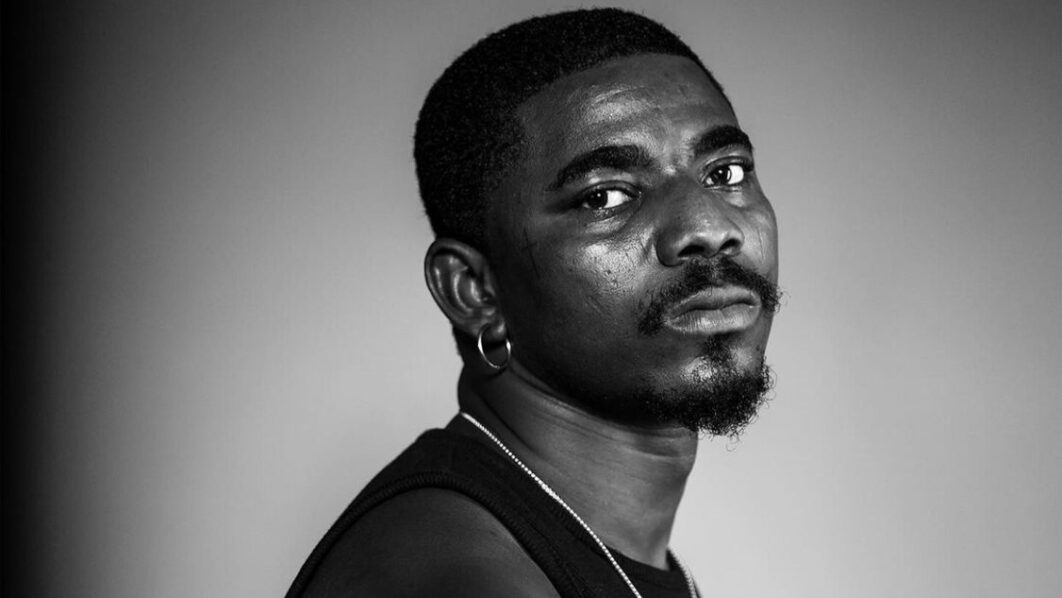
In August 2026, Michael Ajuma Attah, the Kogi-born, Kano-bred artist known as Llona, released his 12-track sophomore album, On The Road.
The album, a blend of Afrobeats, soul, R&B, and jazz influences, serves as a thematic continuation of his critically acclaimed 2024 debut, Homeless. Where Homeless introduced the melancholic artist grappling with his past, Llona On The Road chronicles the psychological cost of his sudden fame and the pressures of public expectation.
Llona On The Road and the sophomore curse
It’s a striking portrait of an artist fighting to hold himself together even as his audience believes his music cures their own despair.
Llona, who had previously performed as a rapper named Tooclasiq before reinventing himself in 2022, found himself facing an acute form of the “sophomore curse.” He openly admitted that he researched why second albums often fail, seeking answers before he even began the psychological work necessary for the music.
His solution was to ground the new work not in external success, but in the relentless, physical movement of the tour itself.
His debut album’s success translated into the extensive “Homeless Nationwide Tour,” which spanned most of 2025. Llona said he wanted the project to be a complete experience, withholding singles intentionally to ensure the album landed as a singular, full body of work. This approach emphasized conceptual integrity over the typical promotional cycle.
It was during this period of constant motion, traveling city by city, that he found the material for the new project. Llona described On The Road as “a journal and also a story of my life put together,” detailing lessons learned and experiences observed while crisscrossing the Nigerian landscape.
The decision to record while touring is rare in the contemporary Nigerian music scene, making the album a unicorn project in its own right.
The 25-city tour as a transformative crucible
The scope of the tour itself was massive, cutting against the grain of typical, corporations-backed university shows that defined the scene in the early 2010s. Llona’s commitment to covering 25 cities—though some reports list 23—meant months spent on Nigerian roads, often by bus, away from the commercial bubble of Lagos.
The physical act of touring proved transformative, allowing the Kano-bred artist to see the country through a new lens. He commented that the experience made him realize “that Nigeria is actually beautiful,” noting the mountains, the landscapes, and the “very amazing people.” He found every stop felt like a “homecoming,” connecting him to a grassroots fanbase attached deeply to his aesthetic and message.
But the journey also brought harsh revelations about the political reality that frustrates the country’s potential. Llona lamented that politics was “destroying us and stopping us from fully enjoying our country.” This blend of newfound national appreciation and political frustration subtly informs the album’s complex emotional texture, often setting an internal monologue against an 80s pop or jazz backdrop.
For many emerging artists, maintaining a genuine connection to that grassroots base is often sacrificed for international exposure and commercial success. But Llona anchored his work firmly in this domestic experience. The exhaustive nature of the tour became the source material, forcing him to confront the self in transit.
That connection between the land and the music sets the project apart from the work of peers who might choose a different path, just as the early political maneuvers of the past set the stage for modern Nigeria.
Llona’s willingness to ground his art in the difficult realities of Nigerian travel and community engagement is part of what resonates with his audience. The fan reaction at stops like Ibadan described the concerts as a “family affair,” highlighting the intense personal bond the audience feels with the former homeless artist.
Grappling with trauma and the Confessional Generation
The 12 tracks on Llona On The Road are dense with confessionals, exploring heavy interiority that often leaves the listener breathless.
On the track “Anger Management,” Llona drops the listener immediately into his frantic mental state, singing, “The trauma lives in my body that owes a rent / Tryna talk to my people but they don’t get.” The song even features excerpts from a therapy session as a bridge, making explicit the psychological battles he’s fighting.
The album explores various facets of pain, including the strain fame puts on personal relationships, as heard on “Different Pictures.” Featuring Morrelo, the song contrasts Llona’s attempts to reassure himself that “nothing has changed” with Morrelo’s poignant reminder asking, “How many times till you realise?” that his career sacrifices are costing him dearly. Llona is deeply aware of the expectations riding on him.
On the track “Pressure,” he addresses the weight of his fans’ hopes directly, admitting, “And the fans dey wait, expectations e plenty for me.” The confessional nature aligns him with what some critics term the “Confessional Generation” in Nigerian arts, artists who prioritize baring their psyche as their primary subject matter.
The pressures that defined his life in Homeless didn’t disappear; they simply multiplied as his profile grew.
The intense pressure of being a therapeutic figure
One of the most intense psychological burdens Llona grapples with is the public perception of him as a healer. He describes the “burden of being seen as a therapeutic figure by listeners while struggling to hold himself together.” This tension is perhaps best captured in the penultimate track, “Won’t Die,” where he responds to comments that his music cures depression.
The song finds Llona wrestling with the scenario of his fans abandoning him if he were to lose his “steeze”—his melancholic swagger. It’s a fear born from the reality that his art is measured not just by its sound, but by its utility to others.
This creates an enormous, almost impossible, feedback loop where the artist must maintain a fragile emotional state to satisfy an audience seeking relief from their own struggles.
Llona’s struggle highlights the increasingly blurry line between the persona and the person in the age of constant digital surveillance.
The album forces the listener to realize that the figure providing solace is dealing with his own demons, and that the internal issues from his debut, Homeless, have not dissipated; they have simply gained a brighter spotlight.
The album’s dense interiority, however, led some critics to wish for more explicit biographical detail to anchor the broad themes.
For example, on the collaboration “Cry” with Ghanaian rapper Black Sherif, Llona opens with the poetic line, “What’s the possibilities of a young warlock? That’s the burden of a young poor boy.” But the critical reaction suggested that the track pulls back too soon, leaving the listener wanting the kind of personal experience Llona shares so openly in interviews.
This paradox—the deeply confessional artist who still holds back too much—is central to understanding the record’s overall feeling. It also speaks to the broader movement where artists like Llona are now addressing issues of mental health, echoing the themes explored by figures who shaped Nigeria’s social conscience through outspoken social commentary decades ago.
Masculinity and the limits of emotional truth
Llona’s willingness to place his struggles with masculinity and mental health at the center of his work marks a significant moment in Nigerian popular music. The themes he explores—guilt, self-forgiveness, and the difficulty men face in seeking emotional connection—are usually reserved for more niche genres or private conversations.
He shines a light on how fame and expectation warp the self-image of a successful man, particularly a young one from a background of struggle.
On the stoic anthem, “N****s Don’t Get Love,” Llona croons a line that struck a chord with many listeners: “there’s a thousand ways to blame us / n**gas don’t get favours.” This track taps into the widespread discussion about male loneliness and the societal pressures placed on Nigerian men.
This narrative position is powerful precisely because it originates from a star who has attained comfort after literal homelessness. His complaints about the pressures of celebrity are instantly contrasted with the tangible suffering captured in his debut, making the current anguish feel earned, not fabricated.
This duality gives his exploration of the male condition an undeniable weight, making his music feel like a necessary cultural valve.
The critical desire for more biographical specificity, wishing he would name the people or reference the places that formed his trauma, is a reflection of the genre’s current limitations. While confessional pop aims for emotional truth, great narrative journalism demands concrete names and verifiable detail to truly transport the reader. Llona trades specificity for universality, a choice that maximizes reach but minimizes narrative intimacy.
For the listener, this ambiguity allows them to project their own struggles onto the artist, reinforcing his role as a therapeutic figure. For Llona, the person, it keeps a necessary distance between his performance and his sanity.
This tension between personal preservation and artistic revelation is the core drama of On The Road, and it leaves the question of whether his approach to trauma is sustainable for a long career.
The sonic dichotomy of turbulence and calm
The sound of On The Road acts as a crucial counterpoint to its emotional turbulence. While the lyrics are heavy, the production is frequently light, utilizing strings, piano notes, and rolling percussion, often overlaid with jazz and Afrosoul textures. This sonic dichotomy—summery pop sounds applied to internal strife—reflects the jarring reality of the artist’s life on the road.
Llona’s natural vocal vibrato is utilized across the 40-minute runtime, though some critics felt his full range was unmaximised. Tracks like “Turbulence” showcase this contrast, featuring a flute dancing over an aggressive electric guitar solo, where Llona declares a new beginning while flexing 2Baba-adjacent vocals.
The song is a declaration of ambition, singing, “Stay ambitious can’t afford to lose my discipline / Been a minute wey I don dey for your TV screen.”
The producers, including GR8, manage to create a space that feels expansive, mirroring the endless movement of the tour.
The opening track, “Monster or Not,” sets a cinematic tone, revving engines and posing the existential query that plagues the artist: “I don’t know if I am a monster, I don’t know if I lived this life before.” This constant questioning of self frames the entire journey.
The album’s cohesive sound demonstrates Llona’s maturity as an Afro-fusion artist, proving his ability to move beyond his viral debut while retaining his core melancholy. Yet, the critique remains that some records have “tepid moments,” possibly collapsing under the sheer weight of the emotional material. This suggests that honesty, while valuable, doesn’t always guarantee a compelling performance for the consumer.
The careful construction of the album’s sound, despite the intense internal chaos, is a testament to the artist’s commitment to his craft.
It shows an awareness of the musical traditions he is building upon, blending the earnestness of Afrosoul with the modern pulse of Afrobeats, a sound that mirrors the journey of his contemporary peers, including figures like Davido and his creative process during massive projects.
What happens after the road ends?
The ultimate takeaway from Llona On The Road is that the journey, physical and psychological, is far from over. The final track, “What Do I Do?”, ends the album not with resolution, but with a lingering question: “What do I do from here?”
This conclusion suggests that finding out the journey is “beyond him” has only intensified Llona’s life and artistic struggles. The success of Homeless offered him comfort and fame, but it also multiplied the psychological pressure, forcing him to keep working nonstop as an escape from bad luck, as he suggests on “Pressure.”
The unresolved nature of his internal ordeals is, perhaps, the most honest outcome the album could have delivered.
Llona’s story, captured in this 12-track journal, is a mirror held up to the reality of the emerging Nigerian star: a relentless cycle of creation, performance, and self-interrogation. His internal turmoil, publicly displayed and commercially consumed, remains the engine of his art.
The future of Llona’s career depends not on new sounds or collaborations, but on his ability to answer that question posed at the album’s end. What does the melancholist-in-chief do when the road ends, and the only place left to travel is deeper within himself?
It’s a universal dilemma, but one he faced while touring the specific, complex topography of Nigeria, making his journey a profound commentary on the cost of visibility in modern Africa.
