




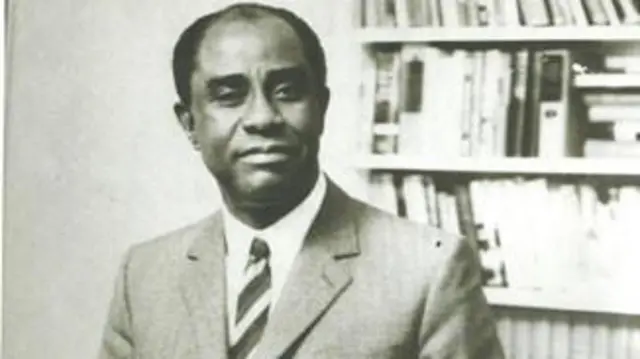
On 17 December 1917, in Awka, colonial Nigeria, Kenneth Onwuka Dike was born.
His story is more than an accomplished academic’s biography; it’s a blueprint for how a continent could reclaim its historical memory. From his education across West Africa and Britain to leading the University of Ibadan and serving Biafra, Dike consistently placed African agency at the centre, transforming the intellectual landscape for generations.
A young scholar’s journey from Awka to global universities
Kenneth Onwuka Dike’s early life in Awka, today’s Anambra State capital, began with profound personal tragedy. He lost both his parents when he was just five years old, yet this didn’t derail his educational ambition. He attended Dennis Memorial Grammar School in Onitsha, entering in 1933, a significant institution in southeastern Nigeria that laid the groundwork for a remarkable academic trajectory.
His pursuit of knowledge then took him beyond Nigeria’s borders. He enrolled at Achimota College in the Gold Coast, present-day Ghana, before moving on to Fourah Bay College in Sierra Leone. This venerable institution, affiliated with Durham University in Britain, awarded him a Bachelor of Arts degree in English, Geography, and Latin in 1943 after he began his studies there in 1939.
Dike’s academic compass soon pointed firmly towards history. In 1944, armed with a British Council scholarship, he embarked on another journey to Scotland. He immersed himself in studies at the University of Aberdeen from 1944 to 1947, completing his Master of Arts in History with first-class honours, cementing his reputation as an exceptional student.
Aberdeen provided the rigorous formal historical training Dike needed. It equipped him with the methodological tools that would later underpin his internationally acclaimed research. This period was crucial in shaping his critical approach to historical inquiry.
Challengling colonial views with a landmark Niger Delta history
After his studies in Scotland, Dike moved to King’s College London, then part of the University of London, where he undertook doctoral research. He completed his PhD on 28 July 1950, becoming the first African to complete professional training in Western historical scholarship. His thesis delved into the complex interplay of commerce, politics, and foreign intervention in the nineteenth-century Niger Delta.
This groundbreaking work later became his seminal book, Trade and Politics in the Niger Delta, 1830–1885, published by Oxford University Press in 1956. The book wasn’t just important for its subject matter; its perspective was revolutionary. Colonial-era narratives often depicted Africans as passive recipients of European influence, their roles confined to reactions to external forces.
Dike’s meticulous research dismantled this Eurocentric view. He portrayed African rulers, merchants, and communities in the Niger Delta as active, sophisticated political and economic actors. Their decisions, local institutions, and responses to changing trade conditions were central to the historical explanation, not mere background scenery.
This methodological innovation – foregrounding African agency and indigenous perspectives through rigorous archival research – became a defining characteristic of his work. It proved that Africa possessed vibrant, complex historical traditions well before colonial intervention, marking him as the pioneer of African historiography.
Founding essential archives for Nigeria’s historical record
Beyond his written scholarship, Kenneth Onwuka Dike recognized a critical need: the preservation of Nigeria’s own historical documents. Upon completing his doctorate, Dike returned to Nigeria and briefly joined University College, Ibadan.
During this period, Dike embarked on a crucial investigation into the state of government records across Nigeria. He found that many vital documents were poorly organised, inadequately stored, and vulnerable to deterioration. This posed a significant obstacle for anyone hoping to accurately reconstruct Nigeria’s development.
Dike’s tireless efforts culminated in his founding of the Nigerian National Archives in 1954, an institution he also served as its first Director. This agency preserved primary sources across locations like Ibadan, Kaduna, and Enugu. Its creation was integral to Dike’s broader vision for African scholarship.
He understood that true intellectual independence depended on access to one’s own historical records. Nigerian historians couldn’t properly investigate their country’s past if essential documents remained scattered, endangered, or primarily accessible only in overseas archives. This achievement secured a vital resource for future generations, complementing his encouragement of oral traditions and widening the evidence base for historians.
Shaping the Ibadan School of History and university leadership
Dike’s influence grew exponentially after his return to University College, Ibadan, in 1955 as a senior lecturer. He quickly made history, becoming the first African to hold a full professorship of History at the institution and the first African to head its History Department in 1956. Under his guidance, Ibadan transformed into a preeminent centre for African historical studies.
The distinctive intellectual tradition that emerged there became known as the Ibadan School of History. While Dike was central to its rise, the school was a collective effort. His mentorship produced leading historians such as Obaro Ikime and Saburi Biobaku. These scholars developed critical research areas and established new generations of Nigerian historians.
The Ibadan School championed reconstructing African history from indigenous perspectives, treating African societies as active historical subjects. This approach integrated oral traditions, archaeology, linguistics, and anthropology, alongside European archival documents. It encouraged reading all sources critically, recognizing the inherent limitations of accounts primarily produced by colonial administrators or foreign traders.
In 1955, Dike was also instrumental in establishing the Historical Society of Nigeria (HSN), the country’s first and oldest academic professional body, serving as its president. The HSN and its scholarly journal provided a vital platform for research, debate, and publication, creating an intellectual infrastructure that sustained historical inquiry long after Dike’s tenure at Ibadan.
Dike’s transformative leadership at University of Ibadan
His academic leadership soon extended to university administration. Dike became Principal of University College, Ibadan, in 1958. Then, in 1960, at the age of 42, he was appointed the first African Vice-Chancellor of the University of Ibadan. He held this position through 1966 or 1967.
This period coincided with Nigeria’s earliest, most turbulent years of independence. Dike oversaw significant expansion during his tenure as Vice-Chancellor, creating new faculties and research institutes. He pushed for a more Africanist perspective and a multidisciplinary approach in the curriculum. Nigeria, however, soon faced severe political instability, with two military coups occurring in 1966, escalating regional tensions. This pushed the federation towards civil conflict.
The Biafran years: A scholar turns diplomat
As Nigeria fractured, Dike’s life took a dramatic, albeit temporary, departure from academia. During the Nigerian Civil War, which spanned from 1967 to 1970, he became deeply involved in Biafra’s international diplomatic efforts. Dike left the University of Ibadan to serve as the roaming Ambassador of Biafra to Côte d’Ivoire.
In this capacity, he advocated for the recognition of the secessionist state, participating in efforts to gain diplomatic recognition and international support. Winning international recognition was crucial for Biafra’s survival. Yet, only a small number of countries formally recognized the breakaway republic before the war ended.
Dike’s diplomatic service underscored the profound impact Nigeria’s political crisis had on its intellectual class, pulling scholars like him from their academic pursuits into the political fray. This period highlights how even prominent academics found themselves swept up in the urgent national civil conflict.
Harvard’s halls and Dike’s final years
Following the Nigerian Civil War, Kenneth Onwuka Dike moved to the United States, joining Harvard University. He was associated with Harvard’s History Department during the 1970s and became the Andrew W. Mellon Professor of African History. His presence significantly strengthened the teaching of African history during a period of considerable expansion for African studies in American universities.
Dike’s appointment reflected the wider transformation of the historical discipline itself. By the 1970s, African history had gained widespread recognition as a legitimate field of professional scholarship. Historians like Dike were no longer merely informants for foreign researchers; they occupied leading positions in major international universities, actively shaping how new generations understood the continent.
Harvard historian John Womack Jr. later remembered Dike as an active and valued member of the History Department, praising his contributions to teaching African history. Dike remained connected with Harvard, where he ultimately died on 26 October 1983, at the age of 66, in Harvard, Massachusetts.
He was also a Fellow of the British Academy and received an honorary LLD from the University of Aberdeen in 1961.
The enduring legacy of an intellectual visionary
Kenneth Onwuka Dike’s profound influence on African history extends far beyond his individual writings or prestigious roles. His legacy is multifaceted, defined by his unwavering commitment to intellectual rigour and institutional development. He championed an African-centered orientation in historical studies, promoting the use of oral evidence and material culture as valid historical sources, alongside meticulous archival research.
He oversaw the birth of the Nigerian National Archives, preserving the nation’s documentary heritage for posterity. He nurtured the Historical Society of Nigeria, creating a professional platform for African historians. Moreover, his mentorship at the University of Ibadan fostered a new generation of scholars, including Obaro Ikime and Saburi Biobaku, who continued to advance African-centered research and interpretation.
The Ibadan School of History, under Dike’s guidance, became influential across the continent and beyond. Its scholars produced foundational studies on precolonial political systems, nineteenth-century societal changes, colonial rule, and the formation of the Nigerian state.
This collective body of work ensured that African experiences were examined in all their complexity, with Africans at the centre of their own narrative, not just as reactions to external forces.
Dike’s motto, “Africa must tell its own story with evidence and pride,” encapsulates his philosophy. He insisted on methodological discipline, demanding criticism and source comparison, moving beyond mere celebratory narratives to build a robust, professional historical scholarship. His work underscored that reclaiming a people’s past requires more than just changing the nationality of the historian; it demands well-established archives, trained researchers, and intellectual freedom.
Today, institutions like the Kenneth Dike Library at the University of Ibadan and annual Dike lectures stand as permanent tributes to his vision. His contributions ensured that African history gained the institutional authority and intellectual framework needed to be studied, interpreted, preserved, and taught on a truly global scale.
These enduring early media platforms help ensure Nigeria’s narratives continue to evolve. He was also awarded the Officer of the Order of the Niger (OON) for his contributions.
Kenneth Onwuka Dike helped transform the institutional and intellectual foundations of African history. From his early education in Nigeria, Ghana and Sierra Leone to his studies at Aberdeen and London, he developed into a scholar whose work challenged assumptions inherited from colonial narratives.
His Trade and Politics in the Niger Delta placed African interests more firmly within the history of nineteenth-century commerce and politics. His archival work helped preserve Nigeria’s documentary heritage. His leadership at Ibadan contributed to the rise of a generation of African historians whose scholarship would reshape the field.
His life also intersected with the political upheavals of independent Nigeria. He led the University of Ibadan, represented Biafra internationally, and taught African history at Harvard. He did not create African history; Africa possessed its histories long before modern universities existed.
What Dike helped create was something different: a durable professional framework through which African historians could study, interpret, preserve and teach those histories on a much greater scale. That achievement secures his place among the most influential African scholars of the twentieth century.
Author’s Note
Kenneth Onwuka Dike’s career shows that reclaiming a people’s past requires more than changing the nationality of the historian. It requires archives, universities, trained researchers, intellectual freedom and methods capable of treating African experiences as worthy of investigation in their own right. Dike helped strengthen each of these foundations.
His enduring lesson is that control over historical memory depends not only on who tells the story, but also on whether the institutions and sources needed to preserve, question and understand that story are protected for future generations.
