




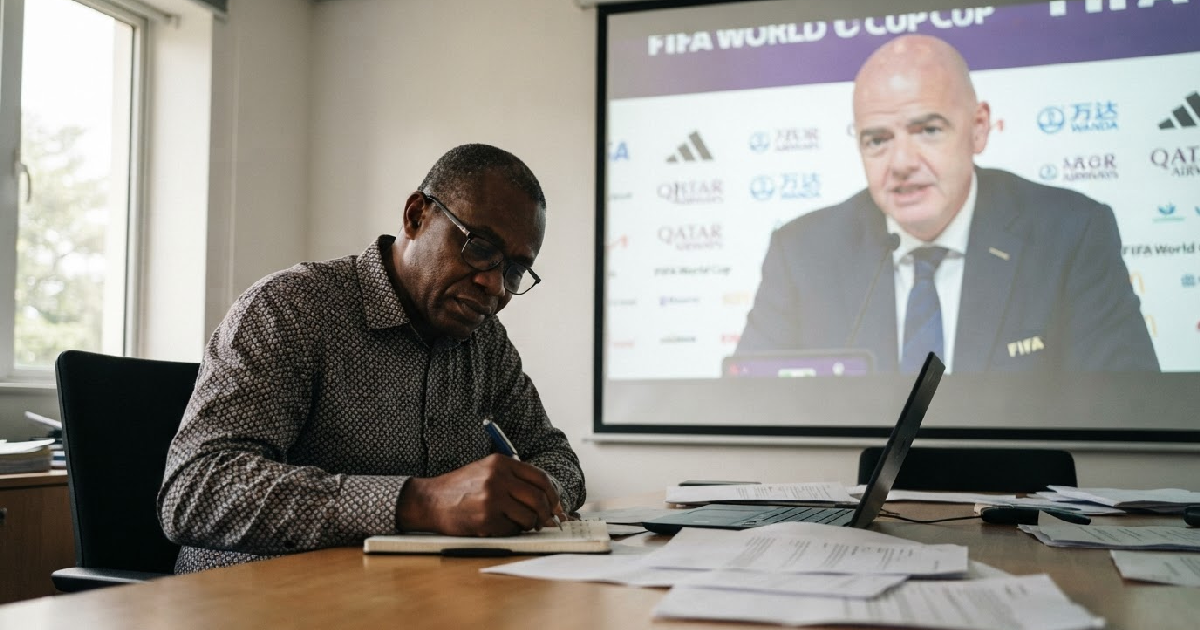
When Owei Lakemfa penned his column titled ‘Infantile Infantino should exit for trying to sell the World Cup’ on Saturday, August 8, 2026, he critically examined the global football landscape. For Lakemfa, FIFA President Gianni Infantino stood accused of trying to sell off the very soul of the World Cup through controversial commercialization proposals.
Lakemfa’s call for Gianni Infantino’s resignation was a direct indictment of what he perceived as a relentless drive towards hyper-commercialisation. This, he argued in his piece, threatened to diminish the tournament’s intrinsic value and its connection to billions worldwide.
Owei Lakemfa’s perspective on football’s future
Owei Lakemfa authored the opinion piece published on Saturday, August 8, 2026. In his writing, he sharply criticized FIFA President Gianni Infantino’s commercialization proposals for the World Cup. Lakemfa’s column highlights the significant debates surrounding the direction of international football.
His article, ‘Infantile Infantino should exit for trying to sell the World Cup,’ suggests a perspective that views global sporting institutions as holding a unique responsibility. It implies the World Cup is more than just a business venture, suggesting it’s a shared heritage needing protection from purely market-driven forces. This viewpoint resonates within broader discussions on sports governance.
Lakemfa’s critique of commercial ambition
Lakemfa’s piece conveys a considerable skepticism towards the commercial ambitions of leaders like Gianni Infantino. His critique argues that prioritizing profit above all else disrupts the foundational spirit of sport. For him, it isn’t just about money; it’s about the very soul of the game.
The article suggests that when a governing body seeks to monetize every aspect of a global event, it risks alienating the fans who give it meaning. He seems to view the World Cup as more than a product, seeing it as an expression of national pride and collective joy. This perspective resonates with many who feel modern football has drifted too far from its roots.
Gianni Infantino and the World Cup commercial plans
Gianni Infantino, a Swiss football administrator, ascended to the FIFA presidency on February 26, 2016. Before this role, he served as the Secretary General of UEFA from 2009 to 2016. His tenure as FIFA President has included both ambitious reforms and proposals aimed at expanding FIFA’s revenue streams and global influence.
Among these initiatives, one of the most contentious was a specific plan to sell significant stakes in the World Cup’s commercial rights. This proposal, reportedly designed to generate substantial upfront capital for FIFA, faced immediate and widespread resistance. Many critics viewed it as a potentially drastic move that could irrevocably dilute the sport’s premier global event.
The proposed sale and its wider implications for football
Infantino’s proposed commercial ventures were not simply about financial gain for the organization. They reflected a broader strategic goal to solidify FIFA’s economic power and fund new initiatives across the sport. However, the plan to effectively privatize parts of the World Cup was met with fierce opposition from various football confederations and stakeholders worldwide.
These parties voiced concerns over issues of transparency, control, and the long-term impact such a move could have on the tournament’s integrity. The backlash from the global football community was significant enough to reportedly lead to the plan’s eventual withdrawal. But for commentators like Lakemfa, the attempted move itself spoke volumes.
It highlighted a leadership philosophy that seemed potentially detached from football’s grassroots and its profound cultural significance. The very notion of selling off shares in such a revered institution, the World Cup, raised fundamental questions about the ethical stewardship of global sport.
Echoes in global sports governance
The controversy surrounding Gianni Infantino’s World Cup plans isn’t an isolated incident. It mirrors broader tensions within international sports bodies. Many grapple with balancing financial imperatives against the preservation of athletic traditions and fan engagement.
This dynamic is particularly acute for entities like FIFA, which oversee events of immense cultural and economic value. The pressures to innovate and generate revenue are constant. But critics often argue these pressures should not come at the expense of core values.
They maintain that leadership of such organizations must prioritize the sport’s longevity and accessibility over short-term financial windfalls. The debate over the commercial future of major sporting events like the World Cup continues to rage globally, impacting national football associations even in Nigeria. Nigeria targets annual investment through various international engagements, but such ambitions often intersect with global governance structures like FIFA’s.
The enduring value of football for Nigerians
For millions around the world, and certainly across Nigeria, football is more than just a game. It’s a powerful unifier, a source of collective identity, and a shared passion that transcends boundaries. The World Cup, in particular, represents the pinnacle of this global phenomenon.
Its value isn’t solely quantifiable in broadcast rights or sponsorship deals; it lies in shared ecstasy, heartbreak, cultural exchange, and the dreams it inspires. The tournament brings nations together, creating a unique global spectacle. This deep emotional connection makes any attempt to commercialize its core elements highly sensitive.
Any perceived threat to this intrinsic value is often seen as an attack on something far more profound than a mere commercial asset. Owei Lakemfa’s stern critique arises from this perspective on football’s non-commercial essence, advocating for the preservation of its fundamental appeal.
A challenge to leadership and ethical stewardship
Lakemfa’s call for Gianni Infantino to step down encapsulates a deep dissatisfaction with the direction of football’s most powerful institution. It’s a challenge to the very idea of what leadership means in sports governance. Is it about maximizing profit, or safeguarding heritage? The question of ethical stewardship remains central.
His demand highlights a critical juncture for FIFA and other international sports bodies. They face constant pressure to grow financially. But they must also contend with the expectations of fans, players, and nations who see these events as indispensable cultural assets.
Jibrin Ibrahim warns Nigeria’s civic space is shrinking, and perhaps Lakemfa sees a similar threat to the open spirit of global football. This struggle defines much of the dialogue around football’s future, impacting how governing bodies are perceived.
What happens next for FIFA and the World Cup?
Even with the reported withdrawal of the contentious proposal, the fundamental questions raised by Lakemfa linger. The episode has forced a re-evaluation of FIFA’s strategic direction and its relationship with the global football community. The controversy brought the long-standing tension between financial ambition and cultural preservation into sharp focus.
The push and pull between commercial expansion and cultural preservation will undoubtedly continue to shape the World Cup’s destiny. It remains a key concern for supporters worldwide, who want to see the tournament’s legacy protected. The future of the event depends on how these competing interests are balanced.
The leadership of FIFA, under Gianni Infantino, must navigate these complex waters with a keen awareness of its immense responsibility. Their decisions won’t just impact balance sheets; they’ll touch the hearts of billions. The future of football, and its most cherished tournament, hangs in this delicate balance. Murtadha Gusau’s sermon warns about certain pitfalls, and perhaps Lakemfa’s column serves as a similar warning against ethical compromises when unchecked commercial ambition takes hold.
