



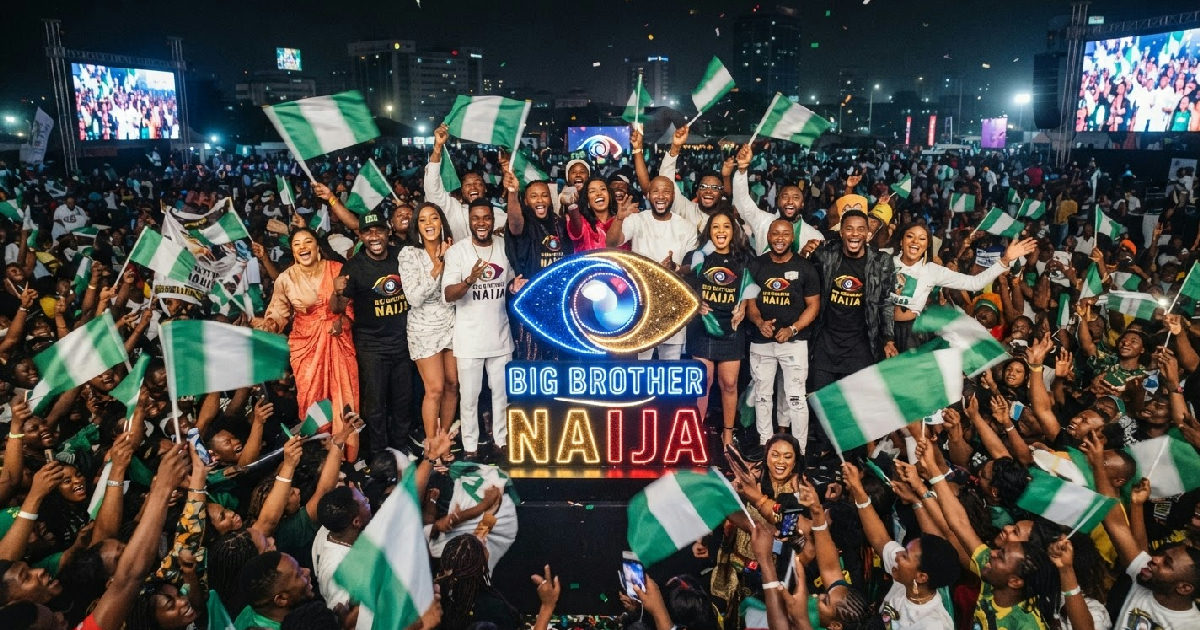
Big Brother Naija has evolved beyond a mere reality television series since its relaunch in 2017, demonstrating a significant Big Brother Naija cultural impact on the nation.
This structured mechanism systematically propels both winners and non-winners alike into Nigeria’s booming media and corporate sectors, fundamentally reshaping how fame and fortune are achieved in the country.
Understanding the Big Brother Naija cultural impact
When Big Brother Nigeria first premiered in March 2006, it felt like a novel experiment in reality television. Katung Aduwak emerged as its inaugural victor, but the show then disappeared for over a decade, leaving a distinct gap in the nation’s pop culture.
Its return in 2017, rebranded as Big Brother Naija and broadcast on Africa Magic, marked a pivotal moment. The revamped series quickly captured the national imagination, laying the groundwork for a new kind of celebrity and cultural influence.
MultiChoice, the parent company of Africa Magic, explicitly treats BBNaija as a “long-term incubator” for talent. This strategic vision extends beyond simple entertainment, aiming to integrate housemates into broader media and enterprise roles long after their time in the isolated house ends.
Ebuka Obi-Uchendu, the show’s host, embodies this evolution. He was a housemate in the original 2006 season before becoming the long-running presenter of the revived series, showcasing a personal journey that mirrors the show’s own development. This deep connection to the show’s history resonates with audiences, much like the broader appreciation for Gbagyi culture and its enduring traditions.
From housemate to entrepreneur: building success
The journey from the BBNaija house to commercial success often begins immediately after the show concludes. Mercy Eke, the winner of the 2019 “Pepper Dem” season, set a high standard for post-show monetisation, illustrating the show’s transformative power for individuals.
After securing a N60 million prize package, she quickly leveraged her newfound fame into lucrative endorsements with major brands. These included Cîroc, Moët & Chandon, PayPorte, and Oppo’s Reno15 series, showing the immediate commercial opportunities available.
Eke’s ambitions stretched further, pushing her into corporate ventures by founding the real estate firm Lambo Homes and the clothing brand MNM Luxury. She also established an acting portfolio, landing roles in significant productions like Netflix’s Shanty Town and My Fairytale Wedding, cementing her status as a multifaceted media personality.
Subsequent champions have largely followed this blueprint of diverse career paths. Laycon, who won the 2020 “Lockdown” season, swiftly secured partnerships with Mentos, GOtv, Orijin, Oppo phones, and House of Lunettes.
He continued his music career, even joining the Grammy voting committee in 2022, balancing commercial work with artistic pursuits. Hazel Oyeye Onou, widely known as Whitemoney, the 2021 “Shine Ya Eye” champion, parlayed his N90 million grand prize into a diverse portfolio, moving into music, food-related businesses, brand deals, and television hosting.
His combined income has reportedly given him an estimated net worth of $230,000, underscoring the substantial financial rewards available to successful housemates. Phyna, the 2022 “Level Up” winner, transitioned into acting roles in films such as Leaving Beauty, Shattered Innocence, Osato, Ada Omo Daddy, House of Trouble and Hustle Code, alongside brand partnerships and event presenting.
Her post-show path has also been marked by public discussions around the full delivery of her N100 million prize package. This included claims since 2024 that certain sponsor items, like one Bitcoin from Quidax and a trip, remained outstanding.
However, she later clarified in a January 2026 Twitch livestream that edited clips had misrepresented her comments about the cash components she did receive. Phyna has since focused on content streaming, including regular Twitch sessions, and a demanding personal test of discipline: a 100-hour challenge repeatedly writing and saying the name MrBeast.
Ilebaye Precious Odiniya, often called the “Gen Z Baddie,” captured the N120 million prize in 2023 as the show’s youngest champion at age 22. Despite a relatively lower public profile compared to some predecessors, she built an impressive commercial empire.
Odiniya has inked deals with brands like Beautiful Body skincare and secured several other multi-million-naira partnerships. She runs a fashion label (OI Clothing) and a creative agency, and has walked runways, hosted events, and expanded into modeling and digital content creation.
In 2024, she founded the Ilebaye Foundation to support vulnerable girls, including those at the Lagos Correctional Centre. She also took on acting roles, including the 2025 film A Weekend Fiasco. These diverse pursuits reflect the dynamic paths available to former housemates, echoing the varied expressions of Nigerian identity found in traditional festivals.
Kellyrae, who took the 2024 “No Loose Guard” title, has concentrated on his music career with his RAENATION Band and property investments with his wife. The couple has become brand ambassadors for companies like Vivon and itel Energy, showcasing the power of coupled celebrity endorsements.
The most recent victor, Imisi Ayanwale, claimed the 2025 “10/10” season and its N150 million package. Within months, she announced partnerships with major household names including Indomie, PalmPay, Goldberg, CDCare, SoftCanada, and Mapia Tea.
Ayanwale also launched her fashion and lifestyle line, 606, and appeared in her first post-house film, a YouTube comedy produced with Bolaji Ogunmola, in December 2025. She has publicly stated her interest in working with Funke Akindele, and continues content creation alongside her brand work.
The advantage for non-winners
The commercial success derived from BBNaija isn’t exclusive to the champions; a significant number of non-winning alumni have forged high-value media careers. Their ability to market themselves effectively during live broadcasts proves just as potent as winning the grand prize.
Tobi Bakre, a finalist from the 2018 “Double Wahala” season, stands out as one of Nollywood’s leading action stars. His performances in the box-office hit Brotherhood (2022), which earned him Best Actor honours at both the Africa Magic Viewers’ Choice Awards (AMVCA) and Africa Movie Academy Awards (AMAA), alongside Amazon Prime’s Gangs of Lagos (2023), demonstrate how non-winners can dominate the screen.
Bisola Aiyeola, the 2017 runner-up, has also built a remarkable career as an actor, producer, and voice talent. She’s starred in features such as Sugar Rush and Disney’s Iwájú, and notably became the first African host of Family Feud Nigeria, expanding her reach across diverse media platforms.
Another example is Bamike “BamBam” Olawunmi from the 2018 season, who leveraged her platform into lead roles in YouTube features like Love in Every Word, complemented by stage productions and beauty ventures. These trajectories reveal a consistent pattern, highlighting the show’s broad cultural impact.
The corporate machinery behind the fame
The transition from a reality TV contestant to a fully-fledged media personality is rooted in straightforward economics. Weeks of continuous live broadcasts cultivate immediate, highly engaged audiences for housemates.
This creates a ready-made fan base that brands can tap into, transforming public visibility into commercial viability. Talent agencies and production studios closely monitor contestants in real-time, often finalising endorsement contracts or casting offers before a housemate even completes their post-eviction media tours.
MultiChoice actively cultivates and reinforces this entire ecosystem. Its venture arm, KingMakers, launched BetKing TV in May 2026 with a flagship lineup hosted entirely by BBNaija alumni, including Kuture, Denari, Kaybobo, GigiJasmine, and Doris. This initiative showcases a deliberate strategy to leverage the show’s popularity.
The executive strategy views the reality show not just as seasonal entertainment, but as a long-term incubator for talent. It systematically converts temporary sponsorship exposure during the show into multi-year broadcasting roles for its alumni, creating a self-sustaining cycle of talent development.
This structured approach to talent management allows for sustained careers, feeding into Nigeria’s “Orange Economy” and contributing to sectors from production to marketing. Each season, the show generates thousands of direct and indirect jobs.
The 2023 “All-Stars” edition, for example, employed over 2,000 people, and the 2022 season alone accounted for 1,200 jobs, making it a significant economic driver. This also reflects the broader dynamics of Nigeria’s virtual asset challenge and its evolving digital economy.
A changing landscape of success
The grand prize money offered by BBNaija has seen a dramatic increase over the years, mirroring its growing influence and commercial value. From $100,000 (approximately N12.8 million) in 2006, it rose to N25 million in 2017, N60 million in 2019, N90 million in 2021, N100 million in 2022, and N120 million in 2023, despite a brief dip to N100 million in 2024.
For Season 11 in 2026, the top prize is N160 million, a mix of cash and other gifts. This escalation in prize money, coupled with the “Prize Money Fluctuation” twist introduced in Season 11 where the cash component can shift based on housemate performance, keeps viewers engaged.
It also reinforces the idea of immediate, tangible rewards for participation. For contestants, the house is no longer just a competition; it is the entry point to Nigeria’s broader media and enterprise economy, shaping individual fortunes and the collective cultural fabric. This is how ordinary life is lived and transformed within Nigeria today.
