




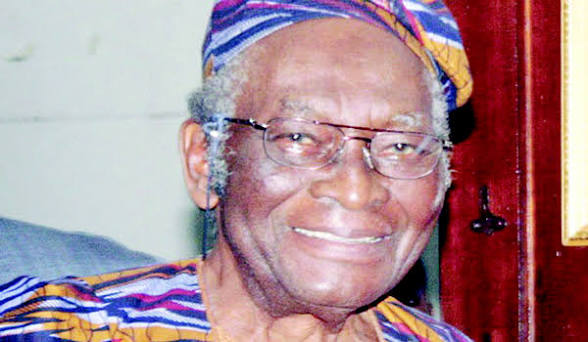
In October 1966, six years after Nigeria celebrated its independence from Britain, a 43-year-old scholar named Aliu Babatunde Fafunwa was given a formidable task. This was the beginning of the Babs Fafunwa story, as he was appointed to plan and build a Faculty of Education from the ground up at the University of Ife.
The nation was young, restless, and flush with the ambition of self-determination, but its schools, Fafunwa believed, were still mentally chained to the past.
The early life of Babs Fafunwa
Professor Babs Fafunwa, as he would come to be known, saw a fundamental contradiction at the heart of the new nation. Nigeria had its own flag and its own government, but its children were being taught in a foreign language, from a curriculum that ignored their own history and culture.
He argued that this “colonial pattern of education had robbed the African child of inventiveness, originality and creativity.” His life became a quest to answer a question that still haunts Nigeria today: how do you decolonise a person’s mind?
Born in Isale Eko, Lagos, on September 23, 1923, Fafunwa’s own life was a bridge between the world he wanted to change and the one that had shaped him. He attended the colonial-era CMS Grammar School in Lagos before travelling to the United States for his higher education.
In 1958, he became the first Nigerian to earn a Ph.D. in Education, receiving his doctorate from New York University.
This experience abroad did not alienate him. Instead, it sharpened his critique of the system back home. He returned to Nigeria in 1961, first to the University of Nigeria, Nsukka, and later to Ife, armed with a conviction that political independence was meaningless without intellectual independence.
This argument often resonated with other pioneers, like the pioneering spirit of Senator Wuraola Esan, who also championed self-determination.
He wasn’t advocating for a wholesale rejection of Western education; his own journey was proof of its power. But he refused to accept that embracing modernity required treating Nigerian languages and cultures as inferior. For Fafunwa, the “conflict between our received idea of education and its indigenous concept” was the central problem holding the nation back.
The Ife experiment and the power of mother tongue
Fafunwa’s most famous and audacious answer to this problem began in January 1970. At the University of Ife, he spearheaded the Ife Six-Year Primary Project (SYPP), a radical experiment that would make him a legendary figure in African education. The project’s central question was simple but profound: what if we taught children in their own language?
For nearly two decades, a group of primary school pupils was taught mathematics, science, and social studies entirely in Yoruba. This was not a simple matter of translation; it required developing new textbooks and creating scientific and technical vocabulary in Yoruba. It also meant training teachers in a completely new methodology.
English was not abandoned. Specialist teachers taught it as a separate subject, much like French or German might be taught in a British school.
The results were compelling. The project’s research indicated that children taught in their mother tongue for the first six years of their education performed better academically. They grasped complex concepts more quickly, and crucially, their English proficiency did not suffer.
They were learning with more confidence and less alienation. Fafunwa had proven that a child’s first language was not a barrier to learning, but the most powerful bridge to it.
This work was a direct challenge to the colonial hangover that prized English proficiency above all else. It moved the debate from one of cultural pride to one of educational science. Fafunwa had data and a working model for his proposals.
His ideas became the intellectual bedrock of the 1977 National Policy on Education, which formally recommended mother tongue instruction. This foundational policy decision shaped how Nigeria divides its wealth and allocates resources for generations.
The architect of a national system
Fafunwa was not just a theorist; he was an institution builder. He understood that ideas needed a structure to survive. During his time as Dean of the Faculty of Education at Ife, which he led from 1967 to 1976, he was instrumental in professionalising the teaching profession across Nigeria.
He believed that teachers were not just instructors but the primary agents of cultural and intellectual reconstruction.
He pioneered the Nigeria Certificate in Education (NCE) program, designed to produce a new cadre of skilled teachers for the nation’s rapidly expanding school system. The NCE was envisioned as the minimum qualification for teaching, a vital step in raising the profession’s status. This focus on empowering educators from the ground up was essential to his vision.
His influence as an architect extended to the very structure of Nigerian education. Fafunwa introduced the 6-3-3-4 system: six years of primary school, three of junior secondary, three of senior secondary, and four of university. This model, which aimed to provide both academic and vocational pathways for students, shaped the educational journey of millions of Nigerians for decades.
His work culminated in his appointment as Nigeria’s Minister of Education under General Ibrahim Babangida, a role he held from 1990 to 1992. During his tenure, he oversaw the promulgation of the decree that established the Teachers’ Registration Council, a capstone to his lifelong effort to see teaching recognised as a true profession.
This period of military administration, which often shaped Nigeria’s military system, saw many such figures from academia and public life step into government. Fafunwa’s appointment highlighted the pressing need for educational reform even amid political shifts.
A legacy rekindled by controversy
Professor Aliu Babatunde Fafunwa passed away on October 11, 2010, at the age of 87. Yet, his work has never been more relevant. In November 2025, the Federal Government made a startling announcement regarding language policy.
The national policy mandating indigenous language as the main instructional medium in early schooling, a key part of Fafunwa’s legacy, was discontinued. Officials cited mass failures in national exams and students’ poor grasp of English, declaring English would once again be the sole medium of instruction from primary through tertiary education.
Education Minister Dr. Tunji Alausa argued the policy “did not deliver,” creating a generation of students who struggled to transition to English in later years. This reversal ignited a fierce national debate, bringing Fafunwa’s name and his research back to the forefront.
Supporters of his vision countered that the policy had failed not in its conception, but in its implementation. They pointed to a chronic lack of funding, a shortage of trained teachers, and a failure to produce the necessary instructional materials in Nigeria’s diverse languages.
The controversy demonstrated that the questions Fafunwa raised have outlived him. Was the problem the use of mother tongue, or the system’s failure to adequately support it? Had Nigeria abandoned a powerful educational tool because it lacked the political will to see it through?
Today, as Nigeria grapples with an education system in crisis, Fafunwa’s story serves as a critical reminder. His career was a testament to the belief that a nation cannot build a prosperous future on a borrowed identity.
He did not seek to isolate Nigeria from the world, but to give its children the confidence to engage with that world on their own terms, in their own voice.
The debate he started is not over, because the question of what it means to be a modern, educated Nigerian has not yet been fully answered.
