




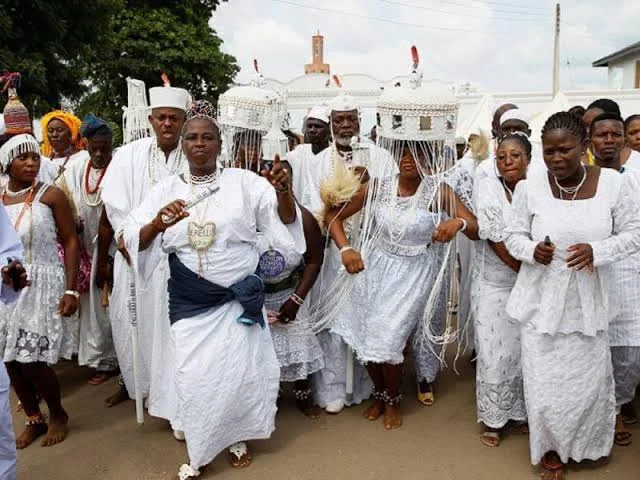
On Thursday, August 20, 2026, the familiar hum of commerce and public life will pause across Oyo State. But this is not a holiday most Nigerians grew up with. It’s not Christmas or Eid-el-Kabir. For the second year running, the state government has declared a work-free day for Isese, a celebration that reaches into the very soil of Yoruba identity.
The announcement, made on August 19 by Governor ‘Seyi Makinde, allows adherents of traditional Yoruba religion to mark their new year. It’s a decision that, on the surface, is a simple administrative act. But beneath it lies a deep and unfolding story about culture, faith, and the ongoing search for a modern Nigerian identity that honours its ancient roots.
Holiday Why Isese Day’s nghĩa là gì và truyền thống
The word ‘Ìṣẹ̀ṣe’ in Yoruba means ‘tradition’ or ‘the source.’ It is the name given to the indigenous faith and cultural practices of the Yoruba people, a complex system of beliefs involving a supreme creator, Olodumare, and a pantheon of deities known as Orishas. Isese Day, observed annually on August 20th, is its most important festival.
It’s a day for honouring the divine, the ancestors, and the philosophies that governed life long before the arrival of either Christianity or Islam. The celebrations are a vibrant expression of this heritage. Streets come alive with colourful processions, the rhythms of traditional music, and dance performances that tell ancient stories.
Priests and priestesses lead prayers and rituals at shrines dedicated to deities like Esu, Obatala, and Sango.
On this day, the air fills with chants and the customary greeting, “Isese l’agba,” which means “tradition is supreme.” The proper response is, “Isese l’agba gbogbo wa,” confirming that tradition will endure with all of us. Like the annual Iriji Mbaise cultural festival, Isese Day is a thread connecting the present to a deep ancestral past, a living record of a people’s worldview.
Offerings are a central part of the observance. Items like kola nuts, local gin, and palm oil are presented as symbols of gratitude and supplication. The day is less about a single-day event and more about a cultural and spiritual reset, a moment to re-align with the values and traditions that have been passed down through generations.
The slow road to official recognition
For decades, Isese was practised quietly, often in private or within community circles. While Christmas and major Islamic festivals were entrenched as national public holidays under the Public Holidays Act, indigenous traditions had no such formal space. The journey to change this has been a slow, state-by-state campaign led by cultural advocates and traditional practitioners.
The breakthrough came in 2013. The Osun State government, under then-Governor Rauf Aregbesola, became the first to officially declare Isese Day a public holiday. It was a significant moment, granting state-level legitimacy to a faith often marginalised in public discourse. For nearly a decade, Osun stood alone in this recognition.
Then, the momentum grew. In 2023, the movement saw a cascade of successes. The Ogun State House of Assembly passed a resolution declaring August 20th as Isese Cultural Day, a move given legal force by an executive order from Governor Dapo Abiodun.
Lagos State, home to a massive population of Yoruba people, also declared a work-free day for the first time that year, following a formal request from its Council of Obas and Chiefs.
In Oyo State, the House of Assembly passed a bill in August 2023, which Governor Makinde quickly approved, establishing August 20th as an annual holiday. Today, only Ondo and Ekiti in the southwest have not yet granted this formal recognition, highlighting a regional but incomplete shift in official attitudes towards indigenous culture.
A statement of inclusion from the governor’s office
The 2026 declaration in Oyo was delivered through a circular signed by the Secretary to the Oyo State Government, Professor Musibau Babatunde. It framed the holiday not just as a religious observance but as a matter of state policy on culture and inclusivity. In his message, Governor Makinde wished adherents a “successful and spiritually enriching celebration.”
He went further, reaffirming his administration’s “commitment to fairness, inclusiveness and equal treatment of adherents of all religions in the state.” This framing is deliberate. The government has positioned the holiday as a cornerstone of its cultural tourism agenda, hoping to transform the state’s rich heritage into a driver of economic growth.
The governor’s statement also carried a political undertone, acknowledging the consistent support his administration has received from traditional worshippers over his seven years in office. It’s a recognition that this community holds not just cultural weight, but political influence as well.
This push for recognition echoes a long history of activism in Nigeria, where figures like the Ransome-Kuti family often challenged the status quo to forge a national conscience.
The government urged residents to use the day to pray for peace, unity, and stability in both the state and the nation. This appeal mirrors the language often used during Christian and Islamic holidays, a subtle but powerful act of placing Isese on an equal rhetorical footing.
The debate beyond the celebration
The growing acceptance of Isese Day has not been without controversy. Its elevation has sparked a broader, sometimes contentious, national conversation. For proponents, this is a long-overdue correction of a colonial-era imbalance that privileged Abrahamic faiths over the traditions that are indigenous to the land.
Groups like the International Council for Ifa Religion (ICIR), led by its president, Fayemi Fakayode, continue to advocate for more. They are calling on the federal government to declare August 20th a national public holiday across all of Nigeria. Their demands also include government funding for cultural festivals and the protection of sacred lands, similar to the state support given to Christian and Muslim pilgrimages.
The reactions from other religious communities have been mixed. The Muslim Rights Concern (MURIC), an Islamic human rights group, has publicly supported the call for a national holiday. However, their support comes with conditions, urging traditionalists to cease practices like imposing illegal curfews during festivals and to respect the rights of others.
Some critics question the holiday’s relevance in a country where the vast majority identify as either Muslim or Christian. Public complaints have sometimes surfaced regarding disruptions from street processions, such as traffic congestion. These tensions reveal a society still grappling with how to integrate its diverse belief systems into a cohesive and equitable public square.
What does a holiday truly mean?
A public holiday is never just a day off work. It is a declaration of what a society chooses to remember and honour. It is a symbol of belonging. For Isese adherents, the holiday is a form of validation, a public acknowledgment that their faith is a legitimate part of the Nigerian spiritual landscape.
This official recognition is happening at a time when many young Nigerians are looking to the past to understand the present. They feel a sense of disconnect from the histories and traditions that were often dismissed or demonised by colonial and post-colonial narratives.
The story of Isese Day’s revival is part of this larger reclamation project. It mirrors other historical attempts to shape a unified story, much like how the TV show ‘Cock Crow at Dawn‘ tried to turn agricultural policy into a shared national narrative.
The journey from a private practice to a state-sanctioned holiday is a powerful story of cultural resilience. It demonstrates the enduring power of tradition to survive, adapt, and re-emerge, even after decades of being overshadowed.
But it also leaves open a fundamental question. Is the growing acceptance of Isese Day a sign that Nigeria is finally beginning to heal its colonial-era fractures and build an identity that embraces all its parts? Or is it simply a symbolic gesture in a nation still deeply divided by faith? The answer is not yet written. It is being forged, one state, one festival, one holiday at a time.
