




The year 1984 marked a dual turning point for Nigerian aviation, showcasing a groundbreaking demonstration of flexible air cargo capacity and ushering in a new passenger service era with twin arrivals that reshaped systems. An Airbus A300C4 cargo variant completed a heavy-lift test flight to both Lagos and Kano.
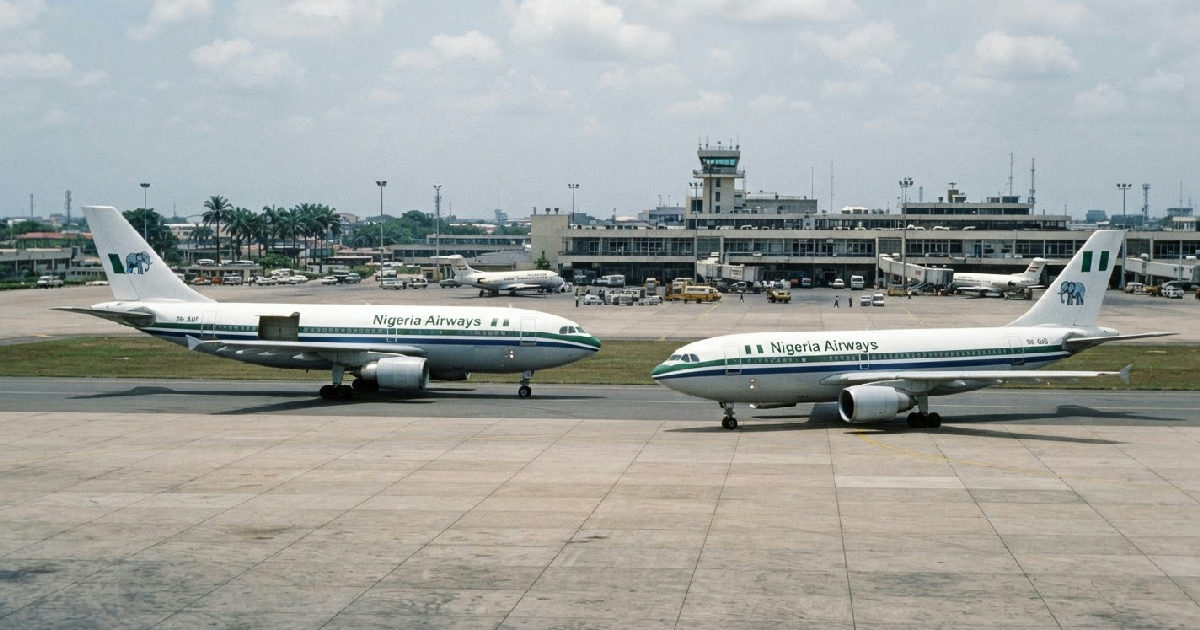
At the same time, Nigeria Airways, the national carrier, was integrating its first Airbus A310-200 passenger aircraft into its fleet, commencing a transformative phase for the nation’s air travel systems.
Airbus A300C4: a versatile cargo system emerges
This period underscored significant shifts in international aviation. Airbus, then a relatively young European consortium, was rapidly expanding its global footprint beyond its foundational European customer base. For Nigeria, these developments represented a strengthening of its commercial connections with major European destinations through the adoption of cutting-edge aircraft technology.
The Airbus A300C4 holds a unique position in commercial aviation for its adaptability. Conceived from the pioneering Airbus A300 family, this aircraft cleverly merged the substantial capacity of a widebody passenger jet with a crucial addition: a large main-deck cargo door. This design allowed it to operate efficiently with passengers, cargo, or a combination of both, providing unparalleled operational flexibility for airlines.
The A300C4 is a convertible-freighter version, derived from the A300B4-200 series. Its key feature was a massive upper side cargo door on the main deck, measuring 3.58 by 2.56 meters. This design distinction allowed for quick changes from an all-passenger to an all-cargo service within 24 hours, a capability that set it apart from conventional passenger aircraft and later dedicated freighter versions.
The A300C4-620 variant received its initial certification on December 18, 1979. It was designed to carry up to 41,000 kilograms of cargo and boasted a substantial range of 7,785 kilometers, or 4,200 nautical miles. This flexibility was crucial for operators looking to maximise aircraft utilisation, especially for seasonal demand.
Hapag-Lloyd’s A300C4 and its African connections
Hapag-Lloyd Fluggesellschaft, a German airline founded in July 1972, became closely associated with the European holiday market, ferrying passengers across the Mediterranean. Its fleet expanded considerably following its 1979 takeover of Bavaria Germanair, which included Airbus A300 widebodies.
One particular aircraft, registered D-AHLB with manufacturer serial number 083, became Hapag-Lloyd’s distinctive A300C4. Its large main-deck cargo door was installed in 1979, enabling the aircraft to operate in passenger, freight, and combined configurations. This capability allowed D-AHLB to undertake varied assignments beyond its typical tourist routes, including cargo services to African destinations during the early 1980s.
1984’s heavy-lift demonstration to Nigeria
The versatility of the Airbus A300C4 was powerfully demonstrated in 1984 when an Airbus A300C4 cargo variant performed a significant test flight to Nigeria. Departing from Cologne-Bonn Airport in Germany, the aircraft landed in both Lagos and Kano. It carried an impressive 41 tons of cargo, highlighting its robust heavy-lift capabilities.
The substantial load included seven motor vehicles, one concrete pump, and eight pallets of industrial goods. This demonstration underscored the A300C4’s capacity to handle long-haul freight routes, specifically into the burgeoning markets of West Africa.
For Nigeria, this event highlighted the potential for enhanced air cargo logistics, capable of transporting large equipment and manufactured goods critical for its industrial development and expanding infrastructure. It marked an important moment for the growth of air freight connections between Europe and Africa.
Nigeria Airways embraces the A310 widebody era
While the A300C4 was proving its cargo prowess, Nigeria Airways, the national airline of Nigeria, was making its own bold move into modern widebody aviation. Founded on August 23, 1958, the airline became Airbus’s 40th customer in 1981, placing a pivotal order for four A310-200 aircraft. This commitment signalled a clear ambition to modernise its fleet and expand its international reach.
The arrival of these 225-seater aircraft marked a significant milestone. The Nigerian government took delivery of all four A310-200s in December 1984. The first two aircraft were ferried to Lagos on December 20, 1984, with the remaining two following in mid-January 1985.
Nigeria Airways earned the distinction of being the first African airline to order the A310, placing it at the forefront of Airbus’s expansion on the continent.
Vision behind Nigeria Airways’ new fleet
Each Nigeria Airways A310 was configured to seat 18 passengers in first class and 207 in economy, powered by Pratt & Whitney JT9D-7R4E engines. Three of these A310-200 aircraft bore the names “Rima River,” “River Ethiope,” and “Lekki Peninsula.” For instance, 5N-AUG, with manufacturer serial number 329, was named ‘Lekki Peninsula’ and delivered in December 1984.
These aircraft began operating in December 1984 on routes connecting Nigerian cities to major European destinations including London, Paris, Rome, and Frankfurt. They also bolstered domestic and regional services along the West African coast.
The A310 was deployed to share international services with the airline’s DC-10s and also had a share of services on West Africa routes, reflecting Lagos’s growing importance as a regional aviation gateway.
Early operations and system challenges
By March 1985, the Nigeria Airways fleet was 22 aircraft strong. This diverse collection included two DC-10-30s, the four new Airbus A310s, three Boeing 707-320Cs, two Boeing 727-200s, ten Boeing 737-200s, and one Boeing 737-200C. Two additional Boeing 737-200s were on order, and the carrier employed 9,096 people.
To ensure the new A310s remained operational, Nigeria Airways contracted two French firms: Sogerma for airframe components and Sabena for maintenance of the Pratt & Whitney JT9D-7R4D1 engines. These contracts also provided crucial technical assistance and personnel training for Nigeria Airways staff. This period saw ambitious expansion, but the long-term sustainability of such an extensive system would soon face considerable challenges.
The wider impact on Nigeria’s aviation systems
The events of 1984, involving both the A300C4 demonstration and the A310 introduction, offer a critical lens into the development of Nigeria’s air transport system. The A300C4’s proven capability to haul 41,000 kilograms of diverse cargo, from vehicles to industrial goods, underscored a growing need for robust air freight channels.
This capacity directly supported Nigeria’s economic aspirations, particularly in an era of expanding trade and infrastructure projects.
The ability to transport heavy and specialised equipment quickly by air was not merely about convenience; it was about accelerating industrial growth and connecting Nigeria’s markets more effectively with global supply chains. This reflected a fundamental understanding that efficient logistics were as vital to national development as any direct investment.
The choice to invest in such sophisticated aircraft highlighted a desire to build a modern, capable national aviation system.
Shaping international air links and domestic infrastructure
The A310s opened new possibilities for direct flights to European capitals. This reduced reliance on older, less efficient aircraft and bolstered Nigeria Airways’ image as a modern international carrier. Domestically, their use on high-capacity regional services, including along the West African coast, aimed to integrate the national economy by improving internal connectivity and trade routes.
The expansion was a significant step for Nigeria’s transport infrastructure as a whole.
The decision to bring in advanced widebody aircraft like the A310 was more than a fleet upgrade; it was an investment in the nation’s image and its strategic position within Africa. It sought to solidify Lagos as a premier international gateway and enhance Nigeria’s influence across the continent.
Such moves, however, often came with complex challenges in maintenance, financial management, and operational efficiency, factors that would continue to shape Nigeria’s national systems for decades.
Legacies and lessons for national systems
The dual narrative of the Airbus A300C4 and Nigeria Airways’ A310 fleet encapsulates a pivotal moment in the evolution of Nigeria’s national systems. The A300C4 demonstrated the inherent value of aircraft flexibility in serving dynamic markets. Its ability to quickly switch between passenger and freight roles offered a blueprint for efficient resource utilisation in capital-intensive industries.
For Nigeria Airways, the A310 acquisition was a bold statement of national ambition. It placed the country squarely within a new generation of international widebody operations, linking its economic aspirations to global aviation trends. This move was about building the systemic capacity to support a growing, modern economy and to facilitate international engagement.
However, the subsequent challenges faced by Nigeria Airways, including financial difficulties and maintenance issues that led to aircraft impoundment, highlight the fragility of even well-intentioned systemic upgrades. This mirrors broader issues observed in Nigeria’s commercial history.
One of the A310s, 5N-AUG named “Lekki Peninsula,” delivered in December 1984, eventually became a poignant symbol of these struggles. Impounded in Brussels in the 1990s due to unpaid maintenance fees, it was later sold on September 10, 1999. An unnamed organisation in Gilly, Belgium, converted it into an Italian restaurant and discotheque.
As of February 3, 2020, this aircraft was even put up for sale at €100,000, with an additional €100,000 required for dismantling and transport.
This dramatic outcome reflects a recurring pattern in Nigeria’s history: ambitious projects and advanced systems often grapple with long-term sustainability due to underlying structural weaknesses in maintenance, finance, or governance. The story of these aircraft is a powerful reminder that the mere acquisition of technology does not guarantee systemic success.
It requires robust support infrastructure, consistent financial management, and unwavering commitment to operational excellence. Such challenges were not unique to the airline sector; the broader question of maintaining national assets also arose during debates around Nigeria’s railway backbone.
The journey of Nigeria’s Airbus era, starting with such high hopes in 1984, provides valuable insights into the complex interplay between national vision and the practical realities of maintaining advanced systems. It offers lessons that continue to resonate in contemporary discussions about infrastructure development.
The events of 1984, therefore, illuminate not just the growth of air travel, but the intricate systemic challenges inherent in building and sustaining a modern nation’s infrastructure. They leave us to consider how crucial effective maintenance and strategic planning are to the longevity of national investments, especially in high-capital industries.
