




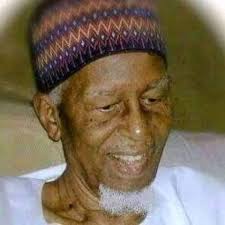
In 1957, a 33-year-old politician from the edge of Nigeria was given a job that did not officially exist inside it. Abdullahi Dan Buram Jada was appointed Minister for Northern Cameroons Affairs. The peculiarity was that Northern Cameroons was not yet part of Nigeria. It was a United Nations Trust Territory, a remnant of a German colony, administered by Britain.
Jada was a man from a land in between, tasked with persuading his own people to choose a side. His life story is the story of how Nigeria’s eastern border was drawn not by colonial masters with maps in London, but by the will of the people on the ground, and the quiet, determined work of men like him.
Abdullahi Dan Buram Jada: The world that made the man
Abdullahi Dan Buram Jada was born in 1924 in Nasarawa Jada, a part of Adamawa that belonged to the British-administered Northern Cameroons. This land had a complex status. Once part of German Kamerun, it was split between Britain and France after Germany’s defeat in the First World War and governed under an international mandate.
This meant that while it was administered as part of Northern Nigeria, its ultimate fate was undecided. Jada grew up in a place that looked and felt like Northern Nigeria, but whose people would one day have to vote on their own national identity.
His generation of leaders, like his contemporary the statesman Yusuf Maitama Sule, was shaped by this dual reality of colonial administration and the approaching dawn of self-determination.
His early life was a blend of two worlds. He received a traditional Islamic and Arabic education before enrolling in Yola Primary School in 1937 at age thirteen. He later attended Yola Middle School, a path that prepared him for a career in the colonial administrative system. He joined the Adamawa Native Authority in 1944, spending a decade there.
Between 1948 and 1952, he trained at the Samaru School of Agriculture, becoming a Supervisor of Agriculture. This was the foundational work of empire: managing land and people, the nuts and bolts of the colonial state. It was a career that gave him an intimate understanding of the system he would soon be asked to transform.
A rise into regional politics
Jada’s transition from civil servant to political leader began in the mid-1950s, as Nigeria’s march towards independence quickened. In 1955, he was appointed District Head of Jada, a traditional role that gave him local authority and legitimacy. A year later, he stepped onto a much larger stage, winning a seat in the Northern House of Assembly.
His election placed him in the political heart of the Northern Region, a system dominated by the towering figure of Sir Ahmadu Bello, the Sardauna of Sokoto and Premier. Jada joined the ruling party, the Northern Peoples’ Congress (NPC), and quickly rose.
At just 30 years old, he was made a minister, a remarkable ascent for a man from a territory with such an uncertain political status.
His portfolio was unique: Minister of Animal Health, Forestry, and for Northern Cameroons Affairs. The first two were standard regional concerns; the third was a delicate and hugely significant international issue. He was now the official representative for his homeland inside the very government that wished to absorb it. His personal history had become his political mission.
Jada found himself at the negotiating table during the great constitutional conferences in Lagos and London between 1957 and 1960. He sat alongside figures like Abubakar Tafawa Balewa, Nnamdi Azikiwe, and Obafemi Awolowo, men shaping the framework of an independent Nigeria. But for Jada, there was always a second question: would his own people even be part of that new nation?
The fight for Nigeria’s eastern frontier
The future of Northern Cameroons was not a matter for politicians alone to decide. The United Nations mandated a plebiscite, a direct vote by the people. The first of these votes, held on November 7, 1959, presented a complex choice: join the Northern Region of Nigeria upon its independence, or postpone the decision.
The result was a setback for Jada and the pro-Nigeria camp. Nearly 88 percent of the electorate voted, but 62 percent chose to postpone. The UN’s plebiscite commissioner noted the vote seemed to be a protest against the local administrative system, which many associated with the Northern Nigerian authorities. It was a clear sign that the bond was not as strong as assumed.
This was happening against a backdrop of evolving attitudes towards colonial power. While men like Jada worked within the system to achieve their aims, the memory of earlier, more violent rejections of colonial authority, such as the 1915 Bussa Rebellion, was a part of the country’s complex heritage.
Nigeria became independent on October 1, 1960, but its eastern border remained an open question. Northern Cameroons continued as a UN trust territory, waiting for a final answer.
The vote that redrew the map
A second, decisive plebiscite was held on February 11 and 12, 1961. This time, the choice was simple and stark: join the independent Federation of Nigeria or join the Republic of Cameroun. For Abdullahi Dan Buram Jada, this was the defining moment of his career.
As a minister from the region, he campaigned for the Nigerian option, arguing his people’s future lay with the new nation.
Out of 292,985 registered voters, 146,296 voted to join Nigeria. Another 97,659 chose the Republic of Cameroun. It was a clear majority. The UN commissioner confirmed the vote was free and fair. In April 1961, the UN General Assembly endorsed the result, and on June 1, 1961, Northern Cameroons formally became Sardauna Province, a part of Nigeria’s Northern Region.
The outcome was a profound personal and political victory for Jada. His advocacy, rooted in his own identity as a man of the territory, had helped secure a permanent place for his home within the Nigerian federation. The contrast with Southern Cameroons, which held its own plebiscite and voted to join Cameroun, highlighted the significance of the choice. The border was now set.
Decades later, Jada’s role in this pivotal event remains a powerful example of how Nigeria was built. It wasn’t just a creation of British cartographers. It was also shaped by local leaders who navigated complex international politics to build a nation, one province at a time, often against a history of forceful colonial imposition like the decades-long Ekumeku Resistance.
A lifetime of building institutions
After the intensity of the plebiscite years, Jada’s career entered a new phase, one defined not by politics, but by the patient work of building public institutions. In October 1960, just after independence, he became a commissioner of the Northern Nigeria Civil Service Commission. He was tasked with building the administrative backbone for the region, a role he held until 1968.
When the regions were broken into twelve states in 1967, he became the first Chairman of the Public Service Commission for the newly created North-Eastern State. Here, he established a reputation for integrity and fairness, pioneering efforts to recruit skilled workers and creating frameworks to curb the nepotism and corruption that plagued public life.
He was known for his refusal to hire even relatives if they were not qualified.
This commitment to public integrity continued when he was appointed Public Complaints Commissioner, first for the North-Eastern State and later for Adamawa State. In this role, essentially an ombudsman, he was a defender of the ordinary citizen against the state. His work here was a direct continuation of his belief in merit-based, accountable governance.
In his later years, he brought this same ethos to higher education. He served on the governing council of Bayero University, Kano, eventually becoming its Chairman in 1984. He later held the position of Pro-Chancellor and Chairman of the Governing Council of Usmanu Danfodiyo University, Sokoto. His career had moved from shaping borders to shaping the minds that would lead the nation.
The quiet legacy of a statesman
Abdullahi Dan Buram Jada lived a life that traced the arc of Nigeria’s 20th-century history. Born a subject of a mandated territory, he became a traditional leader, a regional minister, a nation-builder, and a guardian of its public institutions. He received honours for his work, including the Order of the British Empire (OBE) and the Nigerian Order of the Niger (OON).
When he passed away on May 24, 2021, at the age of 97, the tributes from President Muhammadu Buhari and the Nigerian Senate recalled a lifetime of dedicated service. He was remembered as the man who helped unite Northern Cameroons with Nigeria, but his legacy is broader. It is the story of a public servant who believed in the power of institutions and personal integrity.
Jada’s story offers a different model of leadership. He was not one of the famous firebrands of the independence movement. He was a quiet builder, an administrator who understood that a nation is more than just a flag and an anthem. It is a set of functioning, credible institutions that serve the people.
His life’s work leaves a pressing question: what does it take to build institutions that last?
