




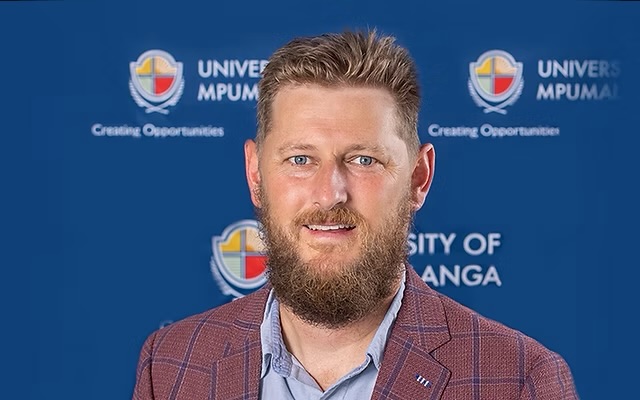
On Tuesday, August 11, 2026, Tim Forssman, a Senior Lecturer at the University of Mpumalanga, offered a sweeping look at how archaeology has shaped, and been shaped by, the story of Africa. His new book, detailed in an article published by The Conversation, maps out four distinct eras in understanding the continent’s deep past.
It’s a journey from colonial curiosity to a discipline increasingly defined by African voices.
The early colonial gaze on African archaeology
Forssman’s work underscores a critical truth: how we interpret the past is never static. It evolves with advancements in science, shifts in political landscapes, new technologies, and changing perspectives. This constant evolution is especially pronounced in Africa, where archaeology has long battled the shadows of colonial narratives and misinterpretations.
The first era of African archaeology evolution coincided directly with the European “scramble for Africa” in the late 1800s. During this period, the primary focus wasn’t on rigorous scientific analysis but on collection. European powers were carving up the continent, and their agents – missionaries, administrators, and casual travellers – were often the ones gathering artifacts.
Much of this early work, as Forssman describes, was “based on collections, with little analysis of the finds.” These were often employees of museums or simply individuals interested in exotic curiosities. Few trained specialists were involved, meaning a crucial lack of scientific context accompanied these early discoveries. This initial phase laid the groundwork for a deeply skewed understanding of African history.
Shifting perceptions and emerging scientific methods
As the early 20th century progressed, archaeological approaches in Africa began to shift. This was a transitional period, marked by what Forssman characterises as a “clash of amateurs and professionals.” The rudimentary collection methods of the past started giving way to more robust analytical approaches by the 1920s.
But even with these advancements, archaeology still grappled with pervasive colonial misperceptions. Ideas like an “Atlantis” in West Africa, or the “Hamitic hypothesis,” which suggested that advanced technology in Africa must have been introduced by people from ancient Egypt, persisted. These theories actively denied the ingenuity and independent development of African civilizations, firmly embedding Eurocentric biases into the historical record.
A coming of age: Technology and community engagement
World War II inadvertently propelled archaeology into its third phase, marked by a significant technological leap. The war spurred innovations that would fundamentally change how archaeologists dated and analysed finds. Crucially, radiocarbon dating emerged as a transformative tool, allowing for unprecedented accuracy in dating ancient sites.
Bernard Fagg, a colonial chief inspector of mines in Nigeria, along with his wife Catherine Fagg, were pioneers in applying this new technique in Africa. Their groundbreaking work on finely crafted terracotta heads from Nigeria’s Jos Plateau yielded ages exceeding 2,000 years. This single discovery shattered prevailing colonial assumptions that complex civilizations in West Africa were a much more recent phenomenon.
From the 1960s onwards, this era witnessed a “diaspora of archaeology,” moving beyond purely academic pursuits to integrate local communities. This shift began to recognise communities not just as sources of information, but as active participants in the research process. It marked a crucial step towards granting agency to Africans in telling their own stories.
Archaeologists working in sub-Saharan Africa today face an ongoing challenge to genuinely engage these local and descendant communities. Moving towards equal collaboration requires more than superficial inclusion; it demands centering indigenous perspectives and reconceptualising the relationship between researchers, communities, and their shared material heritage. This participatory public archaeology is a relatively new but vital approach.
Decolonizing the discipline: Confronting legacies, shaping futures
The latest and most critical phase in African archaeology, often termed the “diaspora across Africa,” centres on decolonisation. Since the 1990s, there’s been a conscious effort to move beyond “African archaeology” as a niche sub-discipline to “archaeology in Africa” – aiming for a more universal and globally integrated approach.
Yet, this goal has sometimes inadvertently led to the adoption of European and American research frameworks at the expense of African contexts.
Decolonizing archaeological practice fundamentally seeks to challenge the dominance of Western ideologies. It pushes back against colonial assumptions that Africa was “uncivilized” or lacked sophisticated culture, actively working to uncover and amplify indigenous histories. This means giving voice to narratives previously silenced or misinterpreted under colonial rule.
Professor Innocent Pikirayi, Head of the Department of Anthropology and Archaeology at the University of Pretoria, is a key figure in this movement. As one of the first Zimbabweans to train in archaeology post-independence, he co-edited a pivotal volume in 2016 on decolonizing archaeological practice.
This work coincided with student protests in South Africa advocating for the decolonisation of universities and knowledge production, highlighting the urgent need for change.
True decolonization demands a fundamental restructuring of disciplinary methodologies and theoretical foundations. It requires archaeologists to move beyond merely including indigenous perspectives, instead centering indigenous ontologies and challenging extractive research models. This ensures the continent’s rich past is interpreted through its own lens.
The field still confronts significant hurdles. Many African archaeological collections remain housed in museums in the global North, limiting access for African researchers. There’s also a pressing need for better infrastructure, equipment, and expertise on the continent itself to fully support advanced archaeological science.
What the past reveals about the future of African heritage
The evolution of archaeology in Africa isn’t just an academic exercise; it’s crucial for understanding the continent’s identity and potential. As Professor Chapurukha M. Kusimba of the University of South Florida notes, East African archaeology is seeing increased participation from Africans and women, a vital step towards more inclusive and accurate interpretations of history.
Kusimba, who grew up in Kenya and conducts regular research there, exemplifies this shift.
However, the continent’s rich archaeological heritage faces constant threats. The global demand for minerals, rapid urbanisation, and conflicts all contribute to the damage and destruction of invaluable sites. Climate change, weak legislation, and insufficient investment in archaeological organisations further exacerbate these challenges. Even looting for the international art market continues to strip Africa of its cultural treasures.
Despite these challenges, archaeology in Africa must assert its domain as a future-oriented discipline. It demonstrates how the past remains deeply relevant to the present, offering insights into human origins and the development of complex societies. The continent is, after all, recognised as the cradle of humankind, with hominins emerging some 6 to 7 million years ago.
From the early anatomically modern human skulls found at Omo Kibish and Jebel Irhoud to the evidence of early human presence outside Africa at sites like ‘Ubeidiya, the continent’s archaeological record is unparalleled.
Understanding these deep histories is not just about preserving the past; it’s about informing future development, fostering transcultural education, and inspiring new forms of tourism and traditional crafts. It offers a unique window into humanity’s shared story and Africa’s indelible contribution to it. This ongoing work contributes to a broader understanding of cultural narratives.
As the field continues to evolve, it leaves open a vital question: how will African scholars and communities continue to reclaim and reinterpret their past, ensuring that its lessons truly serve the continent’s future? The journey from colonial collection to decolonized understanding is far from over.
It is a continuous process of discovery and re-evaluation, promising deeper insights into the enduring spirit and innovation that have always defined Africa. African voices are increasingly taking centre stage in this vital dialogue.
