




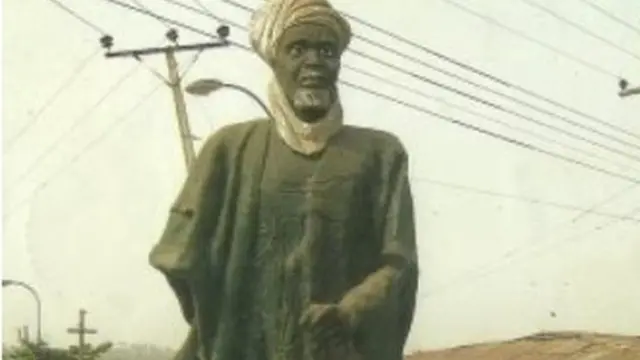
Born Ifaremilekun Fagbemi around 1835 in Joga-Orile, Ilaro, Ogun State, a young Yoruba boy faced capture and enslavement in the mid-19th century.
Instead, he returned to West Africa as Seriki Williams Abass, transforming into a prominent merchant, an influential Muslim leader, and paradoxically, a key figure in the very trade that had stolen his youth.
from Ifaremilekun Fagbemi to Seriki Williams Abass
Abass’s life provides a lens through which to examine the intricate and often brutal dynamics of 19th-century West Africa, particularly the transatlantic slave trade, colonial expansion, and the emergence of new power structures. His personal odyssey from victim to perpetrator, and then to a powerful local ruler, embodies the profound contradictions that shaped the region.
Ifaremilekun Fagbemi’s early life took an irreversible turn during one of the fierce Dahomey–Egba clashes that destabilized the Yoruba communities. At just six years old, he was captured by a Dahomean slave merchant named Abass, marking the beginning of his harrowing passage into the Atlantic system.
From his homeland, young Ifaremilekun was taken to Abomey, the capital of Dahomey. He was subsequently sold to a Brazilian slave dealer named Williams, who then transported him across the vast ocean to Brazil. There, he served in Williams’s household as a domestic servant, far from the life he once knew in Joga-Orile.
During his years in Brazil, Abass demonstrated a remarkable aptitude for learning. He acquired literacy and became proficient in several European languages, including Dutch, English, Spanish, and Portuguese. This intellectual development ultimately paved the way for his freedom, though not without a significant caveat.
His return to West Africa was contingent upon an arrangement with his former master, Mr. Williams, turning him from a slave into a business partner in the continuing slave trade. This marked a deeply unsettling transition, where his personal experience of bondage became a foundation for participating in the enslavement of others.
badagry: a nexus for a troubling return
Upon his return from Brazil, Seriki Williams Abass made his way back to the West African coast, initially settling in Ofin, Isale-Eko, within the Colony of Lagos. However, he soon relocated to Badagry, a town already inextricably linked to the Atlantic slave trade.
Badagry’s strategic location, with its lagoon, extensive waterways, and proximity to crucial coastal embarkation routes, made it an essential hub for Atlantic commerce. Here, enslaved people, European goods, and various African commodities flowed through a complex network of transactions.
Abass quickly established himself as a critical middleman. He connected suppliers of captives from the interior with the European and Brazilian merchants operating along the coast. His firsthand experience in Brazil and his existing commercial ties provided him with a distinct advantage within this brutal network.
This transformation stands as one of the most stark and troubling aspects of his biography. A man who had endured the trauma of capture, forced transport, and enslavement himself, now actively engaged in acquiring, detaining, and selling other African captives. He was, simultaneously, a survivor and a central figure in the machinery of enslavement.
the barracoon: a physical testimony to the trade
The most enduring and chilling physical legacy of Seriki Williams Abass is the barracoon located within his compound on the Badagry waterfront. This structure, dating back to the 1840s, served as a grim holding facility in the commercial infrastructure of slavery.
The complex contained forty cells, specifically designed to confine enslaved men and women. They were held here while sales were negotiated, and arrangements were finalized for their transportation onto ships bound across the Atlantic. At any given time, it could hold between 40 and 100 individuals.
The preservation of the Seriki Faremi Williams Abass barracoon is particularly significant because many other confinement sites in Badagry have since disappeared due to urban development. It offers rare, tangible evidence of how the slave trade was meticulously organized at the coastal level, illustrating the scale and precision required to sustain such a dehumanizing enterprise.
The barracoon serves as a stark reminder that the transatlantic slave trade wasn’t merely about ships and distant plantations. It relied heavily on organized systems of detention, guarding, sale, transportation, and finance. Human beings had to be physically controlled and confined before they could be moved, making such structures an integral part of Badagry’s built environment and a permanent scar on its history.
diversifying wealth and embracing islam
As the 19th century progressed and international efforts to suppress the Atlantic trafficking of enslaved people intensified, Seriki Williams Abass adjusted his commercial interests. He diversified his portfolio, expanding into other forms of trade, recognizing the shifting economic landscape.
Historical studies of western Yorubaland describe him as a prosperous merchant and a substantial property holder whose commercial influence continued to grow well beyond the period when the overseas slave trade was his primary activity. He engaged in general merchandise, trading actively with Brazilian and German merchants.
His accumulating wealth significantly elevated his social standing in Badagry and the wider western Yoruba region. This economic success enabled him to acquire symbols of modern prosperity, such as the “Seriki Ford” lorry, which he bought in 1919 to ply the Abeokuta–Aiyetoro Road, an early example of modern transport in the area. He also founded towns like Aiyetoro in 1902 and Idogo in Ogun State.
Beyond commerce, religion became another crucial aspect of Abass’s public life. By the 1890s, he had emerged as a leading figure within Badagry’s Muslim community, inducted as “Seriki Musulumi” (Chief of the Muslim Faithful) of Western Yorubaland in 1897 by Chief Imam Yusuf.
He was closely associated with the development of Muslim institutions, including the construction of the Badagry Central Mosque at Sango in 1896 and the founding of Egbe Killa in 1898.
He actively championed improved educational opportunities for Muslims, petitioning the colonial administration in April 1899 for a government Muslim school in Badagry, which subsequently opened that same year.
navigating the british colonial system
The political ascent of Seriki Williams Abass unfolded against the backdrop of expanding British colonial rule across the region. As British administrators consolidated their power, they frequently relied on influential local figures to manage newly reorganized districts, a strategy known as Indirect Rule.
Abass’s considerable commercial wealth, personal influence, and established regional connections made him an ideal candidate for such roles. In 1895, Major J.E. Ewart had already recognized his growing authority, but it was in 1913 that he was formally appointed “Paramount Ruler” of Badagry and the Western District.
It’s crucial to understand that this position was not an inheritance of an ancient, hereditary throne. Instead, his authority was a creation of the colonial administration, developed within the new political arrangements imposed by the British. His appointment illustrates how wealth and influence could be converted into political power within the colonial framework.
Even after the administrative restructuring of 1914, which integrated the Western District into the Ilaro Division of Abeokuta Province, Abass maintained his significant position within the reconfigured system of local government and chiefly authority.
His career vividly demonstrates how British officials often reshaped existing political systems, elevating selected chiefs and influential merchants to create administrative relationships that frequently diverged from pre-colonial structures. Abass was one of the figures whose influence expanded within this changing political environment.
an enduring, contradictory legacy in badagry
Chief Seriki Williams Abass died on June 11, 1919, and was laid to rest within his compound in Badagry. His tomb remains there today, a silent testament to a life marked by profound contradictions. His burial within the very compound that also housed the infamous barracoon created an extraordinary historical landscape, where his personal history and the collective trauma of enslavement are inextricably linked.
Today, this site stands as a powerful place of memory. It serves simultaneously as his former residence, a chilling location connected with the imprisonment of countless enslaved Africans, a former center of commercial and political authority, a family compound, and ultimately, a memorial to the complex man who controlled it. These layers of history are impossible to separate, each contributing to the site’s raw power.
Badagry’s importance as a landscape of slavery and remembrance received further international recognition on October 14, 2024. UNESCO included the town among the first twenty-two places admitted to its Network of Places of History and Memory linked to Enslavement and the Slave Trade. This network aims to preserve important historical sites associated with slavery, resistance, remembrance, and the enduring consequences of enslavement.
Within the broader Badagry landscape, visitors can find not only the Seriki Williams Abass barracoon but also the Vlekete Slave Market and Shrine, the Mobee Slave Relics Museum, and the Badagry Heritage Museum.
Badagry’s inclusion in the UNESCO initiative underscores its international importance, ensuring that the physical evidence of the slave trade is preserved and that future generations can confront the human experiences that defined this dark chapter of history.
Seriki Williams Abass’s story leaves us with a question: how do we reconcile the individual’s capacity for survival and adaptation with their role in perpetuating systemic injustice, and what does this tell us about the forces that continue to shape Nigeria today?
