




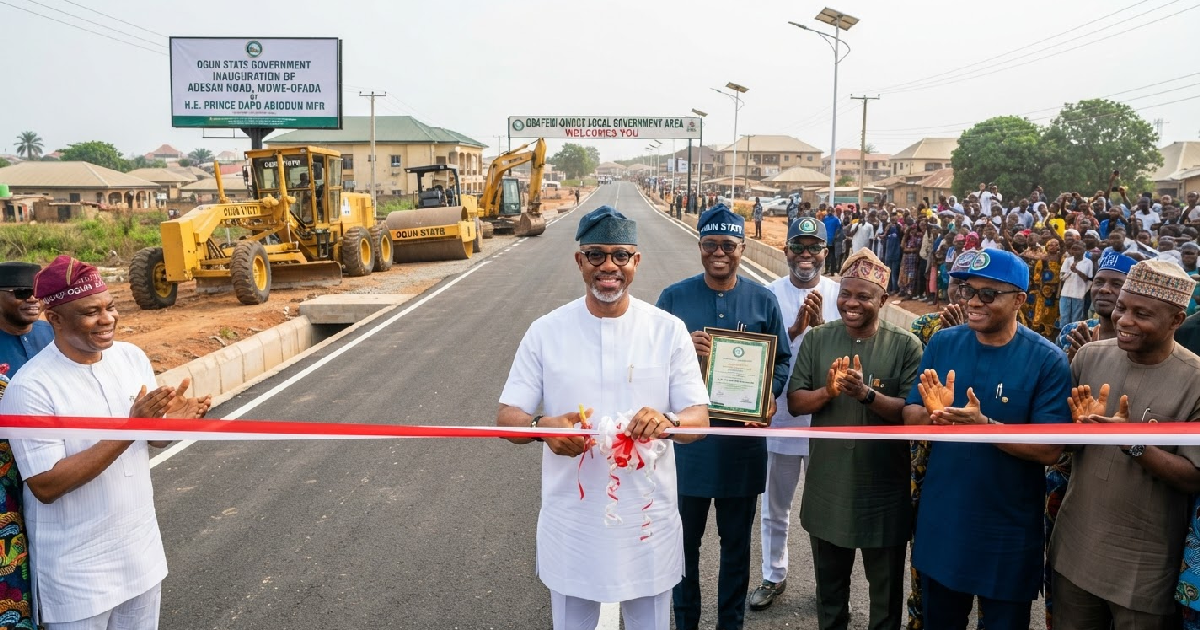
On Friday, August 7, 2026, Governor Dapo Abiodun of Ogun State inaugurated the 3.5-kilometer Adesan Road project in Mowe-Ofada, Obafemi-Owode Local Government Area. This event highlighted a broader effort by his administration.
He announced that over 42 roads have been reconstructed within the Ogun Central Senatorial District since he assumed office in May 2019. This extensive work signifies a sustained focus on regional infrastructure.
His administration has laid down a total of 1,600 kilometers of roads across the entire state over the past seven years, according to Governor Abiodun. These extensive efforts aim to significantly improve connectivity and stimulate economic activity across Ogun State, a region grappling with rapid population growth and its unique geographical challenges.
The enduring promise of infrastructure development
For decades, the condition of roads has been a defining issue in Nigerian political discourse. Every administration, from the federal to the local level, grapples with the dual challenge of building new networks and maintaining existing ones. These roads aren’t just routes for vehicles; they’re the arteries of commerce, connecting farmers to markets and residents to livelihoods.
The system of road construction in Nigeria often begins with a political pledge, driven by the immediate needs of communities and the broader economic vision of a state. It’s a cycle that plays out repeatedly, with each leader promising to deliver the elusive dream of seamless travel. But turning those promises into tangible results requires sustained political will and meticulous planning.
Ogun’s geographical pressures and strategic connections
Ogun State, particularly its central district, finds itself at a crucial crossroads. Its strategic proximity to Lagos State means it absorbs millions of residents and businesses seeking more affordable land and less congested environments. This influx places immense pressure on existing infrastructure, demanding constant expansion and upgrading.
The roads in areas like Obafemi-Owode become critical lifelines. They facilitate daily commutes for those working in Lagos and serve as conduits for goods and services. Without robust road networks, the economic potential of these border communities would remain largely untapped.
Unpacking the Ogun Central road network
The figure of 42 reconstructed roads in Ogun Central Senatorial District stands as a key metric of the Abiodun administration’s focus on this area. These projects aren’t evenly spread, but rather target critical corridors and communities that often felt neglected.
Twelve of these 42 reconstructed roads fall within the Obafemi-Owode Local Government Area, highlighting its importance. Other key projects mentioned are the Abeokuta–Sagamu Interchange Road, Panseke–Adigbe Road, and Siun–Owode Road (Phase I), as well as the Journalists’ Estate Road in Arepo. These specific developments showcase a targeted approach to improving regional flow.
The Adesan Road inauguration: A local anchor
The inauguration of the 3.5-kilometer Adesan Road in Mowe-Ofada marked a specific milestone. For residents of this rapidly growing community, the completed road means improved access and reduced travel times. Governor Abiodun used the occasion to reaffirm his administration’s commitment, stating, “I want to assure you that we will remain a promise-keeping administration and, for those who live here, ensure that this road serves the purpose for which it was designed and reconstructed.”
This localized success story anchors the broader narrative of statewide infrastructure development. It’s an illustration of how large-scale policy translates into concrete benefits for everyday citizens. The project speaks to the foundational role of state leadership in shaping the physical and economic landscape.
Roads as economic engines and community connectors
The impact of a well-paved road extends far beyond smoother rides. These infrastructure investments directly fuel local economies. For Ofada, a community renowned for its rice production, better roads mean farmers can transport their produce to markets faster and more efficiently, reducing spoilage and increasing profits.
Damilola Soneye, who represents Obafemi-Owode in the Ogun State House of Assembly, commended the governor for the road project. He observed the project had transformed transportation, improved livelihoods, and significantly increased property values. Soneye further stated, “This road was in a deplorable condition for years, making movement difficult for motorists and residents before the intervention of Gov. Dapo Abiodun’s administration. The newly completed road has brought relief to commuters and residents while opening up the area for greater economic activities.”
Bridging Ogun and Lagos: A symbiotic relationship
Obafemi-Owode’s status as a residential and business hub for millions stems from its direct connection to Lagos. Investing in its roads solidifies this symbiotic relationship, facilitating trade and movement between the two states. It means easier access to markets for Ogun-based businesses and smoother commutes for its residents who work in Lagos.
The state’s infrastructure strategy acknowledges this critical economic corridor. It’s an approach that understands that growth in one area can catalyze development in another, creating a ripple effect across the region. This is about building a system of economic integration, not just isolated road segments.
Beyond the tarmac: A legacy of connectivity and challenges
The reconstruction of 1,600 kilometers of roads across Ogun State within seven years speaks to a concerted effort to address a persistent development challenge. These projects aren’t simply about constructing new routes; they’re about rebuilding confidence in governance and delivering on fundamental citizen expectations.
Sustaining the momentum of road development in Nigeria
While the immediate benefits of these reconstructed roads are clear, the long-term success of such initiatives hinges on sustainability. Maintaining the pace of development is crucial for continued progress. Can the completed infrastructure be adequately protected and preserved for future generations? These are the questions that hang over every newly paved road in Nigeria.
As Ogun State continues its infrastructure drive, the enduring challenge remains how to build systems that not only deliver projects but also ensure their longevity and sustained positive impact. It’s a process that demands constant evaluation and adaptation, ensuring that today’s achievements lay the groundwork for tomorrow’s continued prosperity.
The future of Ogun State’s infrastructure blueprint
Governor Abiodun’s assurance that his administration will award and complete more road projects before the end of its tenure suggests a continued focus on infrastructure. This ongoing commitment is crucial for a state like Ogun, which serves as a vital economic corridor between Lagos and the rest of the country.
