




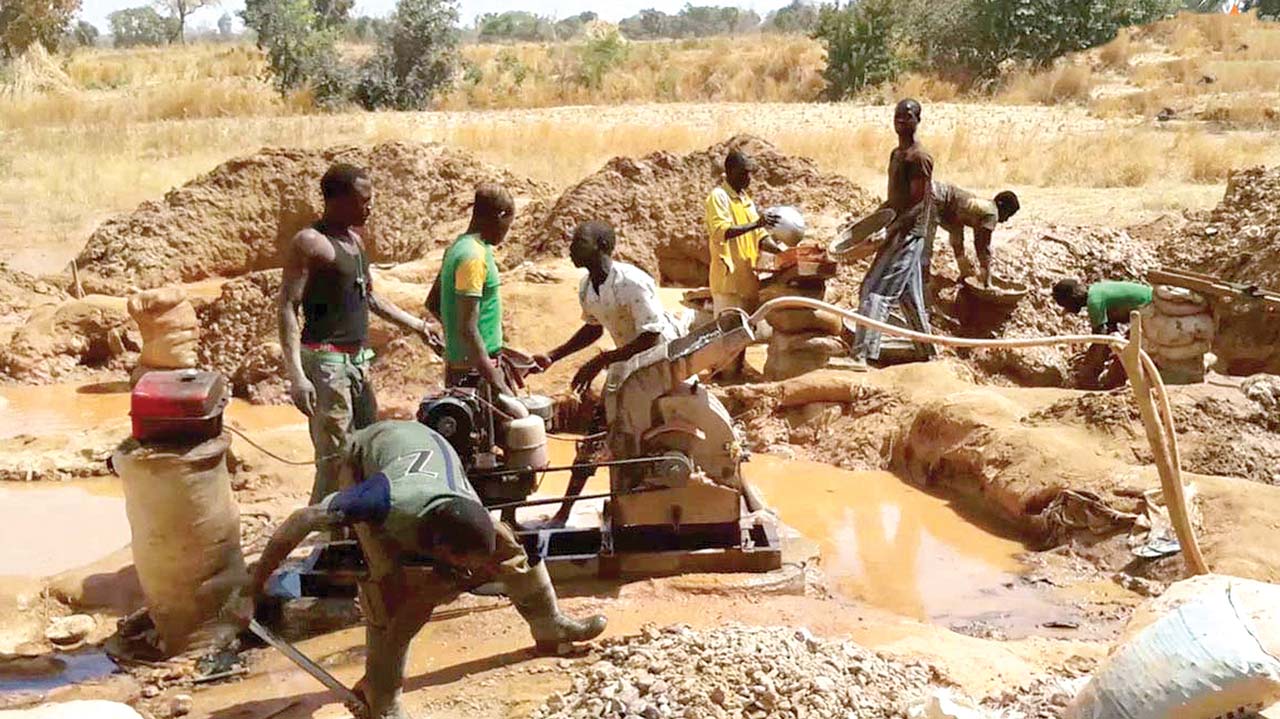
For decades, the official story on artisanal mining in Nigeria and across Africa was simple: it was illegal, criminal, and had to be stamped out with force. From the 1980s onward, the common response involved military-style raids on mining sites, a policy intended to protect national resources and project state authority. This approach, however, contributed to Nigeria’s failed mining sector.
This approach was based on a belief that the men and women digging for gold, tin, and coltan were simply thieves. But this failed to grasp the reality. For millions, artisanal and small-scale mining (ASM) is a desperate livelihood, an escape from poverty where no other options exist.
The making of Nigeria’s failed mining trap
An estimated 90% of these miners operated informally, without the permits their governments made nearly impossible to obtain.
The punitive crackdowns of the late 20th century did not stop the mining. Instead, they created the perfect conditions for a “criminalisation trap.” By treating millions of subsistence miners as outlaws, the state pushed them into the shadows, stripping them of any legal protection. This policy vacuum was quickly filled by organised criminal syndicates.
These gangs were not miners; they were predators. They descended on the informal mining communities, extorting “taxes” and “protection money” from the vulnerable miners. Violence became the norm. In South Africa, turf wars between rival syndicates exploiting artisanal miners, known as “Zama Zamas,” led to hundreds of deaths between 2012 and 2015 alone.
These choices by state authorities reflected a pattern of poor governance that often plagued development sectors, whether in resource extraction or even in how African football federations managed their affairs.
A history of misguided interventions
The roots of this criminalisation trap stretched deep into the past. Post-colonial governments inherited and often expanded upon colonial-era laws that viewed natural resources primarily as state assets to be centrally controlled. This framework often left little room for the traditional, small-scale mining practices that sustained countless rural communities.
The underlying assumption was that all informal mining represented a threat to national sovereignty and economic stability. Instead of creating pathways for legal participation, policies focused on exclusion and punishment. This inadvertently turned a desperate workforce into an illicit one, ripe for exploitation.
A policy failure with a human cost
The consequences of criminalisation were not just economic. They were deadly. In Nigeria, the tragic culmination of this policy was seen in September 2026, when 37 young men, arrested as “illegal miners,” died in the custody of the Nigeria Security and Civil Defence Corps (NSCDC) in Minna, Niger State. An investigation found their deaths from overcrowding and neglect were “entirely preventable.”
These individuals were not master criminals, but victims of a failed strategy that conflated poverty with criminality. The state’s focus on punishment created a system where human rights were an afterthought. This neglect stood in stark contrast to the principles advocated by figures like Nobel laureate Navi Pillay. Arbitrary detention, torture, and forced labor became dark hallmarks of the informal mining sector.
Beyond custody deaths, artisanal miners faced relentless abuses from government security forces and a shocking lack of protection from non-state actors. Crimes included trafficking, enslavement, sexual violence, and the widespread use of child labor. These were the grim realities for those caught in the criminalisation trap.
The economics of neglect: billions lost, lives sacrificed
While governments spent vast sums on enforcement—one operation in South Africa reportedly cost over a billion rand—they simultaneously lost out on immense potential revenue. In 2022, the artisanal and small-scale mining sector accounted for a staggering 32% to 41% of Africa’s total gold production. This was a significant portion of the continent’s wealth.
In South Africa alone, the value of lost gold production due to illegal mining activities was estimated to exceed R14 billion annually. This wealth, instead of flowing into national treasuries for development, was siphoned off by criminal syndicates. The state was fighting a losing battle, turning a potential economic asset into a liability.
This economic leakage fuelled corruption and state capture, as political elites and military personnel in countries like Chad and South Africa reportedly sponsored or engaged in mining. They employed artisanal miners, provided logistical support, and received gold. This created conflicts of interest and ensured selective enforcement of regulations, further entrenching the informal sector.
Regional patterns, shared challenges
The Nigerian experience was not an isolated incident but a reflection of a broader pattern across Africa. In Ghana, a government ban on “galamsey” (illegal artisanal mining) in 2017 initially reduced operations. However, it led to miners relocating to forest reserves and new territories, intensifying environmental degradation rather than solving the problem.
The Democratic Republic of Congo (DRC) also grappled with these issues, leading to reforms like the 2018 Mining Code. This code aimed to create Artisanal Exploitation Zones (ZEAs) and require miners to form cooperatives. Yet, enforcement failures and structural gaps in legislation often meant abuses continued, and miners remained vulnerable.
These examples highlighted a shared challenge: the difficulty in distinguishing between subsistence miners and genuine criminal networks. Policies often painted all artisanal miners with the same brush, failing to address the root causes of informality like poverty and weak rural livelihoods.
This broad-brush approach undermined human dignity and economic opportunity, similar to how historical social changes, such as those that reshaped South Africa’s transgender history, highlighted the need for nuanced understanding.
The path not taken
For years, experts argued for formalisation as the enduring solution to the challenges of artisanal mining in Africa. This involved providing appropriate licenses for small miners, offering safety training, and facilitating access to geological information. Creating official mineral-buying centers would also curb illicit trade.
Such an approach meant distinguishing between the millions mining for survival and the violent syndicates preying on them. It involved addressing underlying issues like poverty and a lack of alternative employment. Formalisation offered a way to integrate this shadow economy into a taxable, regulated sector, benefiting both the state and the miners.
The criminalisation trap reveals a core tension in Nigeria’s development story. It shows a historical preference for using state force to manage informal economies, rather than designing comprehensive policies to integrate them.
This choice, repeated over decades, has not only failed to secure the nation’s mineral wealth but has actively undermined the livelihoods and basic human rights of its own citizens. It remains a stark lesson in the unintended consequences of policy.
