




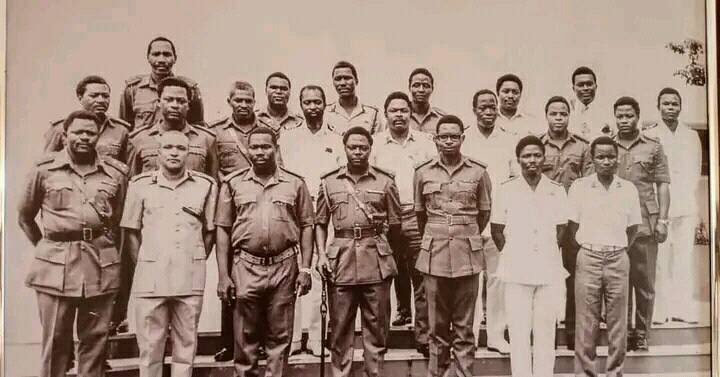
The Murtala Muhammed 1975 appointments saw Brigadier Murtala Muhammed seize power on July 29, 1975, installing new leaders who would define Nigeria’s political trajectory. Gowon was attending the Organisation of African Unity (OAU) summit in Kampala, Uganda, when a bloodless military coup ousted him.
This swift transition saw Muhammed assume the role of Head of the Federal Military Government and Commander in Chief of the Armed Forces. His administration wasted no time, quickly announcing major appointments across the senior military command and replacing the Inspector General of Police, marking a profound shift in national governance.
Understanding the Murtala Muhammed 1975 Appointments
General Yakubu Gowon, who had led Nigeria since July 1966, oversaw the Nigerian Civil War that ended in January 1970. Despite ending the war, his government faced mounting political and administrative challenges in the years that followed.
Dissatisfaction brewed among junior officers regarding the lack of progress in returning the country to democratic rule. Muhammed’s administration justified the coup by citing Gowon’s “indecision, indiscipline, and neglect.” He stated that the government had “not been able to fulfil the legitimate expectations of our people.”
Muhammed delivered his first national address on July 30, 1975, just one day after the coup. In it, he criticised the outgoing regime’s inability to meet public expectations, claiming “Nigeria has been left to drift.” This set the stage for an extensive reorganisation of the federal administration.
New Faces in Key Leadership Roles
The new Head of State, Brigadier Murtala Muhammed, moved swiftly to consolidate power. He immediately appointed Brigadier Olusegun Obasanjo as Chief of Staff, Supreme Headquarters, placing him among the new administration’s most senior figures.
Brigadier Theophilus Yakubu Danjuma became the Chief of Army Staff, taking command of the Nigerian Army. Colonel John Yisa Doko was named Chief of Air Staff, while Commodore Michael Adelanwa took the helm as Chief of Naval Staff. Mr. Muhammadu Dikko Yusufu stepped in as the new Inspector General of Police, replacing Kam Salem.
These rapid changes brought a completely new group of senior officials into key positions within the federal military administration. The comprehensive overhaul demonstrated Muhammed’s intent to completely restructure governance, contrasting sharply with the previous regime.
A Reconstituted Supreme Military Council
Beyond individual appointments, Muhammed’s administration also reconstituted the Supreme Military Council (SMC). This body became central to the new military government, bringing together the Head of State, senior military commanders, and service chiefs. The SMC swore in its members on August 5, 1975, at Dodan Barracks in Lagos.
Other notable members of the Supreme Military Council included Brigadier Iliya Bisalla, Brigadier Emmanuel Abisoye, and Brigadier James Oluleye. Navy Captain Olufemi Olumide and Navy Captain Husaini Abdulahi also joined, alongside Colonel Alani Akinrinade and Colonel Ibrahim Babangida.
Crucially, a separate National Council of States was also established, offering a distinct forum for state representation. The Federal Executive Council formed the third principal organ of government. Military governors were associated with the National Council of States, not automatically members of the Supreme Military Council, a distinction vital for understanding the new power dynamics.
Muhammed also announced plans to remove existing civil commissioners from the Federal Executive Council.
Governors for Nigeria’s Twelve States
Muhammed’s announcement also named twelve military governors, following the removal and retirement of the previous state leadership. Lieutenant Colonel Muhammadu Buhari was appointed governor of North Eastern State. He later became Head of State himself following the December 1983 coup, underscoring the long-term impact of these 1975 changes on Nigeria’s military coups and political landscape.
Colonel George Innih took over Mid Western State, and Lieutenant Colonel Sani Bello became governor of Kano State. Captain Adekunle Lawal, a Nigerian Navy officer, assumed leadership of Lagos State. Lieutenant Colonel Paul Omu was appointed for South Eastern State.
Colonel Ibrahim Taiwo became governor of Kwara State, while Captain Akin Aduwo, another Nigerian Navy officer, governed Western State. Colonel Anthony Ochefu was assigned to East Central State, and Lieutenant Colonel Usman Jibrin took charge of North Central State.
Colonel Abdullahi Mohammed governed Benue Plateau State. Lieutenant Colonel Umaru Mohammed was appointed for North Western State, and Lieutenant Colonel Zamani Lekwot became governor of Rivers State. These appointments covered all twelve states established under the previous military administration.
Records from a United States diplomatic cable dated August 1, 1975, show that ten of the newly appointed governors were sworn in at Dodan Barracks. The remaining ceremonies followed soon after, solidifying the new administrative structure across the nation. These changes signaled a complete overhaul of the administrative machinery.
Charting a New Course for Nigeria
Beyond personnel changes, Muhammed’s administration revealed an ambitious vision for Nigeria’s future. He announced plans for a new constitution and a return to civilian rule, setting a timetable for handing power back to civilians. This promise aimed to address the popular dissatisfaction that contributed to Gowon’s overthrow.
A 49-member panel gathered at the Nigerian Institute of International Affairs in Lagos to draft this new constitution. Chief Rotimi Williams was named chairman of this crucial committee. However, Chief Obafemi Awolowo famously declined to serve, citing that his appointment was made without prior consultation.
Muhammed’s government also initiated the creation of new states and the selection of a new federal capital. These measures demonstrated a commitment to fundamental administrative and geographical restructuring. The scale of these proposed changes highlighted the new regime’s determination to reshape Nigeria.
The Lasting Legacy of 1975
The 1975 appointments by Murtala Muhammed had a profound and lasting impact on Nigeria. They brought a generation of officers to national prominence, many of whom would shape the country’s future. Olusegun Obasanjo’s ascension to Head of State in 1976 and subsequent return to civilian rule in 1979 showcased the direct lineage of this era.
Similarly, Muhammadu Buhari’s later rise to power was a direct consequence of his initial appointment as a military governor in 1975. Muhammed’s own tenure was brief, lasting just 194 days, before his assassination on February 13, 1976, during a failed counter-coup. Obasanjo then succeeded him, continuing the transition to civilian government, which saw Shehu Shagari become president in 1979.
Understanding these initial appointments is crucial for tracing the relationships between various arms of government during that turbulent period. The specific individuals chosen and the roles they filled reveal much about the dynamics of power and the direction the new leadership intended to take the nation, fundamentally reshaping Nigerian history.
The rapid, comprehensive changes of 1975 created a new political class, underscoring how specific individuals can profoundly influence a nation’s destiny, much like a significant global figure can impact international narratives.
