




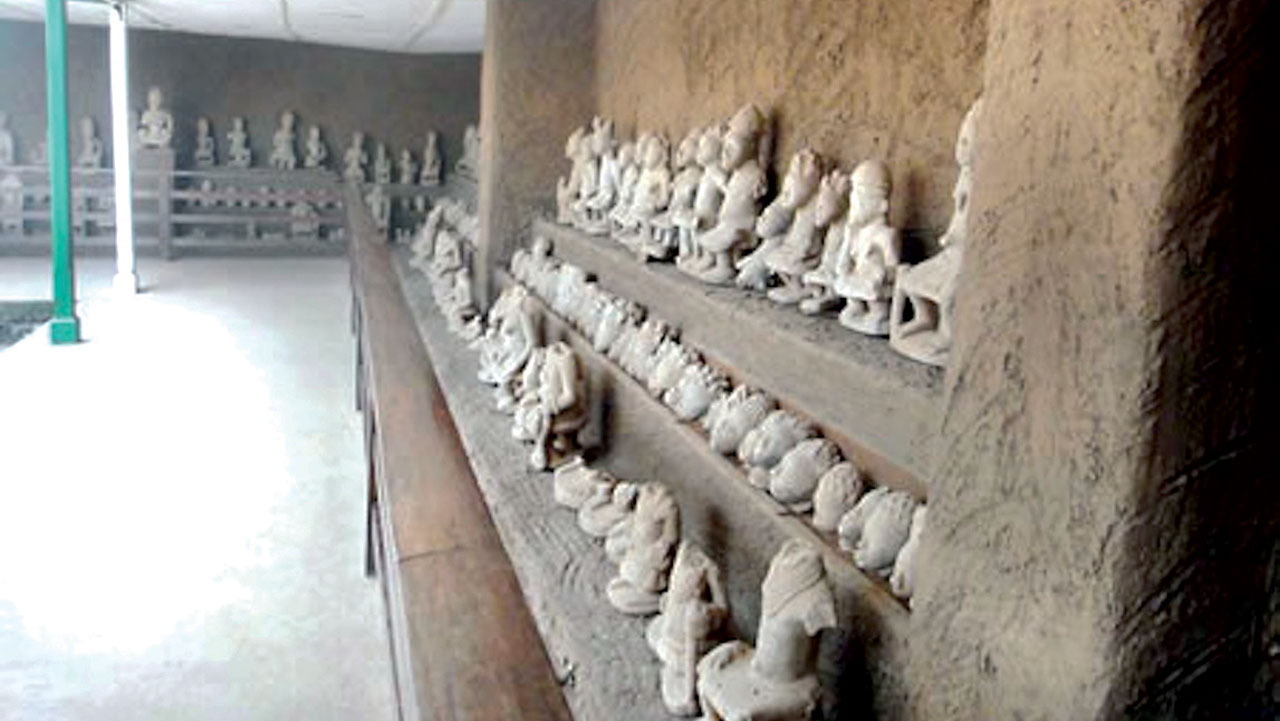
Nigeria’s first museum, built in Esie, Kwara State in 1945, was established to house hundreds of mysterious stone figures. This surprising development saw the colonial administration establish a national institution around an unexplained collection of human-like carvings.
These silent figures, found in large numbers, depicted men, women, and children with elaborate hairstyles, ornaments, and various implements. Their existence sparked a cultural debate that pitted local oral traditions against the emerging archaeological inquiries, shaping how Nigeria would approach its own heritage.
Built Nigerias first museum and the hunter’s discovery
Long before any official museum, the stone figures were central to Esie’s local lore. Oral tradition recounts that a hunter named Baragbon, searching for a new settlement for his community from old Oyo, stumbled upon the remarkable sight in the forest.
He found numerous stone figures, some arranged in striking circular formations, with a prominent central piece. Baragbon’s discovery, which local accounts suggest occurred around 1775, instantly transformed a remote forest site into one of Nigeria’s most intriguing cultural locations. His report to the community set the stage for generations of speculation.
Oral Tradition: Humans Turned to Stone
The Esie community, faced with this inexplicable find, consulted Ifa, the Yoruba divination system. An extraordinary explanation emerged: these were once human beings, transformed into stone as punishment for their disobedience.
This traditional belief deeply embedded the figures within a sacred history. For locals, these were not merely inert carvings, but objects connected to a living, revered past. The site acquired profound religious significance, influencing community practices and beliefs for centuries.
This rich oral history reveals how societies craft meaning around mysterious objects. It shows how communities preserved collective memory long before written records became common. The narrative ensured the figures were never just archaeological curiosities.
Archaeology Offers a Different View
While local tradition provided one powerful explanation, archaeologists and art historians presented another. They identified the figures as soapstone, a soft material ideal for carving, and dated their creation far earlier than 1775.
Estimates suggest the carvings were made between the 12th and 15th centuries, predating their “discovery” by hundreds of years. This implied a sophisticated ancient artistic tradition, though the identity of the carvers remained elusive.
The Unanswered Questions of Esie
Scholarly study highlighted the figures’ intricate details: diverse hairstyles, facial markings, and adornments that hinted at a structured society. Yet, who these carvers were, why they created such a vast collection—over a thousand figures—and why they abandoned them, remained unknown.
The mystery of Esie challenged colonial-era assumptions about African artistic achievements. These sophisticated pieces demanded answers about the societies that produced them, pushing researchers to look beyond simple narratives.
Colonial Attention and the First Museum
The Esie figures first drew wider official attention in 1933, when H. G. Ramshaw, a Church Missionary Society inspector, reported them to the colonial authorities. This marked a turning point, moving the site from local reverence to administrative interest.
By 1945, the colonial administration decided to establish Nigeria’s first museum directly at Esie. This decision acknowledged the immense cultural value of the figures and the need for their preservation. It represented a foundational moment for national heritage management.
A New Era for Nigerian Heritage
The Esie Museum wasn’t just a building; it was a shift in approach. Traditional Nigerian communities had always preserved culturally important objects in palaces and shrines. The museum system, however, introduced a new method for documentation, conservation, and public display.
Esie thus became a unique intersection of community heritage and modern preservation. It demonstrated that Nigeria possessed a rich cultural tapestry that demanded dedicated institutional protection.
What the Figures Reveal About Ancient Societies
The figures themselves offer a silent, yet powerful, narrative. Their varying forms and poses provide clues about the society they depicted. Researchers identified representations reflecting differences in status, suggesting a hierarchical social structure.
Some figures appeared as musicians, others as warriors, or individuals of high social standing. This diverse representation preserved information about a society whose written history had otherwise faded, allowing scholars to piece together glimpses of its past.
The Legacy of the Stone People
Today, the Esie Museum stands as more than a collection of stones; it’s a living testament to Nigeria’s deep and complex history. It serves as a reminder that the nation’s heritage stretches back centuries before colonial influences or written records.
The enduring mystery of the Esie stone figures continues to challenge and fascinate, compelling a critical examination of both oral traditions and archaeological evidence. This constant dialogue between ancient belief and modern inquiry reveals Nigeria’s dynamic relationship with its own enigmatic past. The figures remain a silent population, guarding secrets of a forgotten era, compelling Nigeria to continuously question its origins and artistic legacies.
The museum also houses other traditional art and cultural objects, including items related to Ifa divination and the deity Ṣọ̀pọ̀na. These broader collections contextualise the stone figures, showing how they fit within the spiritual and cultural world of the Yoruba. This integration highlights the complex systems ancient Nigerians used to interpret illness, nature, and authority.
The Esie Museum, therefore, embodies a crucial insight: Nigeria’s past is not a singular story, but a vibrant, multi-layered narrative of art, belief, and enduring mystery. It continues to ask future generations to ponder the identities of its earliest artists, their stories lost to time, their legacy carved in stone.
The site, with its palm tree tradition and the Elesie’s cultural restriction, showed how the figures impacted local social and religious behavior. They weren’t simply objects placed in a museum; they had already acquired profound meaning for the community. The ancient stories and modern interpretations combine to offer a richer, more nuanced understanding of this unique Nigerian treasure.
