




Many believed African military coups offered a swift path to national rejuvenation, yet history showed these interventions led to deeper instability, economic decline, and widespread human rights abuses across the continent.
These military interventions, often justified by putschists citing economic mismanagement or political instability, rarely translated into promised improvements. Instead, the historical record indicates a detrimental cycle, leaving nations worse off than before, a conclusion supported by research from economist John Mukum Mbaku.
The Illusion of Order: African military coups and political instability
Military takeovers, often justified as restoring order, paradoxically introduced profound political instability. They dismantled nascent democratic institutions, replacing them with autocratic structures that concentrated power in specific military or ethnic factions.
This erosion of civilian rule often intensified pre-existing intergroup conflicts, as marginalized communities felt increasingly disenfranchised. The cycle of coups perpetuated a climate of distrust and violence, undermining the very stability they claimed to deliver.
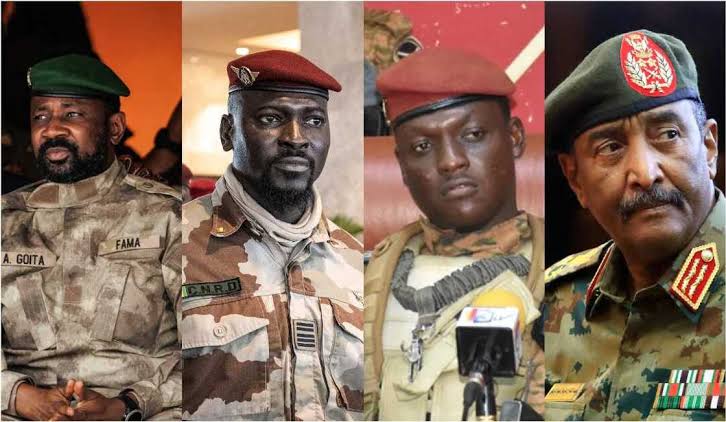
For instance, Mali experienced two coups in quick succession between 2020 and 2021, illustrating how military interventions can trigger further upheavals. Colonel Assimi Goïta overthrew President Ibrahim Boubacar Keïta in August 2020, only to later depose transitional leaders himself in May 2021.
The repeated military interventions shattered any semblance of consistent governance, highlighting how the promise of order often dissolved into a deeper political quagmire. This pattern reverberated across the continent, affecting the legitimacy of state institutions. Such events underscore the challenges of fragile governance.
When legal frameworks collapsed, political vacuums often emerged, paving the way for further internal strife. This destabilisation became a recurring theme in post-coup nations, impeding long-term development.
Economic Decline: The Cost of Military Interventions
Despite promises to fix ailing economies, military coups consistently led to significant economic downturns. These interventions typically deterred both foreign and domestic investment, stifling growth and increasing poverty.
A 2026 IMF report painted a stark picture, indicating that countries experiencing coups suffered a 2.3 percentage point reduction in GDP growth. Investment also plummeted by an alarming 14.3% in the same year, reflecting a severe blow to economic prospects.
The initial appeal of military leaders pledging to combat corruption and improve living standards often evaporated quickly. Instead, these regimes frequently fostered environments rife with their own forms of mismanagement and patronage. Afrobarometer surveys, however, showed high public opposition to coups in several African countries like Zambia, Uganda, Eswatini, and Seychelles, indicating a growing democratic culture.
Entrepreneurs and businesses found little incentive to invest in environments where legal stability was absent and property rights were precarious. This created a vicious cycle, where economic stagnation further fuelled public discontent and the potential for future unrest.
The economic impact wasn’t merely about large-scale investment; it permeated daily life. Increased unemployment and rising inflation frequently followed, further burdening ordinary citizens. The short-term instability caused by a coup cast long shadows over a nation’s economic future, making recovery a protracted and difficult process.
A Heavy Toll: Human Rights Abuses and Escalating Conflicts
Military regimes, by their very nature, often operated outside constitutional norms, leading to widespread human rights violations. Constitutions were frequently suspended, and civil liberties curtailed, suppressing dissent and consolidating power.
Violent crackdowns on protests, arbitrary detentions, and restrictions on media freedom became common occurrences. The focus on maintaining power often superseded any commitment to the welfare or rights of the populace, leading to a climate of fear.
In Sudan, the October 2021 coup saw General Abdel Fattah al-Burhan detain the transitional prime minister and other ministers, showcasing the swift and severe suppression of political opposition. This type of action was replicated across other nations experiencing military takeovers.
These actions not only violated fundamental rights but also exacerbated existing societal divisions, fostering deep-seated resentments. The military’s heavy-handed approach could unintentionally fuel armed insurgencies or reignite dormant ethnic and regional tensions.
Such repression had lasting consequences for social cohesion and justice. Countries often grappled with legacies of abuse long after military rule ended, making national reconciliation a challenging endeavour. These unchecked abuses of power underscored the fragility of democratic norms under military regimes.
Eroding Sovereignty: External Interference and Weakened States
While coupmakers often presented themselves as champions of national sovereignty, their actions frequently resulted in weakened states more susceptible to external influence. Internal instability and a lack of legitimate governance created vacuums that foreign powers exploited.
This dynamic was particularly evident in the Sahel region, where anti-French sentiment often accompanied recent coups. Countries like Mali, Burkina Faso, and Niger saw their new juntas pivot towards non-Western actors, such as Russia and the Wagner Group, seeking new alliances.
Such shifts in alignment, while framed as assertions of independence, often traded one form of external dependence for another, complicating the geopolitical landscape. This reduced a nation’s autonomy in international affairs.
The economic fallout from coups also made nations more vulnerable, forcing them to rely on external aid or loans under unfavourable conditions. This weakened their bargaining position on the global stage, further eroding sovereignty.
Conversely, nations that developed strong democratic institutions and professional armed forces under civilian oversight, such as South Africa, Namibia, Botswana, and Mauritius, largely avoided coups. Their commitment to rule of law and credible elections proved a more robust defence against both internal and external pressures.
Even attempts by regional bodies like ECOWAS to intervene, such as their threats of military action after the July 2023 Niger coup, demonstrated the challenges. The defiance of Mali and Burkina Faso in supporting Niger’s junta highlighted the complex interplay of regional and external forces at play following a military takeover.
Lessons from History: A Detrimental Path
The historical record across Africa clearly illustrates that military coups, despite their initial promises of swift and decisive change, consistently delivered negative outcomes. From widespread takeovers in the 20th century to the more recent wave of interventions across the Sahel, the detrimental pattern remained.
These interventions systematically undermined political stability, inflicted severe economic damage, resulted in widespread human rights abuses, and eroded national sovereignty. The alluring rhetoric of national salvation often masked a darker reality of extended suffering and stalled development.
For African nations, this historical pattern offers a crucial lesson: genuine progress and stability stem from robust democratic institutions, civilian oversight, and a commitment to human rights, not from the temporary, destructive allure of military rule.
