




The first reports from Makuku on the morning of August 10, 2026, were confused. One police account clocked the attack at 6 a.m. Another timed the interception of a heavily armed group at 9:25 a.m.
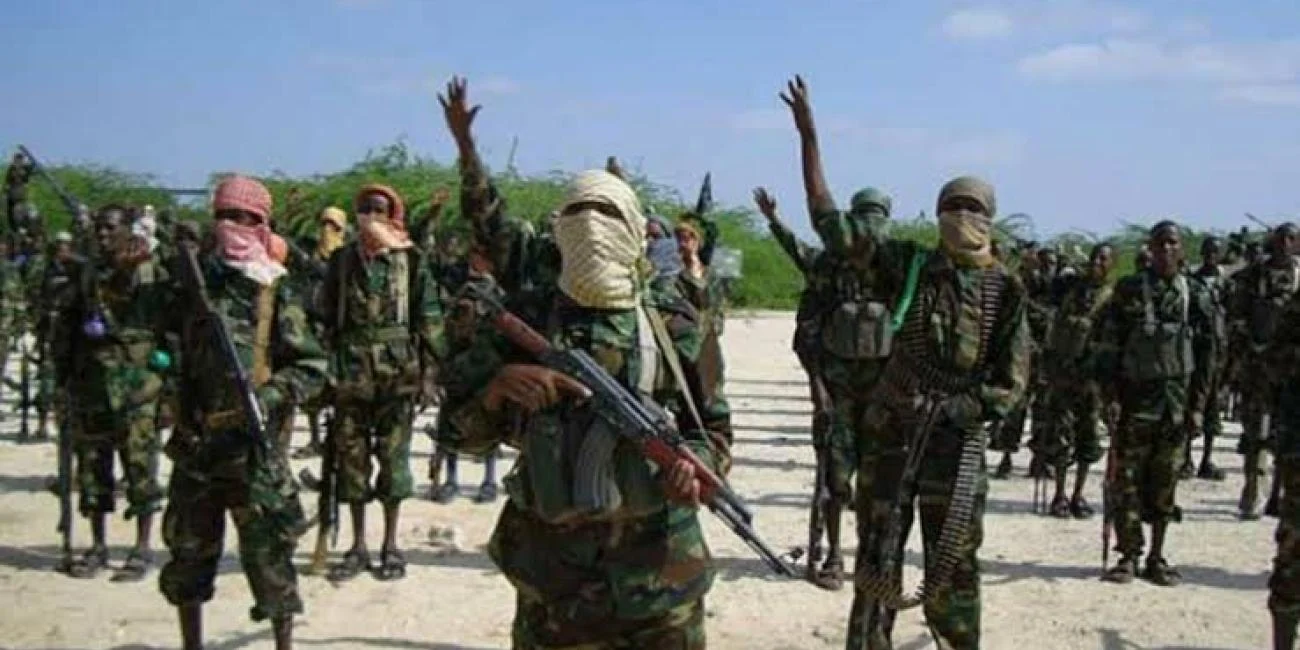
For over two hours, a gun battle raged in Sakaba Local Government Area of Kebbi State, involving more than 200 armed men on motorcycles, police, the army, and the air force.
Single Morning Redefined Kebbis: nine months of violence
When the shooting stopped, the picture was brutally clear. Ten police officers, two civilians, and one local vigilante were dead. The clash, which police said also killed at least 17 of the attackers, was not a random raid. It was a coordinated, three-pronged assault on the community of Makuku—a place security forces already knew was a target.
The battle for Makuku was the bloody crescendo to a period of escalating violence that had been redrawing the security map of Kebbi State. The story of that morning doesn’t begin at dawn, but nearly nine months earlier, on November 17, 2025, in another part of Kebbi South.
On that day, armed men stormed the Government Girls’ Comprehensive Secondary School in Maga. They killed the vice-principal, Hassan Makuku, and abducted 25 schoolgirls. The incident forced the state into national headlines and led to the temporary closure of schools, exposing the vulnerability of civilian life to a growing threat.
Controversy flared when Governor Nasir Idris revealed that soldiers stationed near the school had been withdrawn shortly before the raid, despite intelligence warnings. The events were a grim omen. Rather than being a singular tragedy, Maga was the opening chapter in a story of spreading insecurity across LGAs like Danko/Wasagu, Sakaba, Shanga, and Bagudo.
The violence was not monolithic. Officials have used different labels for the perpetrators: bandits, Lakurawa terrorists, and unidentified kidnappers. Their targets were just as varied, ranging from schoolchildren and farmers to a High Court judge, Faruku Bunza, abducted from his home in July.
A deadly return to a known battlefield
What makes the August 2026 battle so significant is that Makuku had been here before. In June 2025, a large armed group had attacked a temporary Mobile Police post in the very same village. They overwhelmed the officers, burnt a patrol vehicle, and escaped with rifles. No one was killed, but the warning was stark.
In response, authorities said the security base was fortified. Manpower was increased. The police’s elite Special Intervention Squad was deployed. The state, it seemed, was determined not to be caught off guard again. And yet, just 14 months later, a far larger force returned to the same community.
This time, the outcome was devastatingly different. The police headquarters confirmed the deaths of 10 of its officers. This wasn’t a case of a fortified base being simply overrun a second time. Police spokesperson Bashir Usman explained that security forces engaged the attackers at various points to prevent them from entering Makuku itself.
But that clarification raises a harder question. Were the additional structures, specialist deployments, and increased manpower introduced after the 2025 attack enough? The loss of 13 lives on the side of the state suggests a catastrophic failure of either intelligence, operational capacity, or both.
The porous southern corridor
Much of this violence spills across state lines. Kebbi South, where both Maga and Makuku are located, sits uneasily beside Zamfara and Niger states—epicentres of entrenched banditry. Local officials have long argued that their problem is imported.
Hussaini Bena, the council chairperson for Danko/Wasagu, made this exact point after a late July attack in Tudun Bicci that killed two local guards and two civilians. He blamed armed-group camps in neighbouring states.
The issue of borders and their meaning is central to Nigeria’s history, often drawn by distant hands, a problem detailed in the story of how Abdullahi Dan Buram Jada drew Nigeria’s eastern map.
The Makuku assault followed this script. Initial reports on August 10 showed a large armed group moving from Zamfara towards Kebbi. The state’s security is not just about policing its own territory, but defending a frontier against mobile, well-armed groups who treat administrative boundaries as mere suggestions.
A state caught between different enemies
To understand the violence in Kebbi is to understand that it does not have a single face. The evidence does not point to one unified organisation advancing across the state, but to a complex ecosystem of different armed actors with varying motives. This complexity challenges any simplistic security response.
In the southern corridor of Danko/Wasagu and Sakaba, attacks are often described as banditry, linked to kidnap-for-ransom economies and rustling. But further west, in LGAs like Shanga and Bagudo, which border Benin Republic, officials often name “Lakurawa terrorists” as the culprits.
In March 2026, these suspected Lakurawa fighters ambushed a security convoy in Shanga, killing nine soldiers and one police officer. In November 2025, they attacked an immigration camp in Bagudo, killing three officers. The persistence of these systems of violence often has deep roots, similar to how a colonial mining system remade the Jos Plateau, leaving scars that last for generations.
Within a single 24-hour period in August 2026, the geographic split was clear. As security forces battled bandits around Makuku near the Zamfara axis, troops were also ambushing suspected Lakurawa fighters in Dandi, near the international border. The state is fighting a war on at least two fronts, against enemies with different goals.
A cycle of reaction and response
The state government, led by Governor Nasir Idris, has been caught in a reactive loop. In early June 2026, following a surge in attacks, the governor convened an emergency security meeting and ordered a full review of the state’s strategy. Top officials from every major security branch were in the room.
Less than two months later, on August 5, they met again to review “emerging security challenges.” Just two days after that meeting, Governor Idris was in Yauri, visiting newly deployed army personnel sent to secure the area. Three days after his visit, the massacre at Makuku happened.
Following the Makuku losses, Inspector-General of Police Olatunji Disu dispatched a high-level delegation to Kebbi and ordered intensified operations. This cycle—attack, meeting, deployment, repeat—raises serious questions about the effectiveness of the state’s security architecture.
The reliance on local vigilantes, who fight and die alongside federal forces, also points to the enduring power of community-based justice, a concept explored in the history of how Alekwu oaths shaped Idoma law.
The hidden costs of a spreading war
The true cost of this conflict is not measured only in casualties. It is counted in closed schools, abandoned farms, and displaced families whose numbers are not even properly tracked. The Maga abduction triggered the shutdown of secondary and tertiary institutions across Kebbi, a decision that ripples through the lives of thousands of students.
Agriculture, the state’s economic backbone, is also under threat. Attacks like the one on farmers in Tudun Bicci create a climate of fear. Governor Idris has explicitly linked troop deployments to the goal of allowing farmers to return to their fields, but the scale of abandoned farmland remains unknown.
A November 2025 report by the European Union Agency for Asylum noted it could find no official figures for internally displaced people in Kebbi, despite documenting attacks that displaced hundreds. This lack of data creates an accountability vacuum. Without knowing the full human cost, it is impossible to gauge the success or failure of any security intervention.
The events from Maga to Makuku do not tell a story of a single enemy or a single front. They reveal something more unsettling: a state where multiple forms of violence are erupting across different corridors, stretching security forces thin and leaving communities exposed. The map of Kebbi is indeed being redrawn, not by administrators, but by the relentless geography of fear.
